
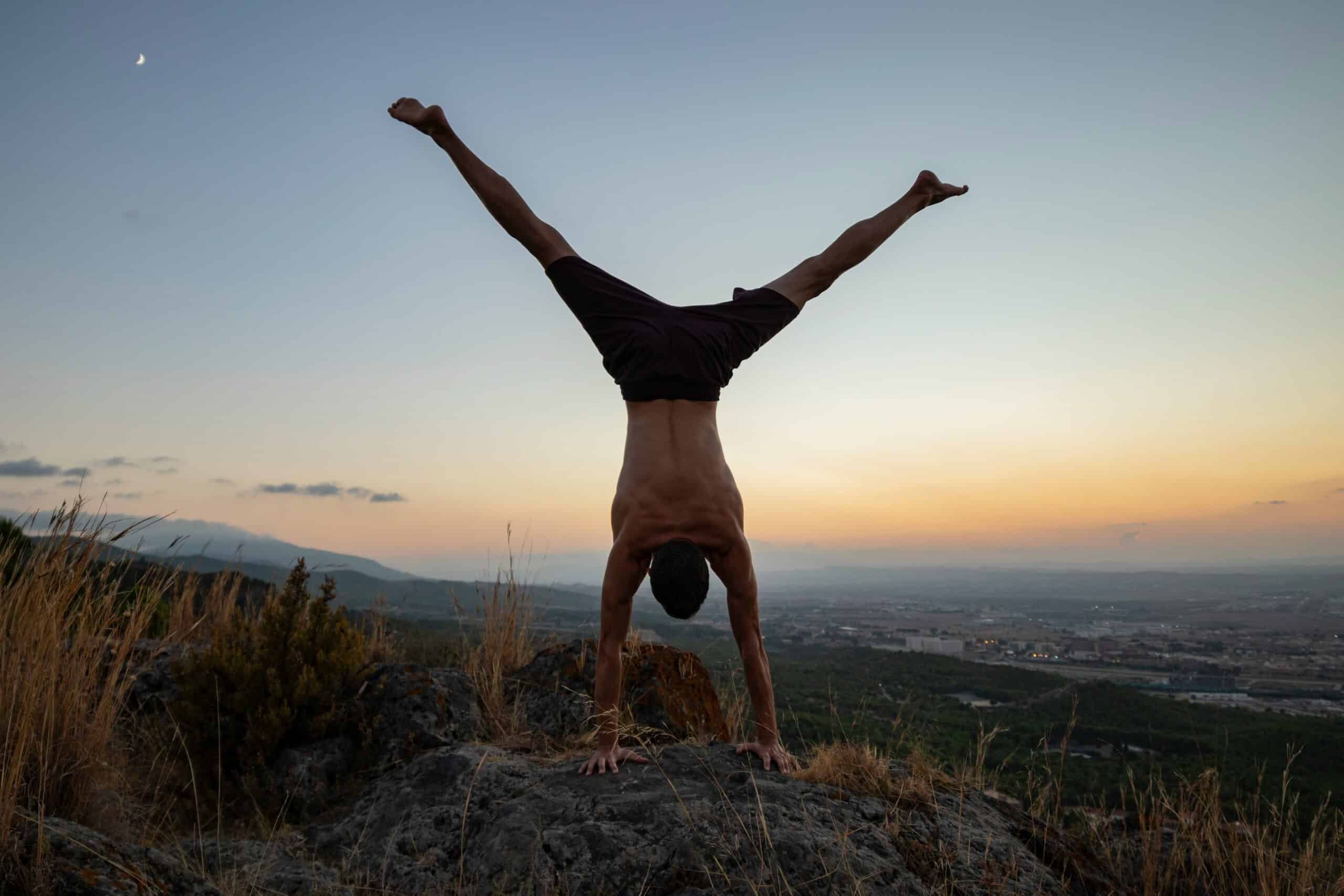
No gym membership. No equipment. No commute. Just a pull-up bar in the park or a patch of floor in a living room — and a growing number of Americans are discovering that this is enough.
Calisthenics — the practice of using bodyweight as resistance through exercises like push-ups, pull-ups, dips, squats, and planks — has been around since ancient Greece. But something is different now. Search interest, social media content, and outdoor fitness infrastructure are all pointing in the same direction: a significant and sustained shift toward bodyweight training as a primary fitness method, not just a backup plan.
What Is Driving the Trend
What used to be a niche park-workout activity is now everywhere from gym floors to social feeds. Data from Google Trends shows that search interest for calisthenics equipment climbed through 2025 with major peaks around January and September — spikes that correspond to common goal-setting periods, indicating that people are not just trying calisthenics briefly but actively researching tools to support year-round training.
Several forces are converging to accelerate the trend. The first is economic. Americans spend an average of $65 per month — or $780 annually — on gym memberships, with luxury gyms like Equinox and Life Time running anywhere from $150 to $350 or more per month. Calisthenics, by contrast, requires little to no ongoing financial commitment. A pull-up bar, a set of parallel bars, or simply access to a public park covers most of what the practice requires.
The coronavirus pandemic accelerated the calisthenics trend as people became accustomed to exercising with minimal equipment at home. Research shows calisthenics can improve muscle strength and aerobic conditioning, making bodyweight a highly effective training tool, according to Rice University experts.
The Accessibility Factor
One of calisthenics’ core appeals is the low barrier to entry — for beginners and experienced athletes alike.
Personal trainer Martyn Oakey, head of fitness at Everlast Gyms, describes the barrier to entry as extremely low: exercises can be done at home or in a gym without expensive equipment, they are accessible in terms of ability, and they are sometimes used by physiotherapists as part of treatment regimes. Once the basics are learned, they can be incorporated easily into a daily schedule.
That accessibility extends across demographics. In recent years, cities and communities have been investing in calisthenics parks featuring pull-up bars, parallel bars, and monkey bars that allow users to work on all areas of the body. The post-pandemic world has seen a major push for these community fitness spaces as people have taken their fitness more seriously.
The result is a workout infrastructure that is free, publicly available, and built into neighborhoods across the country — a meaningful alternative in communities where gym access is limited by cost or geography.
What the Research Shows
The health case for calisthenics has strengthened alongside its cultural momentum.
Research has found that progressive calisthenic push-up training produced similar muscle thickness gains to bench press training over four weeks, with calisthenics showing superior gains in functional pushing strength. This kind of finding challenges the long-held assumption that external weights are required for meaningful strength development.
For overall functional fitness, flexibility, and cost-effectiveness, calisthenics often wins. It builds strength using bodyweight, enhances mobility, and can be done anywhere without expensive equipment. However, for goals centered on maximum muscle gain, heavy lifting, or bodybuilding, gym training may be more effective.
The distinction matters: calisthenics does not replace every training modality, but for a broad population focused on functional strength, mobility, and general fitness, the research supports it as a complete and effective approach.
The Social Media Effect
Calisthenics has the kind of visual appeal that works well on social platforms. From everyday users sharing their first muscle-ups to coaches posting full bodyweight routines, social feeds are full of calisthenics content — and this visibility is drawing in new practitioners who might never have encountered the practice otherwise.
The community dimension has become a draw in its own right. Group calisthenics sessions and meetups have become more popular as people use social media to share their stories, allowing people of different ages to bond over shared fitness goals and mutual motivation.
This community aspect addresses one of the traditional criticisms of home or outdoor training — that it lacks the social accountability of a gym environment. Public calisthenics spaces and online communities have largely filled that gap.
How to Get Started
For anyone looking to try calisthenics, the entry point is straightforward. The foundational movements — push-ups, pull-ups, dips, squats, lunges, and planks — form the core of most programs and require nothing beyond bodyweight and floor space.
Whether someone is a complete beginner or a seasoned athlete, bodyweight movements can be scaled and modified. Adding tools like pull-up bars, parallel bars, or weighted vests allows for progressive training and keeps workouts challenging as fitness improves.
Proper form is crucial in calisthenics — incorrect form can lead to strain or injury. Before attempting advanced movements, mastering the basics and understanding correct technique is essential. Progression is equally important: gradually increasing the difficulty of exercises as strength and skill improve, and avoiding rushing into advanced movements without a solid foundation.
A Shift, Not a Fad
All of this points to calisthenics moving beyond a passing trend into a category with staying power, especially as equipment innovation makes it easier for more people to train effectively at home or outdoors. Its versatility, scalability, and fit with modern lifestyles suggest it is not going away.
For a country where gym membership costs are rising, schedules are tighter, and functional fitness is increasingly valued over aesthetics, calisthenics offers a compelling answer to a simple question: how do you build a sustainable fitness practice that works for your actual life?
The answer, for a growing number of Americans, is simpler than the fitness industry has often suggested. Your own body — used consistently, progressed intelligently, and moved through its natural range — turns out to be a remarkably capable training tool.