Pizza chain begins a North Carolina trial with Alphabet-owned Wing, starting with toasted sandwiches and a longer-term plan to tackle the cost of last-mile delivery
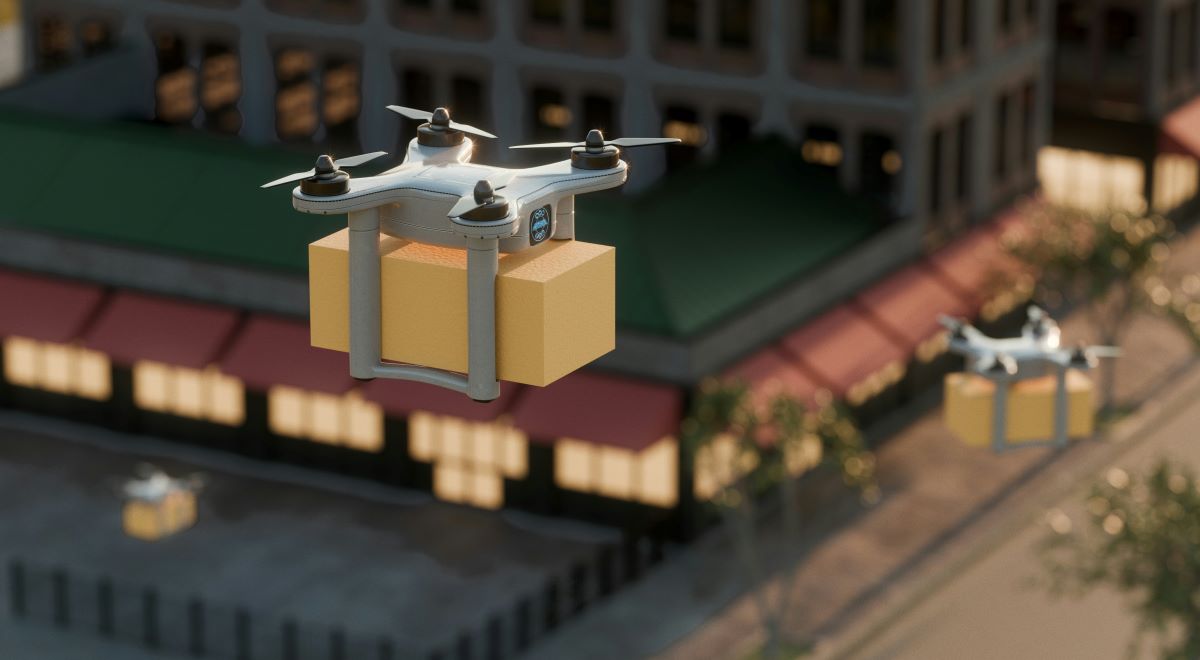
Papa John’s has launched a drone delivery pilot in partnership with Wing, the autonomous delivery company owned by Google parent Alphabet. The trial began this week in the Charlotte, North Carolina, area, starting with a limited menu and a single franchise location, and the two companies have framed it as the first step in a broader effort to rethink how restaurant food reaches customers.
According to a joint announcement from Wing, the pilot started May 11 and serves customers near Sun Valley Commons in Indian Trail, a suburb southeast of Charlotte. Eligible customers within the drop-off zone can order through the Wing app and have food flown to their homes by drone.
What Customers Can Order
For now, the service is deliberately narrow. The pilot menu is limited to three of Papa John’s Oven Toasted Sandwiches: Philly Cheesesteak, Chicken Bacon Ranch, and Steak and Mushroom. Pizza, the chain’s signature product, is not yet part of the drone offering.
That omission is not an accident. Wing chief executive Adam Woodworth told WIRED that pizza boxes present an aerodynamic challenge, describing the large, flat surface area as a problem for stable flight and noting that a tilted pizza is not an acceptable outcome. Solving that packaging and loading problem is part of a joint research and development effort the two companies say will run alongside the consumer pilot.
Orders currently run exclusively through the Wing app. The companies say the next phase will integrate Wing’s drone network directly into Papa John’s own app and into Lou AI, the chain’s digital ordering assistant, which runs on Google Cloud. The drone partnership builds on Papa John’s existing relationship with Alphabet through that cloud computing work.
The Business Case: The “Last Mile”
Executives have been explicit that the pilot is aimed at a longstanding cost problem in the restaurant industry: the final leg of delivery from store to doorstep. That “last mile” is expensive for restaurants that rely on their own drivers or on third-party delivery platforms, which take a cut of each order.
Kevin Vasconi, chief digital and technology officer at Papa John’s, said in the announcement that the partnership is meant to change how customers interact with the brand digitally, pairing in-app ordering with what he called Wing’s ultra-fast delivery. He also pointed to a specific operational use: drones could help during demand spikes, when store staff are scrambling to push orders out the door. Vasconi said the company has an internal business case that, in his words, pencils out, and that Papa John’s plans to grow the service and train staff on the new workflows drones require.
Heather Rivera, chief business officer at Wing, described the arrangement as defining a blueprint for the future of food delivery. The companies have used the term “agentic commerce” to describe the eventual goal of a more automated, end-to-end ordering and delivery experience.
Where Wing Already Operates
Wing is not new to the space. The company received the Federal Aviation Administration’s first certification allowing a drone delivery company to operate in the United States in 2019. It currently flies drones in four metro areas: Atlanta, Charlotte, Dallas-Fort Worth, and Houston.
The Papa John’s deal is notable as Wing’s first direct partnership with a national restaurant brand. It also follows a separate arrangement: last month, DoorDash and Wing launched drone-based food deliveries in the metro Atlanta area. Taken together, the moves point to a broader push by U.S. food and delivery companies to test whether autonomous aircraft can become a routine part of the delivery mix rather than a novelty.
For consumers, the immediate effect is limited to a small footprint in one North Carolina suburb. But the national interest in the story lies in what a recognizable American brand is signaling. If drone delivery proves workable at scale, it could reshape the economics of restaurant delivery, reduce reliance on third-party platforms and their fees, and shift the labor model that currently depends on a large network of human drivers.
That last point raises questions the pilot does not yet answer. The restaurant and gig-delivery sectors employ large numbers of drivers, and a meaningful move toward automated delivery would have implications for those jobs. Papa John’s has so far described drones as a complement to existing operations and a tool for peak demand rather than a replacement for its delivery workforce.
For now, the pilot remains exactly that. Charlotte-area residents can check eligibility and sign up for updates through Wing, and the companies say expansion will depend on how the trial performs and on the progress of their joint work on packaging, loading, and app integration. Whether the rest of the country eventually sees Papa John’s arriving by air will be decided well beyond Indian Trail.