
Modern medicine has increasingly focused on specialization and evidence-based practice, particularly in the fields of chronic pain and musculoskeletal disorders. Interventional pain management has arisen as a unique focus area of clinical practice through the combination of detailed evaluation and minimally invasive procedures to help manage discomfort from these disorders. Physicians who try to integrate these techniques into their practice often combine a long history of clinical approachability with procedural skill and experience to assist their patients in managing pain complaints that can limit mobility or quality of life.
As the population ages, demand has grown for physicians who can combine advanced clinical skills with patient-centered care across the United States, particularly in states such as New Jersey and New York, where a sizable portion of the population experiences chronic spinal and musculoskeletal conditions.
One example of a physician who takes this pathway is Anil K. Sharma. Born in Indore, Madhya Pradesh, India, on June 2, 1964, Sharma attended Mahatma Gandhi Memorial Medical College and graduated with his MD as the valedictorian in 1989. After he moved to the United States, Sharma completed his internship in internal medicine at Nassau County Medical Center from July 1990 to June 1991. This was the first postgraduate training experience that provided an orientation to general clinical practice from a consideration of patient care in a hospital environment. While in New Jersey, he completed a residency in anesthesiology at Monmouth Medical Center in Long Branch from 1991 to 1994. Sharma served as chief resident and received the Robert D. Dripps Award for Best Graduating Resident, which acknowledged peer and supervisor respect.
Sharma’s education continued in pain medicine at the Cleveland Clinic Foundation from June 1994 to July 1995. During that time, Sharma was honored as the Best Graduating Fellow and appointed to the Cleveland Clinic Alumni Association in 1995. This fellowship encompassed several interventional approaches to treating spinal and musculoskeletal pain, including epidural injections, radiofrequency denervation, and other alternative minimally invasive approaches. The Cleveland Clinic is a reputable institution that emphasizes clinical research as well as an outcomes-based approach to care, supporting Sharma’s exposure to more complex patient cases and how evidence-based approaches inform best practices in pain management.
Board certification has always been an aspect of Sharma’s professional life. He is certified by the American Board of Anesthesiology. He has received the Certificate of Added Qualifications in Pain Management, which was renewed in 2006 and 2015. He is also certified by the American Board of Pain Medicine. These credentials indicate that Sharma has met national norms for documented assessment of clinical competence and procedural skill in the specialty area of pain medicine. Board-certified anesthesiologists and pain medicine specialists have complied with the guidelines and documented education by the American Boards to demonstrate they are practicing evidence-based principles for an evolving standard of care.
Sharma has served in positions of leadership at many institutions, particularly as Director of Pain Management at Monmouth Medical Center in 2003. In that role, he has overseen clinical programs, participated in hospital pain management policies, and facilitated a multidisciplinary approach to clinical care addressing shared patients. He also started several ambulatory surgical centers in partnership with other physicians and specialties during the course of his practice in Freehold, Millburn, Shrewsbury, Neptune, and Toms River, where he has performed tens of thousands of spinal interventional procedures during his career. These roles demonstrate both an interest in clinical practice and a managerial component of procedural programs at various institutions.
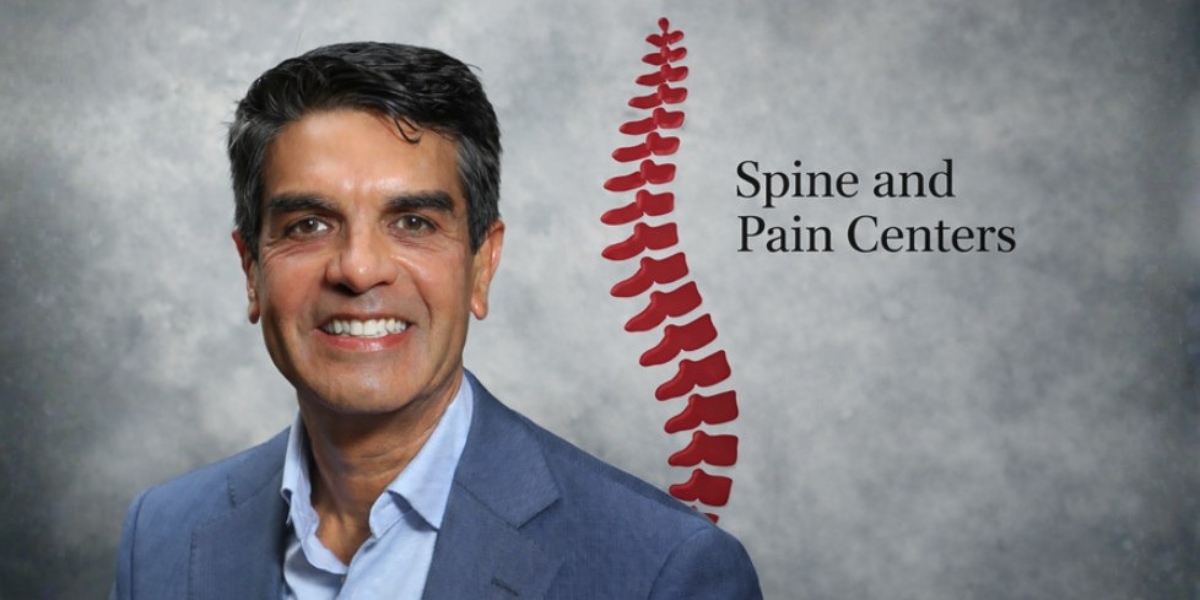
Sharma established the Spine & Pain Centers of New Jersey & New York in 1996, serving as its president. Combining outpatient treatment with procedural capabilities underscores his commitment to improving access for his patients while at the same time maintaining procedural efficiency. His roles have included strategic leadership, the development of clinical care protocols, and adapting to evolving governmental regulations. While the precise patient volume and nature of procedures involved are maintained as standard operating procedures of most institutions, having worked under the same management and clinical service structure for many years speaks to continued management continuity over many years in the face of competition in the health care market.
Sharma’s professional role and involvement have extended beyond direct patient care to participation in societies and the development of clinical guidelines. Each of these activities had an evolving emphasis from the societal aspect to clinical application, and they all dealt with standards or guidelines for the management of pain.
Sharma has held multiple roles with the North American Spine Society, from being on the Evidence-Based Clinical Guidelines Committee since 2007, to serving on the editorial board of Spine Line from 2007 to 2013. Within the Spine Intervention Society, Sharma was both a member and vice-chairman of the Standards Committee from 2012 to 2013, and served as co-chair of the annual conference. Since 2010, Sharma has served on the Exam Council of the American Board of Pain Medicine. Each of these positions involved evaluating clinical evidence, establishing standards of practice or procedures, and educating other providers in interventional pain management.
Publications form another dimension of Sharma’s professional contributions. He has published peer-reviewed articles in the Pain Medicine Journal, including systematic reviews assessing fluoroscopically and non-image guided lumbar interlaminar epidural steroid injections. He has co-authored clinical guidelines for the diagnosis and treatment of cervical radiculopathy and lumbar disc herniation with radiculopathy. He has contributed to evidence-based clinical guidelines for adult isthmic spondylolisthesis. His work on textbook chapters in publications such as Interventional Pain Management: A Practical Approach and Symptom-Oriented Pain Management further illustrates his contributions in clinical education and dissemination of procedural education to larger audiences in the field.
Sharma’s recognition by external media has included repeated listings as a Top Doctor in pain management by New Jersey Monthly between 2012 and 2024, including a feature on the magazine’s front cover in 2014. While these listings are part of third-party recognition of professional standing, his sustained engagement in professional societies and publications supports an ongoing role in the development of standards and practices in interventional pain management.
Anil K. Sharma’s career history shows a blend of clinical service, institutional administration, scholarly work, and participation in professional organizations in interventional pain management. With medical training in India and further postgraduate education in the U.S., in addition to certification and administration in medical institutions, he is a physician with significant experience in spinal and musculoskeletal procedures across New Jersey and New York. While the institutional or patient-specific outcomes are proprietary information, Sharma’s consideration of published studies and participation in guideline development reveal how he engages in evidence-based information and the broader practice of interventional pain medicine.
Disclaimer: This article is for informational and profile purposes only and should not be interpreted as medical advice, diagnosis, treatment guidance, or an endorsement of any physician, clinic, procedure, or medical service. Readers should consult a qualified healthcare professional for advice regarding their own medical condition or treatment options. Any professional recognitions, credentials, affiliations, or career details mentioned are presented as provided or publicly available and should be independently verified where necessary.