
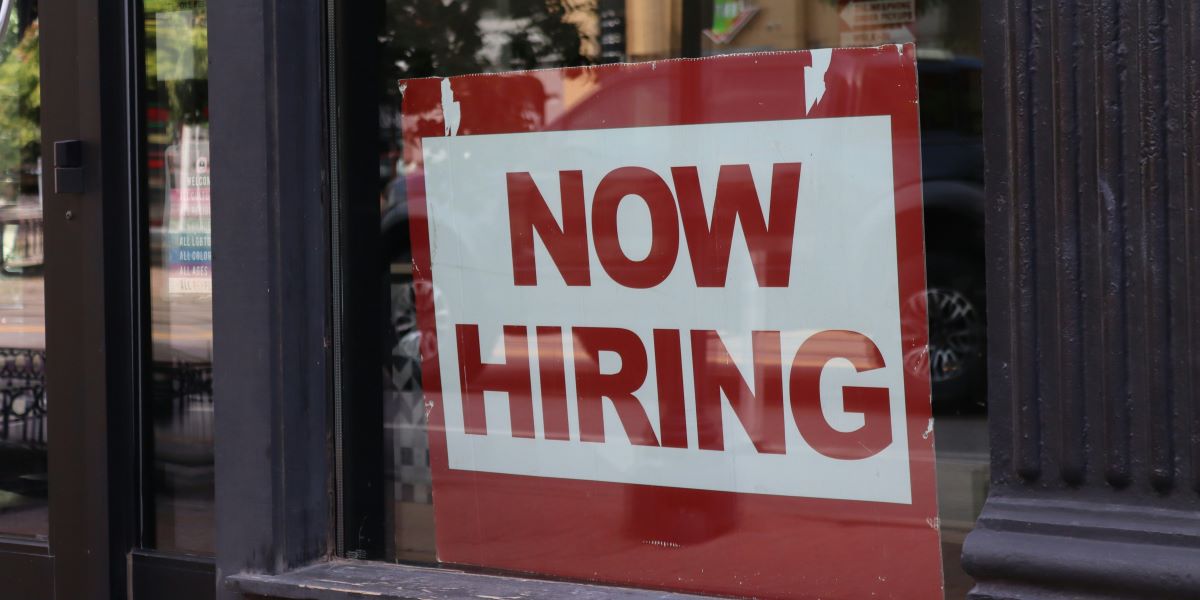
Job openings across the United States rose to 7.6 million in April, the highest level in nearly two years, according to data the Bureau of Labor Statistics released June 2. The increase, a gain of 731,000 from March’s revised 6.9 million, points to a labor market that continues to show resilience even as hiring cools, and it arrives at the start of a data-heavy week that culminates in Friday’s closely watched May jobs report.
The figure, drawn from the Job Openings and Labor Turnover Survey known as JOLTS, exceeded expectations. Economists surveyed by Dow Jones had projected roughly 6.8 million openings. The jump pushed the number of available positions back above the total of unemployed workers, and lifted the job openings rate by 0.4 percentage point to 4.6%, a sign that employer demand for labor has not faded the way some forecasters anticipated.
A Closer Look At The Numbers
The headline gain comes with an important qualifier. Nearly all of the increase was concentrated in a single category: professional and business services, which added 668,000 openings. Health care and social assistance, consistently among the strongest engines of job creation, contributed another 89,000, while financial activities saw a decline of 134,000. Most other industries reported little change.
That concentration has led analysts to caution against reading the report as a broad-based hiring surge. The April data shows a labor market settling into what some economists describe as a low-hire, low-fire pattern. Hires actually decreased over the month to 5.1 million, with the hiring rate slipping to 3.2%. In other words, employers are advertising more positions but filling them more slowly, a gap that suggests caution rather than exuberance in the underlying labor market.
The makeup of the openings has also drawn attention for what it may signal about technology. The surge in professional and business services postings has prompted speculation about the influence of artificial intelligence on labor demand, as companies in those fields recalibrate the roles they need and how quickly they move to fill them.
Why The Report Still Reads As Steady
For workers and businesses, the broader picture remains one of stability. The components that measure job security held firm. Layoffs and discharges were little changed at 1.7 million, with the layoff rate easing to 1.1% from 1.2% in March, keeping involuntary separations near historic lows. Quits, a measure of workers’ confidence in their ability to find new jobs, were essentially flat at 3.0 million, indicating that employees are prioritizing the security of their current positions over the uncertainty of switching employers.
Initial jobless claims, reported separately, have also stayed low by historical standards, reinforcing the sense that companies remain reluctant to let workers go even as they take more time to hire. Taken together, the data describes a labor market that is neither accelerating sharply nor deteriorating, but holding its ground heading into the summer, a steadying signal after a stretch in which forecasters had repeatedly warned of softening.
The Fed Is Watching
The timing gives the report added weight. Federal Reserve officials track JOLTS closely for evidence of slack in the labor market, and the data feeds directly into the central bank’s policy deliberations. For much of last year, policymakers worried about weakness in hiring. More recently, their concern has shifted toward inflation, driven in part by elevated energy prices, leaving the Fed balancing a still-firm job market against price pressures that have refused to ease.
The central bank meets later this month and is widely expected to hold interest rates steady. A labor market that remains resilient gives policymakers room to keep policy tight against inflation without the immediate worry that doing so will trigger a sharp rise in unemployment. A report showing collapsing demand would have complicated that calculus; the April figures, by contrast, suggest the Fed can stay patient.
The Week Ahead
The JOLTS release opens a sequence of labor-market data that will shape expectations through the summer. The ADP private payrolls report follows on Wednesday, and the government’s May employment report, the most comprehensive monthly snapshot, arrives Friday. Analysts will look past the headline payroll figure to the unemployment rate, wage growth, and labor-force participation for confirmation of whether the steadiness seen in the openings data extends across the full picture.
For now, the message from April is measured optimism. The rise in openings to a near two-year high signals that employers still see reasons to expand, even if they are hiring with deliberation. The contained layoffs and low jobless claims point to a workforce that remains largely secure. The concentration of the gains and the slower pace of hiring temper any declaration of a boom, but the overall reading is of an economy whose labor foundation is holding firm as it moves into the second half of the year.