By: James Blackwell
Forget the manufactured rock stars and carefully rehearsed tales of suffering. Pittsburgh’s Lady of the Blues has lived a story more powerful than anything the music industry could invent.
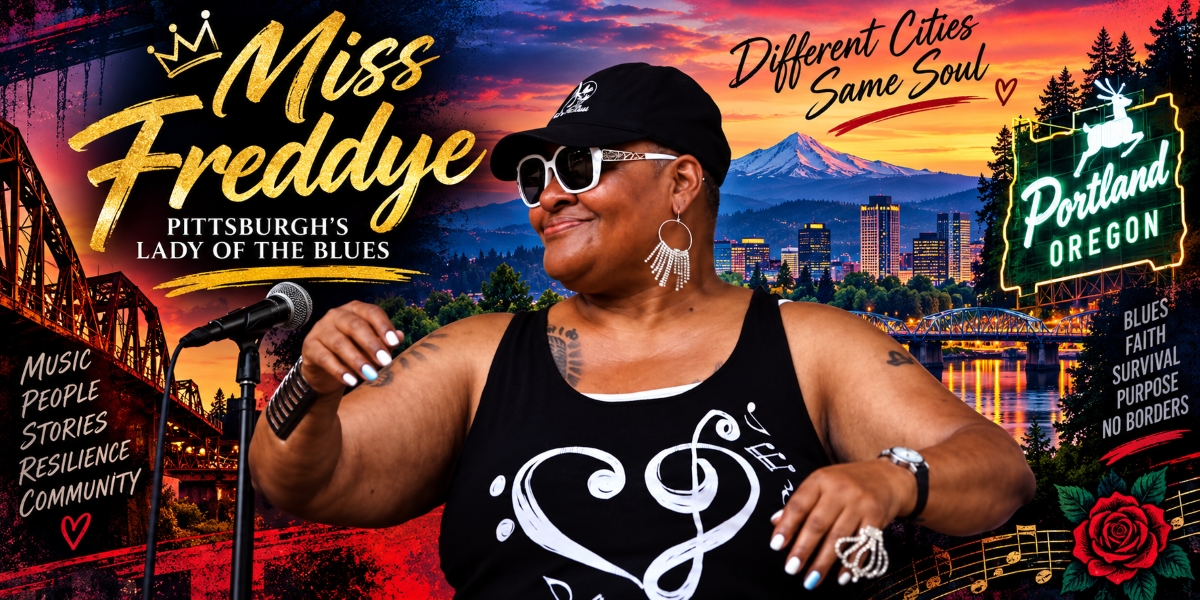
There are people who sing the blues, and then there are people who have looked the devil square in the eye, told him to get lost, and lived to sing about it. Miss Freddye belongs firmly in the second category. Twice she has faced breast cancer. She has survived COVID. She has spent more than three decades caring for the sick and dying as a nurse. And somewhere between hospital corridors, family responsibilities, personal battles, and the unforgiving realities of the music business, she became one of the most compelling blues voices to emerge from Pittsburgh, Pennsylvania. They call her Pittsburgh’s Lady of the Blues, but that title barely scratches the surface. Because Miss Freddye isn’t simply another talented singer paying tribute to Etta James or Koko Taylor. She’s a woman whose entire existence seems to embody the very essence of the music she performs. And you can’t fake that.
The story begins, appropriately enough, in church. Like so many of the great American blues and soul singers, Miss Freddye discovered music through gospel, learning early that a voice could do more than entertain. It could comfort, challenge, inspire, and occasionally shake the foundations of a room. Those lessons never disappeared. When she stepped into Pittsburgh’s blues scene during the 1990s, she brought with her the emotional intensity of gospel and the hard-earned wisdom of a woman who understood that life rarely follows the script. But there was no glamorous overnight breakthrough. While aspiring stars chased recording contracts and celebrity connections, Freddye was working as a nurse, raising a family, and finding whatever time she could to pursue music. For more than thirty years, she worked in healthcare, witnessing the fragility of human existence, watching people struggle, recover, suffer, and sometimes slip away. If you want to understand where the conviction in her voice comes from, that’s a pretty good place to start.
Then came cancer. Not once, but twice. Suddenly, the woman accustomed to caring for others found herself confronting the terrifying uncertainty of her own survival. There are no rehearsals for that kind of experience, no studio tricks or carefully constructed image to hide behind. Only fear, faith, determination, and the hope of seeing another sunrise. Miss Freddye survived, and when she returned to the microphone, she carried something no producer could manufacture: perspective. Her voice could still roar with the authority of a classic blues shouter, but beneath that power was something more revealing. Vulnerability, gratitude, and the unmistakable sound of someone who understands how quickly everything can disappear. That’s what separates genuine blues from imitation. Anybody can learn the notes, but not everybody can make you believe them.
For years, Miss Freddye built her reputation the difficult way, performing in clubs, at festivals, and wherever audiences were willing to listen. Her performances became a fixture of western Pennsylvania’s blues community, eventually earning her the affectionate title that now defines her public identity. Then something remarkable happened: the world began listening. Her recordings achieved international recognition, including a No. 1 placement on the UK iTunes Blues Chart. Her gospel recording “Wade in the Water” reached No. 2 on an iTunes gospel chart, reconnecting her contemporary success with the spiritual traditions that first inspired her. For an independent blues artist operating outside Nashville, New York, or Los Angeles, those achievements represented a significant breakthrough. Awards followed, including multiple Iron City Rocks honors and recognition from Pittsburgh’s music community. Her album Lady of the Blues further established her reputation as a performer whose musical identity was rooted in tradition without becoming trapped by it.
Listen to Miss Freddye, and the influences are unmistakable. There’s the commanding presence of Koko Taylor, the emotional fire of Etta James, and the spiritual conviction of the gospel singers who helped create the foundation of American popular music. Yet Freddye isn’t interested in becoming a museum exhibit. Her music isn’t an exercise in recreating somebody else’s glory days. It’s alive, immediate, and connected to the realities of contemporary life. She understands that the blues isn’t simply about heartbreak or suffering. It’s about what happens afterward: the morning after the worst night of your life, the moment you realize you’re still breathing, and the decision to keep going when everything around you suggests otherwise. That understanding gives her performances a remarkable sense of authority. She doesn’t need to convince you she’s suffered. You can hear it.
There is something wonderfully appropriate about Miss Freddye coming from Pittsburgh. This is a city built on steel, sweat, stubbornness, and survival, a place where people have historically measured character through determination rather than appearances. Miss Freddye reflects those values. Despite international recognition, she has remained connected to her hometown, supporting charitable causes, cancer awareness initiatives, veterans, and community organizations. Her success hasn’t separated her from the people who helped build it. If anything, it’s brought her closer. And perhaps that’s the most revealing part of her story. For all the awards, recordings, and applause, the nurse never really disappeared. She still understands that music can be an act of service, something capable of reaching people in ways that ordinary conversation sometimes cannot.
The music industry loves youth, worships novelty, and constantly searches for the next big thing while overlooking extraordinary artists who have spent decades earning their place. Miss Freddye stands as a magnificent contradiction to that obsession. She’s not chasing relevance; she’s earned it. Through illness, adversity, motherhood, professional responsibility, and the countless disappointments that accompany any serious artistic pursuit, she has continued doing what she was born to do. Her career is a reminder that musical greatness isn’t always announced by massive record sales or celebrity headlines. Sometimes it’s built slowly, through perseverance, authenticity, and the simple determination to keep showing up when the world gives you every reason to quit.
And when Miss Freddye steps onto a stage, takes hold of that microphone, and lets loose with a voice that has traveled through decades of struggle and triumph, something extraordinary happens. The audience isn’t simply hearing a blues singer. They’re hearing a woman who has endured, persevered, and discovered that the greatest victory isn’t fame or fortune, but the opportunity to keep doing what you love. Pittsburgh calls her its Lady of the Blues, and the rest of the world would do well to pay attention. Because Miss Freddye isn’t finished telling her story, and the blues has rarely sounded more alive.
More information: https://www.missfreddye.com