
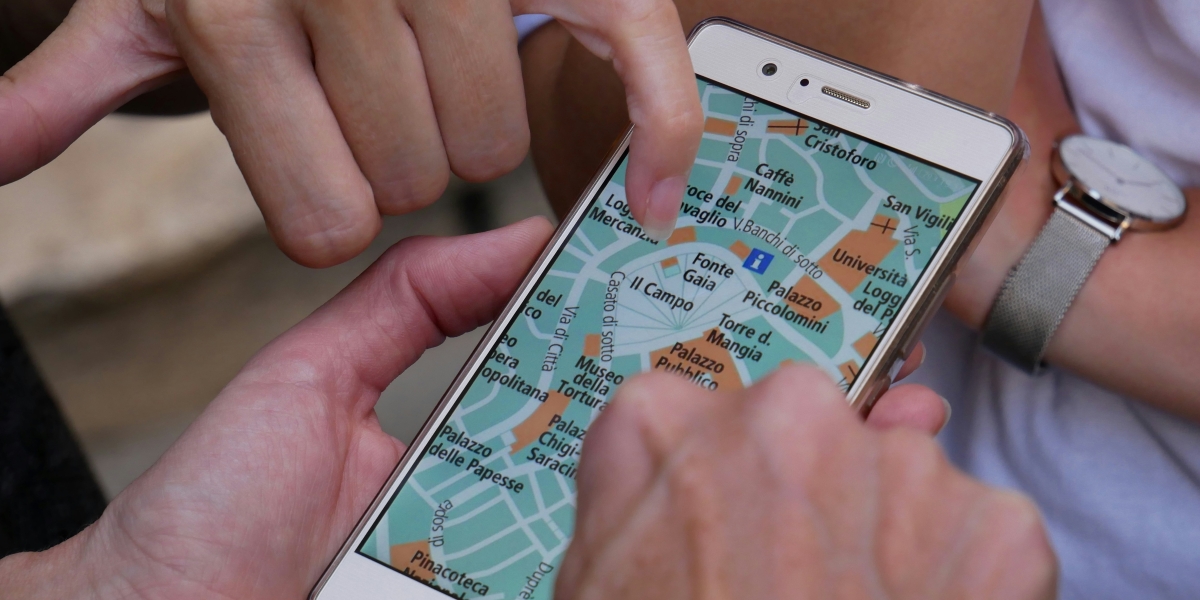
Concept3D is an American software-as-a-service company founded in 2006. It develops digital engagement tools for higher education institutions, sports and entertainment venues, convention centers, and destination marketing organizations. Its platform combines interactive campus and venue maps, 360-degree virtual tours, Localist Events, an event calendar and community engagement product, and room reservation software designed for higher education.
Concept3D serves more than 700 client organizations worldwide. Colleges and universities are its primary market, while its products are also used by sports franchises, municipalities, healthcare organizations, K-12 schools, tourism agencies, and corporate campuses. The company holds SOC 2 certification and is led by Chief Executive Officer Gordon Boyes and Chief Revenue Officer Carlos Perez.
Concept3D describes its mission as helping people discover, navigate, and engage with their world. Its four products are presented as a connected platform supporting audiences from initial discovery through ongoing community engagement.
History
Founding and Early Focus
Founded with a focus on three-dimensional campus visualization and interactive mapping, Concept3D has concentrated on higher education for much of its history. Its network now includes more than 700 campuses. This focus has helped the company develop expertise in the distinct needs of higher education marketing, admissions, and student engagement.
Expansion Beyond Mapping
The platform expanded beyond mapping to include events, room reservations, and virtual experiences. Concept3D says institutions often manage related needs, where things are, what is happening, and how spaces are booked, with disconnected systems that duplicate information and administrative work.
Acquisition of Localist
Concept3D acquired Localist, an event calendar and community engagement platform with an established higher education customer base, and incorporated it as Localist Events. Together with mapping and room reservation software, the acquisition broadened the platform to cover location, campus activity, and space management.
Products
Interactive Maps
Interactive Maps is Concept3D’s founding and most established product. It provides web-based, mobile-responsive maps that institutions and venues can embed on their websites and share through digital channels, helping visitors explore complex physical environments before and during a visit.
Maps can be branded with an institution’s colors, fonts, and logo. Users can filter buildings, points of interest, parking, accessibility routes, dining, and other features. Client administrators can update map information through a content management system as facilities and services change.
Concept3D positions Interactive Maps as more than a wayfinding tool: it combines navigation, accessibility information, visual storytelling, real-time updates, and branded content. The product is intended to address common challenges such as visitors getting lost, outdated static maps, accessibility barriers, fragmented location information, and the work required to maintain it.
Uses include self-guided tours, event navigation, recruitment and visitor engagement, emergency communications, and bringing departmental location information together. Documented clients include Penn State University, Georgia Tech, UC Davis, Ole Miss, Northeastern University, UC San Diego, and Reed College. Ryan Whittington, Assistant Vice Chancellor for Marketing at Ole Miss, has called the campus map the institution’s single biggest indicator of student engagement, noting increased use during the first week of the academic year.
360-Degree Virtual Tours
The 360-degree virtual tour product lets prospective students, visitors, and fans explore a campus or venue remotely in a web browser without downloading dedicated software. Tours combine 360-degree photographs captured at multiple locations into a navigable walkthrough.
The product supports admissions and visitor marketing by giving prospective students a view of campus life and facilities before an in-person visit. Michael Lackovic, Director of Marketing at Lakeland University, has described the virtual tour as a tool that encourages undecided prospective students to schedule a campus visit.
Localist Events
Localist Events is Concept3D’s event discovery and community engagement product. It brings events into a single branded calendar that can be embedded on websites, mobile apps, and other digital communications. Features include community-submitted events with moderation and approval workflows, filters for category, audience, date, and location, and integrations with external calendars and campus systems.
Concept3D presents Localist Events as a way to connect people with shared experiences, not simply as calendar software. It is designed to address events scattered across departmental websites, limited discoverability, duplicate entry, inconsistent branding, manual publishing, and poor visibility into event performance. Institutions use it to centralize communications, support participation, improve search visibility, measure engagement, and reduce administrative work.
Documented clients include Colgate University, High Point University, and Visit Plano. Dave Herringshaw, Senior Digital Production Specialist at Colgate, has said the platform helps communicate activity across academics, athletics, and other areas while maintaining a consistent brand. Millerann Moya of Visit Plano has described its events calendar as a valuable asset for connecting cultural engagement with local revenue.
Room Reservation Software
Room Reservation Software is the newest addition to the suite. Built for higher education, it helps colleges and universities schedule classrooms, meeting rooms, study spaces, and other facilities, supporting the process of discovering, requesting, approving, and managing spaces.
The product is positioned as an alternative to legacy scheduling systems. It offers mobile access and integration with campus calendaring and facilities platforms. Capabilities include approval workflows, conflict prevention, real-time availability, search and filtering, configurable reservation policies, accessibility-focused design, and partner success support. It is intended to reduce double bookings, manual approvals, duplicate data entry, and coordination across departments.
Platform Integration
The products are designed to work together. Interactive Maps provides location information used by the other tools: visitors can discover an event in Localist Events and navigate to its venue. Approved room bookings can be published as Localist Events entries, reducing duplicate data entry, while users can find reservable spaces on the map and navigate to them.
Digital Accessibility
Concept3D describes accessibility as a foundational part of product design, rather than a later compliance step or a separate accessible version. Its stated aim is to make platform information and services usable by people with different abilities. Jill Bobrick Igl, Head of Product, has said accessibility is central to the company’s mission and embedded throughout product development.
Standards and Conformance
Concept3D says its products are built to meet or exceed Web Content Accessibility Guidelines (WCAG) 2.1 Level AA, a standard referenced by many public-sector and higher education requirements. The company aligns its work with evolving regulations, including the U.S. Department of Justice’s Title II ADA rule requiring state and local government entities to bring digital content into WCAG 2.1 Level AA conformance. Concept3D provides a Voluntary Product Accessibility Template on request and offers clients accessibility audits of their digital properties.
Accessibility Features Across the Product Suite
Accessibility features are built into Interactive Maps, 360-degree virtual tours, and Localist Events. Documented features include alternative text for images and visual elements, text that can be enlarged up to 200 percent without disrupting the layout, keyboard navigation for links, buttons, forms, and other controls, and semantic HTML that helps assistive technologies interpret page structure.
Position on Integrated Versus Separate Accessibility Solutions
In an article by Jill Bobrick, Concept3D argues against meeting accessibility obligations through separate or alternative versions of digital content. The company calls this a “digital back door” experience because users with disabilities may receive a version stripped of the primary product’s features and interface quality. It also cites delayed updates, security risks, reduced functionality, incomplete testing, and the added cost of maintaining two products.
The article also cautions that text-only websites can remove context that some users with cognitive disabilities rely on, as well as interactive functions such as maps that users with motor disabilities may access through adapted devices. The company says separate experiences can signal that users with disabilities are not expected to use the primary product.
As an alternative, Concept3D advocates universal usability, progressive enhancement, and user-centered design. These principles mean designing for a broad range of abilities, ensuring content works at a basic level and improves on more capable devices, and involving people with disabilities in design and testing. The company acknowledges that accessibility in interactive web applications requires ongoing research, training, and design work.
Experience and Client Assessment
Concept3D says it has worked in digital accessibility for more than ten years and aims to help institutions move beyond minimum legal requirements. Dave Van Etten, an accessibility consultant at Idaho State University, has said working with a vendor that builds accessibility into its product resolves a substantial challenge for the institution.
Industries Served
Higher Education
Higher education is Concept3D’s primary market, with more than 700 college and university clients, from community colleges and liberal arts colleges to regional and research universities. The platform supports marketing and admissions through maps and virtual tours, and student engagement through maps and event calendars. Jen Brock, VP of Marketing and Communications at Mount Holyoke College, has praised the team’s understanding of campus complexity and accessibility.
Fan and Guest Experience
Concept3D serves professional and collegiate sports venues, stadiums, and event facilities with interactive maps showing seats, amenities, parking, concessions, and other points of interest. Clients include the Kansas City Chiefs, Circuit of the Americas, and Alabama Athletics. Nick Capo, VP of Event Operations at the Kansas City Chiefs, has said the map helps deliver personalized information to fans when and where it is needed.
Convention Centers and Meetings
For convention centers, hotels, and large meeting venues, Concept3D provides interactive wayfinding and space maps to help organizers and attendees navigate multiroom facilities during conferences, trade shows, and other events.
Destination Marketing Organizations
Concept3D also serves destination marketing organizations and municipal tourism agencies through Localist Events and mapping products, helping cities, regions, and visitor bureaus showcase events, attractions, and destinations. Documented clients in this area include the Indianapolis Indians and Visit Plano.
Values and Culture
Concept3D describes its culture through six values: Listen, Speak, Act, Amaze, Teamwork, and Optimism. Listen emphasizes respect and openness to ideas; Speak encourages candid communication; Act reflects a bias toward action and focused work; Amaze means exceeding expectations; Teamwork values different skills and perspectives; and Optimism focuses on finding opportunity in every situation.
Certifications and Compliance
Concept3D holds SOC 2 certification, a Type II standard administered by the American Institute of Certified Public Accountants that evaluates a service organization’s controls related to security, availability, and confidentiality. Such controls are relevant to higher education clients that manage sensitive student and academic information.
The company also says its accessibility commitment extends WCAG conformance across its products, supporting institutions’ obligations to provide accessible digital experiences under the Americans with Disabilities Act and Section 508 of the Rehabilitation Act.