
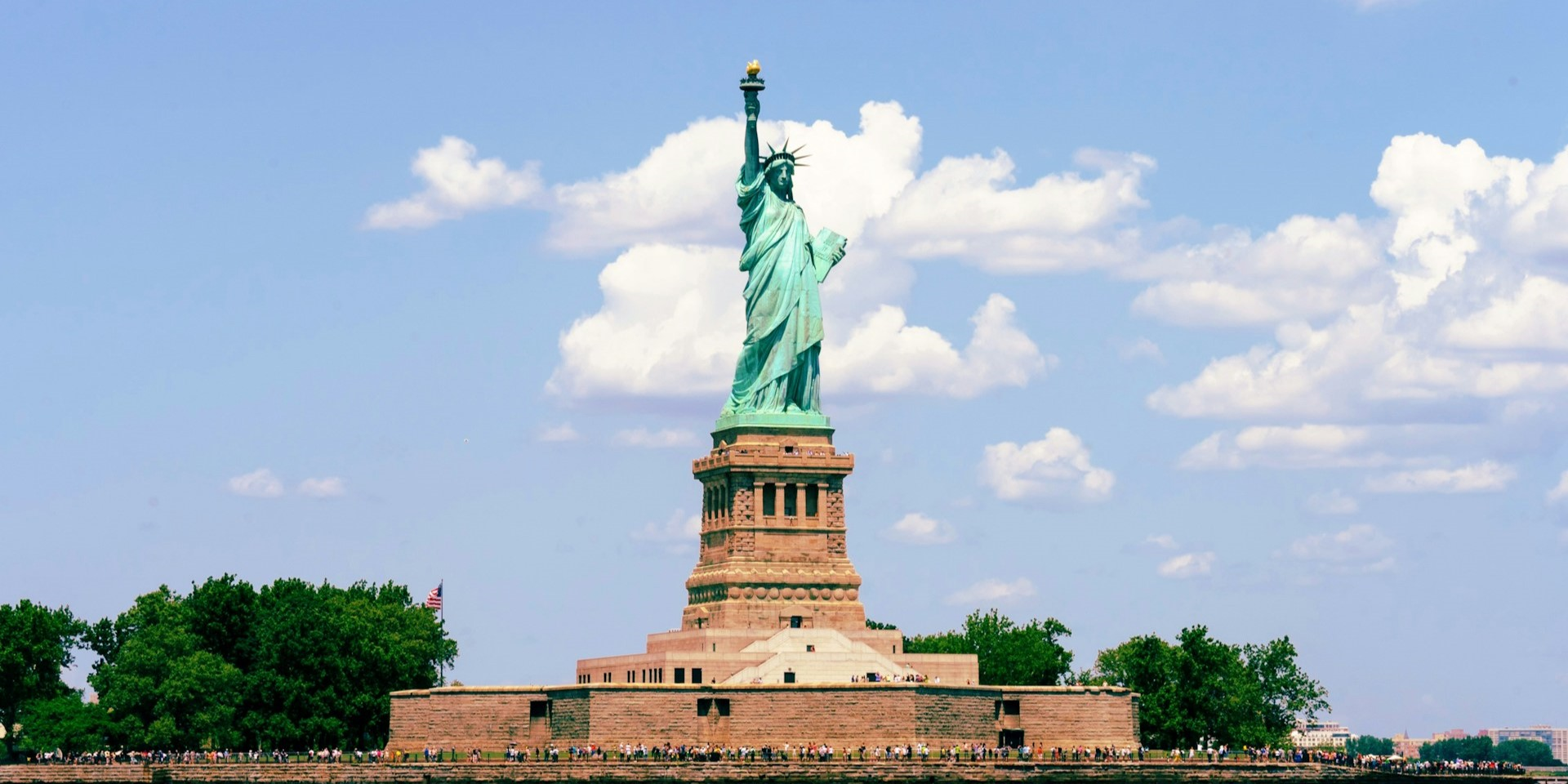
The Statue of Liberty stands on Liberty Island in New York Harbor, a massive copper figure that has greeted millions of people arriving in the United States by sea. While it began as a gift from France to celebrate the centennial of the Declaration of Independence, its meaning shifted over time. It transformed from a monument of political friendship into a universal symbol of hope and the “American Dream.”
A Gift of Shared Values
The idea for the monument started with Édouard de Laboulaye, a French political thinker, around 1865. He wanted to celebrate the Union’s victory in the American Civil War and the end of slavery. Laboulaye believed that by honoring American liberty, he could inspire democracy in his own country. Frédéric Auguste Bartholdi, the sculptor, designed the figure with specific symbols. The torch represents enlightenment, while the broken shackles at her feet signify the end of oppression and servitude.
For the first few decades, the statue was primarily viewed as a symbol of republicanism and the historical bond between France and the U.S. It was not immediately associated with immigration or the personal aspirations of those moving to the country.
The Turning Point: “The New Colossus”
The shift in meaning is often traced back to a poem by Emma Lazarus titled “The New Colossus,” written in 1883. At the time, the committee raising money for the statue’s pedestal needed funds. Lazarus wrote the poem for an auction to help the cause. Her words gave the cold metal structure a motherly, welcoming soul. One of the most famous excerpts reads:
“Give me your tired, your poor, Your huddled masses yearning to breathe free, The wretched refuse of your teeming shore. Send these, the homeless, tempest-tost to me, I lift my lamp beside the golden door!”
These lines reframed the statue. It was no longer just a celebration of a past revolution. Instead, it became a “Mother of Exiles,” a figure looking out into the ocean to welcome people fleeing poverty or persecution.
The Gateway to a New Life
As the 20th century began, the geographic location of the statue became vital to its identity. Ellis Island, the main federal immigration station, opened in 1892 right next to Liberty Island. Between 1892 and 1954, more than 12 million immigrants passed through this gateway.
For these travelers, many of whom spent weeks in the cramped lower decks of steamships, the sight of the statue was their first glimpse of America. It represented the end of a long journey and the beginning of an opportunity to build a better life. This visual connection between the monument and the start of a new career or home solidified the statue as the face of the American Dream.
Cultural Integration and Global Recognition
During World War I, the government used the statue’s image on “Liberty Bond” posters to raise money for the war effort. This effort tied the statue to national identity and patriotism. As the children and grandchildren of immigrants grew up, the stories of their ancestors seeing “Lady Liberty” became part of family history. These stories passed down the idea that the statue promised a fair chance at success for anyone willing to work for it.
In 1924, the monument was declared a National Monument, and later, a UNESCO World Heritage site. This international recognition confirmed that its message reached beyond American borders. People worldwide began to see it as a symbol of the possibility of upward mobility.
Modern Interpretations of the Dream
The American Dream is often described as the belief that anyone, regardless of where they were born, can attain their own version of success in a society where upward mobility is possible for everyone. The Statue of Liberty remains the visual shorthand for this concept. Historians often point out that the statue’s meaning is not fixed; it evolves with the people who look at it.
David Luchsinger, the last resident superintendent of Liberty Island, once noted the power of the monument’s presence:
“She’s a very simple but very powerful symbol. She means something different to everybody that looks at her, but the one thing they all have in common is that it’s all about liberty and it’s all about freedom.”
Today, the statue continues to be a focal point for discussions about what it means to be American. While the political climate may change, the copper figure remains a constant reminder of the ideals of welcoming the stranger and providing a “golden door” to those seeking a fresh start. Its enduring legacy is not found in the metal itself, but in the millions of personal stories of achievement and perseverance that began under its watchful eye.