Year-round training has become an increasing norm in youth baseball and softball throughout America. Though league play still serves as the cornerstone of youth involvement, it has become increasingly common for players to pursue training opportunities through private instructors, indoor training facilities, and special clinics off-season. Nationwide organizations like USA Baseball have sought to provide educational materials for coaches and players, demonstrating that there is increased interest in player training and proper development. With the increasing competitiveness of youth sport involvement, it can be argued that academies are simply a piece of this training puzzle and not a substitute for other programs.
Within this environment, D-BAT, founded by Cade Griffis, Kyle Griffis, and Craig Penfold, developed a network of indoor baseball and softball academies centered on instruction, practice, and equipment sales. Since opening its first location in Addison, Texas, in 1998, the company has expanded its academy model through franchising while maintaining a consistent group of core services across locations. Independent reporting has focused largely on the company’s business growth, while descriptions of its instructional philosophy and training programs come primarily from D-BAT’s own published materials.
The academy’s instructional model combines several formats rather than relying on a single method of coaching. Most locations offer private lessons, small group instruction, batting cage rentals, seasonal camps, clinics, and team training. These services are designed to accommodate players with different levels of experience, from young beginners through advanced high school athletes. Company information also states that instruction is available for both baseball and softball players. This range of programs allows athletes to focus on specific aspects of the game, including hitting, pitching, catching, fielding, and defensive skills, depending on individual needs and available coaching resources.
One of the central ideas described by D-BAT is individualized instruction. Rather than using identical lesson plans for every athlete, the company states that coaches work with players according to their existing abilities, physical characteristics, and personal goals. This philosophy is presented as a way to recognize that athletes develop at different rates and often require different areas of emphasis. Although independent studies evaluating this specific approach have not been published, individualized coaching has become a common feature across many modern player development programs. D-BAT presents this concept as one of the defining characteristics of its academy model.
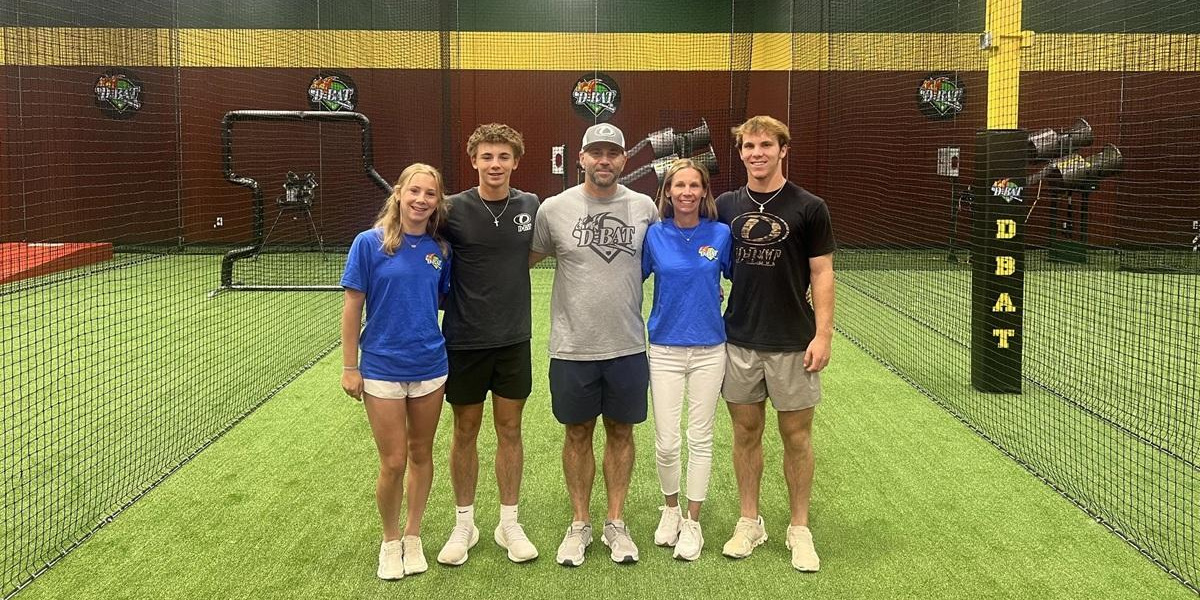
The company’s facilities also reflect a standardized operating structure. Most academies include indoor batting cages, dedicated lesson areas, and a retail pro shop offering baseball and softball equipment. Many locations conduct spring break camps, summer programs, holiday clinics, and specialty classes that focus on particular skills such as hitting or pitching. Public planning documents prepared for new franchise developments describe multipurpose training areas where camps, clinics, and instructional sessions can operate throughout the year. The indoor format allows activities to continue regardless of weather conditions, providing greater scheduling flexibility than outdoor facilities alone.
Professional experience has also influenced the backgrounds of many instructors associated with the academy network. D-BAT has stated that its coaching staff includes former collegiate players, former professional players, and experienced instructors working with athletes across different age groups. Cade’s own experience at Dallas Baptist University, his time within the Kansas City Royals organization, and his later work as a scout for the Chicago White Sox shaped the company’s original approach to baseball instruction.
As the company expanded through franchising beginning in 2008, maintaining consistency became an operational priority. The franchise model allowed individual owners to operate local academies while offering a similar range of instructional services under the D-BAT name. According to the company, franchisees receive training and assistance that help provide a uniform experience for customers. Though the academies tailor their programs to local demand, the overall structure of lessons, camps, clinics, membership, and retail services is more or less similar across locations. This standard structure played a significant role in the expansion of the company.
Measurable success achieved through private sports coaching is tough to assess via independent research since athletes undergo training from many coaches, schools, travel teams, and even individual instructors over several years. According to D-BAT, many athletes have trained in their academies, and some have become professional prospects while others have received college scholarships.
The broader context of youth baseball training explains why companies like D-BAT have continued to expand. USA Baseball has increased educational efforts for coaches, players, and parents on a national level through certification programs, educational online platforms, and comprehensive developmental programs for athletes. These programs include a focus on proper instruction, safety, and appropriate coaching at any age in the sport. D-BAT is one of many organizations in this greater context, including private academies, local organizations, school training programs, and national bodies involved in baseball and softball development in the US.
D-BAT’s instructional approach can be seen as a result of both athletic experience and business practices rather than the innovation of a new coaching method. The company started as a business providing private lessons, camps, clinics, indoor practice facilities, and sports equipment and expanded through franchising. The company’s official philosophy focuses on individual instruction and year-round training availability.