Removing a tree stump and breaking a boulder may appear similar, but the materials behave differently under pressure. The Rock Popper is designed around the physical properties of stone, concrete, and masonry. Wood is softer, fibrous, and able to absorb energy in ways that hard mineral materials do not.
That distinction matters when contractors, property owners and land managers compare tools for site preparation. A system intended for rock should not automatically be treated as a stump-removal device. Clear limits help users choose suitable equipment and avoid relying on an application the manufacturer has not validated.
Does the Rock Popper Work on Stumps?
The manufacturer does not present the Rock Popper as a dependable or verified solution for tree stumps. According to the company’s official FAQ, tests on tree trunks and other organic materials have not produced consistent results. The company also states that it cannot confirm the effectiveness or safety of using the system on stumps.
This does not mean that every attempt would produce the same outcome. It means performance is unpredictable and the application falls outside the area in which the company expresses confidence. For practical planning, that is a clear reason to select equipment developed specifically for wood or stump removal.
Why Wood Reacts Differently From Stone
The Rock Popper relies on pressure developing inside a drilled borehole. The company explains that solid material provides the containment needed for pressure to build and contribute to a fracture. Once the surrounding material splits, that pressure is released.
Stone and concrete generally offer rigid structures that can support this process. Wood behaves differently. Its fibers can bend, compress, and absorb energy. A stump may also contain moisture, decayed sections, roots, soil, and irregular internal spaces.
The company says soft, cracked, or layered materials can allow gases to escape before enough pressure develops. Wood’s spongy characteristics create a related limitation. Instead of forming a fracture through a hard mass, the material may absorb or redirect the force. This is why hardness and structural integrity are central to the intended application.
Materials the System Is Designed to Address
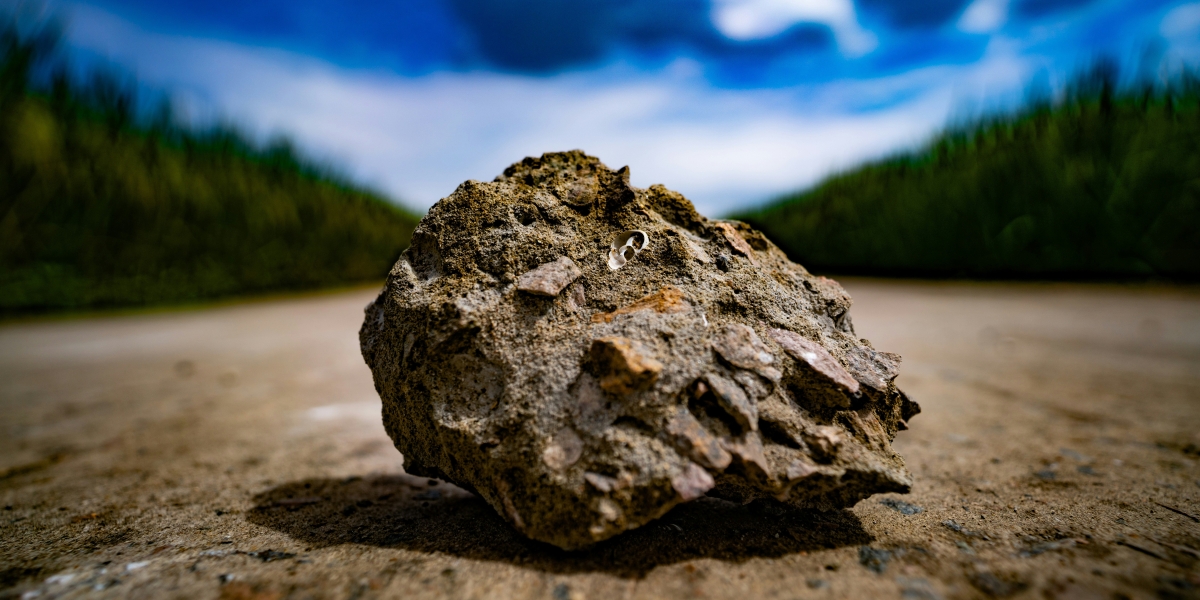
For the Rock Popper, the relevant question is not simply whether an object is large. Material composition and condition are equally important. The system is intended for rock, concrete and masonry, including hard materials that may need to be reduced into pieces that are easier to move or transport.
Even within those categories, results may vary. Existing cracks, pores, voids and layers can reduce containment. Site conditions, target dimensions, and material integrity therefore require evaluation. The manufacturer’s information should be read as product guidance rather than a promise that every target will fracture in the same way.
The brand describes its focus with the statement: “The next generation in breaking stone and concrete”
The wording identifies stone and concrete as the product’s field. It does not extend that positioning to wood, roots, or other organic material.
Safety and Preparation Remain Essential
Anyone considering the Rock Popper should begin with the manufacturer’s current instructions, certification process, and warnings. The company says certification is required before customers can purchase its charge and booster cartridges. It also advises users to check federal, state, and local requirements because rules may vary by location and project.
Work on stone and concrete can create hazards before or after fracturing. Drilling into silica-containing materials may release fine respirable dust. The Occupational Safety and Health Administration identifies drilling, cutting, and crushing stone or concrete as activities that can expose workers to respirable crystalline silica. OSHA provides standards covering exposure controls, work practices, and respiratory protection in occupational settings.
The National Institute for Occupational Safety and Health likewise explains that drilling can make silica-containing dust airborne. Applicable dust controls, personal protective equipment, and jobsite procedures should be selected by qualified personnel. Manufacturer guidance does not replace workplace rules, permits, or a site-specific hazard assessment.
Choosing Equipment Based on the Material
Before selecting the Rock Popper, the operator or project manager should identify the target material, inspect its condition and confirm that the proposed application is covered by current product guidance. Nearby utilities, structures, people, vehicles, and unstable debris can change the risk profile of a job.
For a stump, purpose-built options may include mechanical grinding, excavation or removal by a qualified tree-service contractor. The appropriate method depends on stump diameter, root spread, access, nearby utilities and plans for the land. A professional assessment is important when the stump sits near a foundation, road, fence or buried service line.
For stone, concrete or masonry, users should review the technical overview, complete required training and follow all supplied instructions. If the material is unusually soft, fractured or layered, direct guidance from the manufacturer may help determine whether the system fits the project.
A Clear Product Boundary Supports Better Decisions
The company’s position on the Rock Popper and tree stumps is direct: results have not been consistent, and the company does not vouch for effectiveness or safety in that application. Its technology is oriented toward hard, solid materials rather than the flexible and absorbent structure of wood.
Recognizing that boundary is part of responsible equipment selection. A tool can be useful within its intended field without being suitable for every removal task. Contractors and property owners can reduce uncertainty by matching the method to the material, consulting qualified professionals, and following current safety requirements.
Contact
Questions about the Rock Popper, certification, or a proposed stone or concrete application can be directed to the company at contact@rockpopper.com or 775-525-1551. Its mailing address is 1101 Maryland Avenue, Deer Lodge, Montana 59722.