By: BL Ritchey
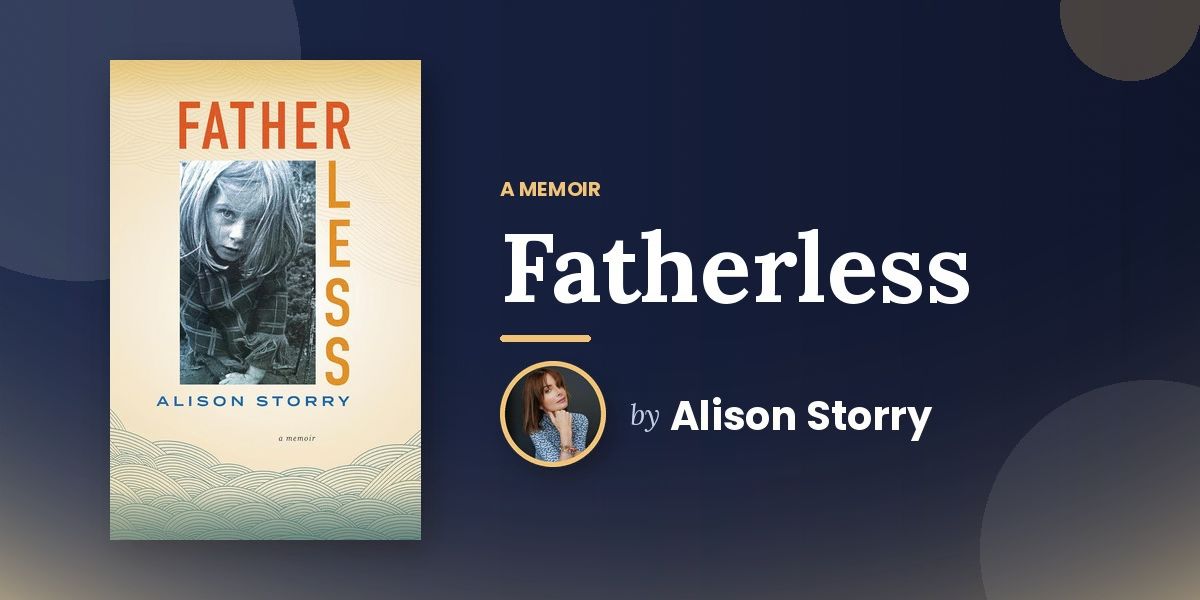
There are memoirs that tell a story, and there are memoirs that tell the truth, and the difference between them is not a matter of facts but of willingness, the specific courage required to remove the protective layer that most survivors of early childhood trauma construct between themselves and the full weight of what happened to them and to write from the exposed place underneath. Alison Storry spent fifty years constructing that protective layer, and Fatherless is the book she wrote when she finally, after a divorce trial that stripped away the last of the armor, became willing to go back without it. The result is a genuinely raw and honest debut memoir, written by a woman who has lived an extraordinary life across multiple continents and who arrives at the end of it having finally answered the question that has organized everything from the beginning.
She was seven years old, almost eight, when she learned her father had been murdered, a casualty of the Troubles in Northern Ireland. She was in a friend’s garden. It was August. The specific detail of that telling, the garden, the August, the matter-of-fact naming of where and when as if those coordinates could contain the enormity of what they frame, is characteristic of the prose throughout the memoir, which approaches the most devastating material with a restraint that somehow makes it land harder rather than softer. Storry learned early to construct what she calls a useful self, a version of her that could navigate the world with the grief held at a manageable distance, and she learned it so well that she deployed it successfully for five decades across a career as an international model, a life that took her from England to boarding school to Hong Kong to Japan to the United States and through a marriage and a divorce that finally made the distance untenable.
What Fatherless discovers as it retraces all of it, the grief and the boarding school and the Asia chapters and the marriage, is not just the answer Storry had been waiting fifty years for about her father’s death. It is the understanding of how the survival strategies that saved her as a child became, in her adult life, the source of the choices and situations that deepened the original wounds rather than healing them. That insight, arrived at through the sustained and genuinely painful examination of a life that looked successful from the outside and cost considerably more than it appeared to from the inside, is the memoir’s most valuable and most lasting contribution.
Storry writes with the clarity of someone who has finally decided that accuracy matters more than comfort, both for herself and for the reader she is trusting with this material. The memoir does not sentimentalize its protagonist or its losses, does not reach for easy redemption arcs or comfortable conclusions. It offers instead something considerably more valuable: the truth of a specific life examined without armor, and the specific kind of courage that requires.
Readers who want a memoir that earns the word raw without mistaking rawness for roughness, and that approaches devastating material with restraint and honesty, will find it in Fatherless by Alison Storry, available on Amazon. Storry waited fifty years to be ready to write it.