
Many cities across the United States have begun creating memorial architecture projects to preserve sites related to slavery, civil rights, and other events in the country’s history that are often neglected. Instead of using typical monuments as the main tool of memorialization, many modern initiatives combine archaeology, preservation, public education, and community engagement to create sustainable projects that foster interaction with the past. Such projects can be created only through the cooperation of many specialists, including architects, historians, descendants of those whose stories are told in these memorials, public officials, and representatives of cultural institutions. One of the best examples of this new way of commemorating the past is the Shockoe Project in Richmond, Virginia.
Richmond’s Shockoe Bottom neighborhood is an important site in the history of American slavery. According to historians’ studies, it was the second-largest domestic slave trading center in the United States after New Orleans in the nineteenth century. Tens of thousands of African Americans were transported there, where they had to be sold and sent to other southern states. Most of the original sites connected with that history survived in that neighborhood until recently, while some parts of the landscape have been changed due to development projects and infrastructure reconstruction. The Shockoe Project was created after long-term planning, campaigning, archaeological investigations, and discussions to preserve these sites and increase the educational and interpretative potential of these places. The total cost of the project is estimated at around $265 million; its implementation will continue until 2037 – the 300th anniversary of Richmond’s foundation.
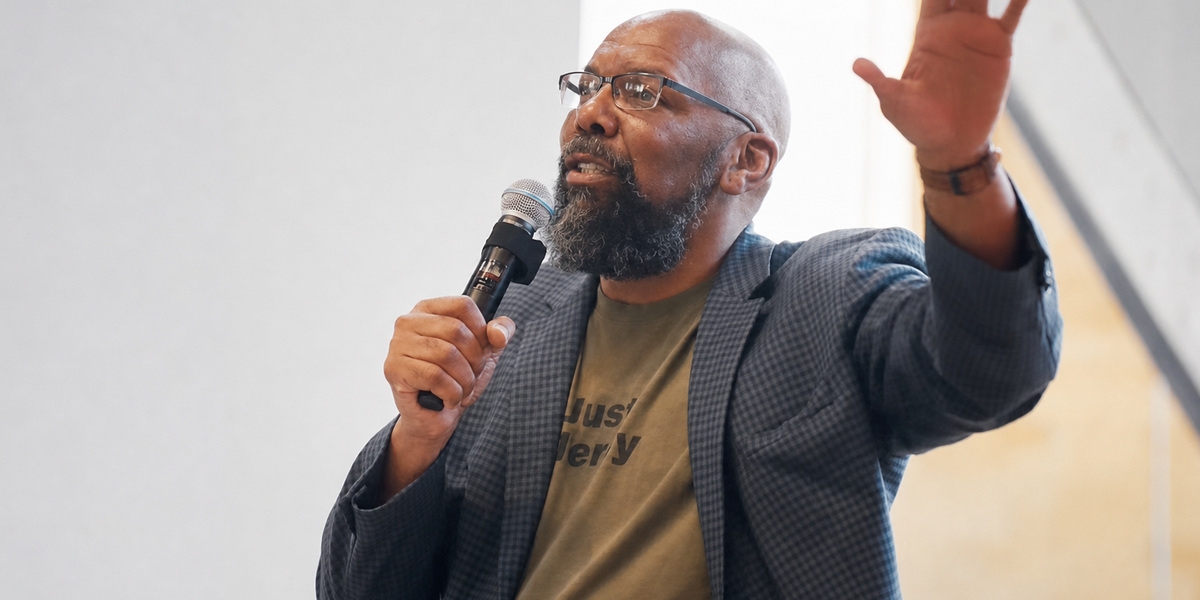
Burt Pinnock serves as the lead architect for the project’s design team through Baskervill. His role extends beyond preparing architectural plans for individual structures. Instead, the work involves developing a unified vision that connects multiple historic sites into a coordinated public landscape. The City of Richmond selected Baskervill to lead the architectural planning for the initiative, which combines preservation, interpretation, landscape architecture, and civic design. Throughout the planning process, Pinnock has worked alongside city officials, historians, archaeologists, descendant representatives, nonprofit organizations, and community stakeholders to ensure that architectural decisions reflect both historical evidence and public engagement.
The project involves several interrelated locations rather than a memorial on its own. For example, the Shockoe Institute is part of the plan. It should become the educational facility for interpreting Richmond’s history and involvement in the domestic slave trade. In addition, there are plans for establishing a future National Slavery Museum experience in the district, as well as increased public programming and exhibition space. The new facilities are meant to complement each other, stimulating visitors’ movement through the historic neighborhood rather than focusing their attention on one specific site.
Another key aspect of the project is the preservation of the historic sites in the district. For example, the Shockoe Bottom African Burial Ground, one of the major sites in the district, is to be preserved as a place of remembrance, with interpretive and landscape enhancements. Furthermore, archaeology has been carried out around Lumpkin’s Jail, previously known as one of the largest slave jails in Richmond. As a result, archaeological evidence of the site was discovered, which makes possible both the preservation and historical research of the site without reconstruction of lost buildings. The project focuses on preserving what exists and explaining the significance of each of the historic sites through landscape design.
There is also the Richmond Slave Trail that has a place within the wider master plan. Currently existing segments of the trail are to be extended and integrated with other historic sites throughout Shockoe Bottom. Public plazas, landscape gathering areas, interpretive elements, public art, and pedestrian enhancements will make that possible. According to the documents published by the City of Richmond, the aim is to connect architecture, history, and landscape in such a way that it facilitates learning.
Funding for the initiative reflects the scale of the undertaking. Early financial commitments include approximately $25 million from the City of Richmond, $13 million from the Commonwealth of Virginia, and an $11 million grant from the Mellon Foundation, while additional public and private fundraising is expected during future phases. The project has also attracted sustained attention from national and regional media outlets, including The Washington Post, Axios Richmond, Virginia Mercury, VPM News, and Next City. Coverage has frequently examined the project’s approach to descendant engagement, archaeological preservation, and the challenges of balancing urban development with the protection of historically significant places.
Collaboration has always been part of the planning and architectural design processes. Communities of descendants, conservationists, historians, archaeologists, civic groups, and government institutions have all engaged in consultations and planning throughout the development of the project. This approach to the memorial building process demonstrates a trend in memorial architecture in which public participation in the development of a design occurs before construction. Pinnock has been describing similar ideas in his public lectures and professional conversations, claiming that architecture has to contribute to civic understanding besides development. In the case of the Shockoe Project, these ideas have found their expression in a landscape created for preservation of historical information and educational purposes.
With construction beginning in the next several years, Shockoe Project will remain one of the most ambitious public history projects in progress in the United States today. A combination of architecture, archaeology, conservation, interpretation, and community participation has made this project a focal point of the national discussion on memorial architecture. Within this broader scope of activities, Burt Pinnock has acted as an architect who has managed to bring historical research and civic collaboration together into a coherent design concept.