
By: Alena Wiese
A September 2026 study found that an experimental antibody helped diabetic mice regrow nerve fibers in their paws. It is not a treatment people can get yet, so here is a plain guide to what numb, tingling, or burning feet mean and how to protect them today.
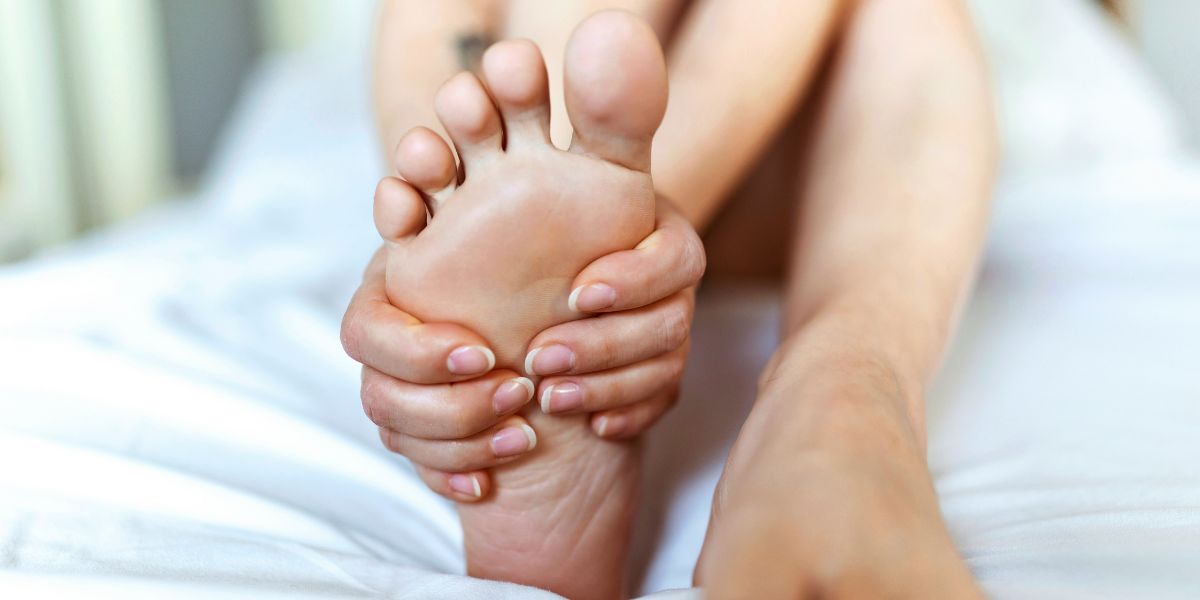
A person may first notice it at night. The sheet feels too heavy on the toes, or the feet burn after a long day of errands and school pickups. Other times it shows up as the opposite: the feet feel padded or asleep, and a pebble in a shoe goes unnoticed until a sock comes off stained.
Those sensations often point to peripheral neuropathy, damage to the long nerves that carry feeling from the feet and hands. Diabetes is the most common cause. The short answer to the question most people ask is this: in most cases, the damage can be slowed, and the feet can be protected, but no current drug is known to repair the nerves themselves. Evaluation, blood sugar control, daily foot checks, and supervised conservative care remain the practical tools.
That is why a new study drew attention this month. On Sept. 9, 2026, researchers at the University of Texas Health Science Center at Houston reported in Science Translational Medicine that lab-made antibodies blocking an enzyme called MMP-9 slowed and reversed diabetic nerve damage in mice with type 1 and type 2 diabetes. Treated mice regrew nerve fibers and showed better wound healing in their paws.
Why Do Feet Burn, Tingle or Go Numb With Diabetes?
Burning, tingling, and numbness in the feet usually happen because the smallest and longest nerves in the body are the first to be harmed by high blood sugar over time. The National Institutes of Health, through its diabetes institute, says up to one-half of people with diabetes have peripheral neuropathy.
The NIH describes symptoms that include burning, a pins-and-needles feeling, numbness, pain, and weakness. Some people also lose balance or have trouble sensing where their feet are. Diabetes is not the only cause. Mayo Clinic Health System noted in a Sept. 3, 2026 expert explainer that nerve compression, vitamin deficiencies, kidney disease, and some medications can also cause numbness and tingling, which is one reason a proper evaluation matters.
Source: Peripheral Neuropathy, National Institute of Diabetes and Digestive and Kidney Diseases, reviewed February 2018.
What Did the New Nerve Study Find?
The UTHealth Houston team found that blocking MMP-9 in diabetic mice was associated with nerve fiber regrowth and improved wound healing in the paws. MMP-9 is an enzyme that breaks down proteins between tissues. According to the university, it can drive an excessive immune response in the nerves and slow wound healing as disease progresses.
The researchers designed antibodies that block MMP-9 selectively, which has been hard to do because related enzymes look very similar. The work was partly funded by the NIH HEAL Initiative, which supports research into safer, nonaddictive pain treatments. Corresponding author Xin (Alex) Ge, PhD, said in the university’s release: “There is no good drug for managing peripheral neuropathy. There are painkillers and other drugs, but they are only targeting the symptoms.”
Source: UTHealth Houston Team Reverses Nerve Pain in Diabetic Mice, UTHealth Houston news release on a Science Translational Medicine study, via EurekAlert, September 2026.
What Does the Study Not Tell Us?
The study does not show that this approach works in people. It was done in mice, and animal results often fail to carry over to humans. There is no human trial result, no dosing information for patients, and no timeline for when, or whether, a treatment could reach a clinic.
The study also does not change what people with neuropathy should do now. Readers should be wary of any product or clinic that points to this research as proof that nerve damage can be reversed today. The honest takeaway is narrower: scientists are testing ways to treat the disease process rather than only the pain, and that work is early.
How Can People Protect Feet They Can No Longer Feel Well?
The most useful habit is simple: look at both feet every day, because numb feet cannot warn you about a blister, cut, or pressure spot. The NIH recommends daily foot checks, a foot exam by a health care provider at least once a year, and a call to a doctor right away for any foot problem. At that exam, a clinician may touch the foot with a thin nylon strand, called a monofilament, and use a tuning fork to check vibration sense.
Education appears to help people build those habits. A study published June 16, 2026, in Frontiers in Medicine followed 40 adults with diabetic neuropathy at one hospital in Saudi Arabia through a four-week foot care program based on international diabetic foot guidelines. Before the program, 67.5 percent showed poor foot self-care; afterward, 92.5 percent showed good compliance. Satisfactory knowledge rose to 85 percent.
That study was small, had no comparison group, and relied partly on self-report, so it cannot prove the classes caused the change. Still, the practical steps it taught are low cost: wash and dry feet carefully, check between toes, wear shoes and socks that fit, and do not walk barefoot, even inside the house.
Source: Effectiveness of Foot Care Guidelines on Preventive Knowledge and Self-Care Behaviors Among Patients With Diabetic Neuropathy, Frontiers in Medicine, June 2026.
When Is Numbness or a Foot Problem an Emergency?
Sudden numbness is a different problem from slow neuropathy and needs emergency care. Mayo Clinic Health System lists sudden one-sided numbness of the face, arm or leg with weakness as a possible stroke sign, and numbness in the groin with loss of bladder or bowel control as a possible spinal cord emergency. For people with diabetes, a foot wound that will not heal, spreading redness, warmth, swelling, drainage, or fever should be seen by a medical doctor promptly.
Where Can People in Hamlin and Winter Garden Get Their Feet and Nerves Evaluated?
People in Hamlin, Horizon West, Winter Garden, and Windermere can start with an evaluation at ReliefNow Disc Joint and Nerve Center Hamlin, 5736 Hamlin Groves Trail, Suite 154, Winter Garden, 407-706-4944. The clinic’s page says every plan starts with an evaluation, and it reviews nerve-related symptoms such as numbness, tingling, or burning before deciding whether a therapy is appropriate.
Diabetes is common in the area’s home state. The Florida Department of Health reported that 12.2 percent of Florida adults, more than 2.1 million people, had diabetes in 2022, above the national rate cited in the same report.
Dr. Jeffrey N. Shebovsky, DC, has more than 30 years of clinical experience and holds Florida chiropractic license CH6499. In a nerve evaluation, the first job is to sort out where symptoms are coming from: a pinched nerve in the low back can also cause tingling or burning in the feet, and that calls for a different plan than diabetic neuropathy. Conservative care such as rehabilitation and balance work may be discussed for some patients, but no clinic therapy replaces blood sugar management or care from a primary doctor, endocrinologist, or podiatrist. Open wounds, signs of infection or rapidly worsening weakness call for medical referral first.
Progress, when care is appropriate, is usually tracked with pain ratings, repeat sensation tests with a monofilament or tuning fork, balance checks, and simple questions about sleep and daily activity.
A Quieter Way to Think About It
Neuropathy tends to change slowly, and so do the habits that protect against its worst outcomes. A daily look at the feet, a yearly exam, well-fitting shoes, and an honest conversation about blood sugar will not make headlines. The mouse study might, someday, lead to something more. For now, the steadiest progress still happens at home, one pair of feet at a time.
About the Expert: Dr. Jeffrey N. Shebovsky, DC | ReliefNow® Disc Joint & Nerve Center Hamlin | 5736 Hamlin Groves Trail, Suite 154, Winter Garden, FL 34787 | 407-706-4944
Disclaimer: This article is for informational purposes only and does not constitute medical advice. Consult a qualified healthcare provider before beginning any treatment program.