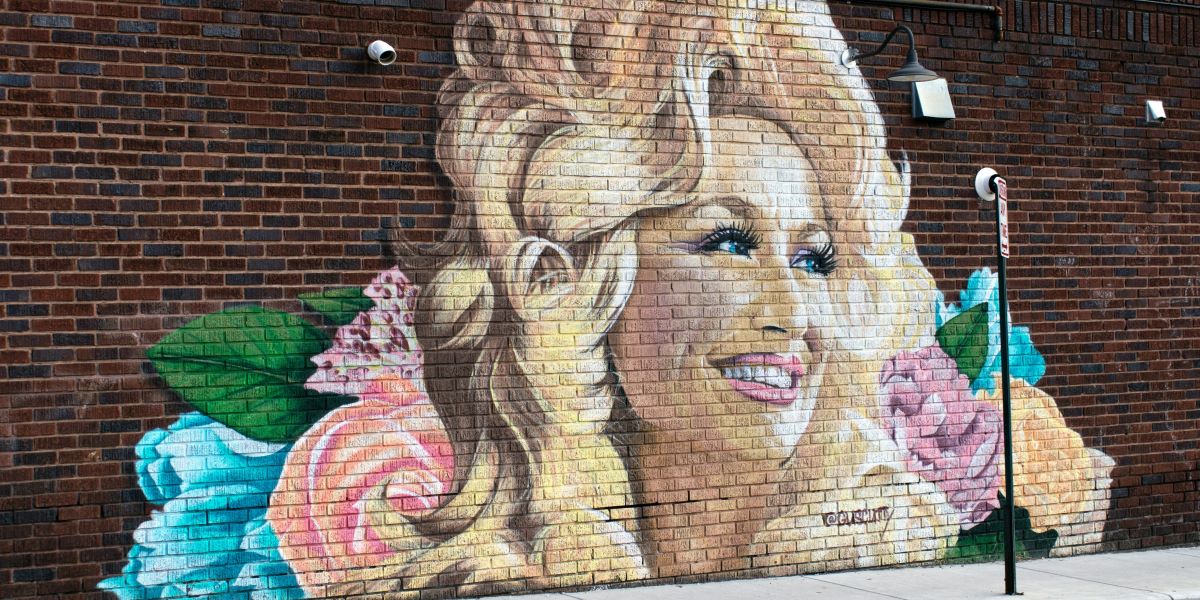
Dolly Parton died peacefully on August 25, 2026, at Vanderbilt-Ingram Cancer Center in Nashville after a brief battle with cancer. The songwriter, singer, actress, and philanthropist was 80 years old. Parton’s publicist Marcel Pariseau confirmed the cause of death, and her nephew Bryan Seaver announced the passing in a video posted to social media. Parton’s family said a small, private service will be held and requested that memorial donations be directed to her Imagination Library at imaginationlibrary.com.
Key Takeaways
- Dolly Parton died on August 25, 2026, at Vanderbilt-Ingram Cancer Center in Nashville after a brief battle with cancer; she was 80 years old.
- Parton’s career spanned seven decades and produced more than 3,000 songs, dozens of top-10 country hits, and crossover success in film, television, and theme park entertainment.
- Her Imagination Library, founded in 1995, has gifted more than 300 million books to children worldwide from birth through age five.
- Parton made a $1 million donation to Vanderbilt University Medical Center that helped accelerate development of the Moderna COVID-19 vaccine, and her contributions to a Knoxville children’s hospital were substantial enough to have the facility renamed in her honor.
- Parton was preceded in death by her husband Carl Dean, who died in March 2025 at 82 after 58 years of marriage.
- The Grand Ole Opry held a tribute performance Tuesday evening, with singer Rhonda Vincent performing “Coat of Many Colors” as a photo of Parton appeared on screen with the message “Remembering Dolly Parton 1946-2026.”
From the Smoky Mountains to Nashville: The Songwriter Who Built an Empire on Her Own Terms
Dolly Rebecca Parton was born on January 19, 1946, in a one-room cabin in Locust Ridge, near Pittman Center, Tennessee, the fourth of 12 children in a family that lived without electricity in their earliest years. She began writing songs and singing on local radio as a child and moved to Nashville the day after her high school graduation in 1964, arriving in a city where women could find work as singers but rarely as credited songwriters.
Parton insisted from the beginning that her songwriting was the foundation of everything else. In a 1989 interview, she described the calculation clearly: her outrageous look helped, her personality helped, but the writing was the root of the whole thing. That assessment proved accurate across every phase of her career. Parton was the sole author of her first number-one hit, 1970’s “Joshua,” and followed it with a string of self-penned songs that defined not just her catalog but the vocabulary of modern country music. “Coat of Many Colors,” “My Tennessee Mountain Home,” and “Jolene” each established a different facet of her artistic identity: the celebrator of beauty in humble circumstances, the chronicler of mountain life, and the narrator of desires and vulnerabilities that her audience recognized as their own.
Her partnership with veteran performer Porter Wagoner gave Parton her first national television exposure, but the arrangement also confined her to the role that Nashville most readily offered women: duet partner to a male star. By 1974, Parton was ready to leave. She wrote “I Will Always Love You” as a farewell to Wagoner, a song that reached number one on the country charts twice under her name and was later transformed into a global pop standard by Whitney Houston’s 1992 interpretation for the soundtrack to The Bodyguard.
The Crossover Years: Pop Stardom, Hollywood, and Dollywood
Parton crossed into pop music with deliberate strategy, not accident. The 1977 hit “Here You Come Again,” written by Brill Building songwriters Barry Mann and Cynthia Weil, demonstrated that her voice and presence could carry material outside the country format. By 1978, she was recording with disco-style production, and by the early 1980s she had established herself as a film actress alongside Jane Fonda and Lily Tomlin in 9 to 5, a workplace comedy whose title song Parton wrote and recorded. The song reached number one on the pop charts, making her one of the few country artists to achieve simultaneous dominance in both formats.
Film roles in The Best Little Whorehouse in Texas and Steel Magnolias followed, placing Parton alongside performers including Burt Reynolds, Julia Roberts, Sally Field, and Shirley MacLaine. The acting career reinforced what the music had already established: Parton’s appeal was not confined to a single genre or audience segment. She operated across formats, mediums, and demographics with a consistency that few performers of any era have matched.
In 1986, Parton opened Dollywood in Pigeon Forge, Tennessee, near the Smoky Mountain communities where she grew up. The theme park became a regional economic engine and a physical manifestation of the narrative Parton had been building since childhood: a mountain girl who made it to the top and brought her home with her. Dollywood has expanded continuously over four decades and employs thousands of workers in a region where tourism is the primary industry.
The Philanthropist: Books, Vaccines, and a Hospital
Parton’s philanthropic activity operated at a scale that matched her commercial output. The Imagination Library, which she founded in 1995, mails one free book per month to enrolled children from birth through age five. The program began in Sevier County, Tennessee, Parton’s home county, and expanded into a national and then international operation. By the time of her death, the Imagination Library had distributed more than 300 million books to children worldwide. The program’s infrastructure, which partners with local community organizations in each participating area, became a model for scalable literacy intervention that other philanthropic efforts have studied and emulated.
In 2020, Parton made a $1 million donation to Vanderbilt University Medical Center that was directed toward coronavirus research. The donation helped fund early development of the Moderna COVID-19 vaccine, a contribution that became public only after Parton’s name appeared in a preliminary research paper. The timing and target of the donation reflected Parton’s pattern of directing resources toward medical research rather than making gifts contingent on naming rights or public recognition. Her contributions to a Knoxville-based children’s hospital, however, were large enough that the facility was renamed in her honor.
The philanthropic work extended Parton’s public identity beyond entertainment. By the time of her death, she had become a figure whose cultural standing rested on three pillars, each reinforcing the others: the music catalog, the entertainment empire, and the charitable infrastructure. No other figure in American popular music had constructed all three at comparable scale.
The Final Years: Loss, Health, and an Unbroken Work Ethic
Parton’s final years were shaped by personal loss and declining health, though she maintained public appearances and creative output through the last months of her life. Carl Dean, her husband of 58 years, died in March 2025 at age 82. Dean had famously avoided the public dimensions of Parton’s career, rarely appearing at events or in photographs with her. Parton described him as the foundation she came home to when she was off the road, and his death was followed by a period she described publicly as being “worn down and worn out.”
In September 2025, Parton postponed a planned Las Vegas residency, citing ongoing health issues. She pushed the shows to September 2026. In October 2025, she addressed public speculation directly on social media, assuring her followers she was doing fine and captioning a post with the characteristic line, “I ain’t dead yet!” At a Dollywood appearance in March 2026, Parton told fans she had been dealing with “a few little health issues” and that her medical team was managing them.
In mid-August 2026, less than two weeks before her death, Parton canceled a scheduled Dollywood appearance, citing dehydration and dizziness. She posted on social media that her Nashville doctor had “kinda clipped my wings, saying, ‘You ain’t traveling this week.'” The post carried the tone her audience expected, self-deprecating and reassuring, and gave no public indication that the underlying condition was terminal. Her death on August 25, while surrounded by loved ones at Vanderbilt-Ingram Cancer Center, came as a shock even to family and friends who knew she was ill.
A Cultural Legacy That Crossed Every Boundary
Parton’s cultural position at the time of her death was unlike that of any other figure in American entertainment. She was claimed simultaneously by country music traditionalists and pop audiences, by conservative communities and progressive movements, by drag performers who saw her as a pioneer of self-constructed identity and by Appalachian communities who saw her as their representative to the world. Drag performer Trixie Mattel described watching Parton as witnessing her first drag show, noting that Parton put on a Dolly costume every day and played Dolly onstage in a real-life performance of herself.
Her 2022 induction into the Rock and Roll Hall of Fame underscored the point. Parton initially protested the nomination, arguing she had not earned it as a rock artist. She ultimately embraced it and released a star-studded rock album in response. The episode captured her public persona in miniature: modesty as an opening move, followed by total commitment to the endeavor once she decided to participate.
The Grand Ole Opry held a tribute performance Tuesday evening. Rhonda Vincent, who had shared the stage with Parton many times, performed a rendition of “Coat of Many Colors” as a photograph of Parton appeared on the screen behind the performers, reading “Remembering Dolly Parton 1946-2026.” Flowers and handwritten notes were left outside Parton’s studio on Elmwood Street in Nashville throughout the day.
Parton authored her own summary of her legacy, in a way, through the family’s official statement: “Dolly Parton’s legacy is one of love, compassion, and resilience. With a seven-decade career, she inspired multiple generations of artists and fans with her music and an unwavering commitment to making the world a better place. Her songs will continue to resonate with people of all ages, and her philanthropic work will have a lasting impact.”
FAQs
When and where did Dolly Parton die?
Dolly Parton died on August 25, 2026, at Vanderbilt-Ingram Cancer Center in Nashville, Tennessee. Her publicist confirmed the cause of death was a brief battle with cancer. She was 80 years old.
What was Dolly Parton’s Imagination Library?
The Imagination Library is a book-gifting program Parton founded in 1995 that mails one free book per month to enrolled children from birth through age five. The program began in Sevier County, Tennessee, and expanded internationally, distributing more than 300 million books worldwide by the time of her death.
How did Dolly Parton contribute to COVID-19 vaccine development?
Parton made a $1 million donation to Vanderbilt University Medical Center in 2020 that was directed toward coronavirus research. The donation helped fund early development of the Moderna COVID-19 vaccine, a fact that became public after Parton’s name appeared in a preliminary research paper.
Was Dolly Parton in the Rock and Roll Hall of Fame?
Yes. Parton was inducted into the Rock and Roll Hall of Fame in 2022. She initially protested the nomination, arguing she had not earned it as a rock artist, but ultimately accepted the honor and released a rock album in response.
How can people honor Dolly Parton’s memory?
Parton’s family has requested that memorial donations be directed to her Imagination Library at imaginationlibrary.com. A small, private service will be held for close family.