
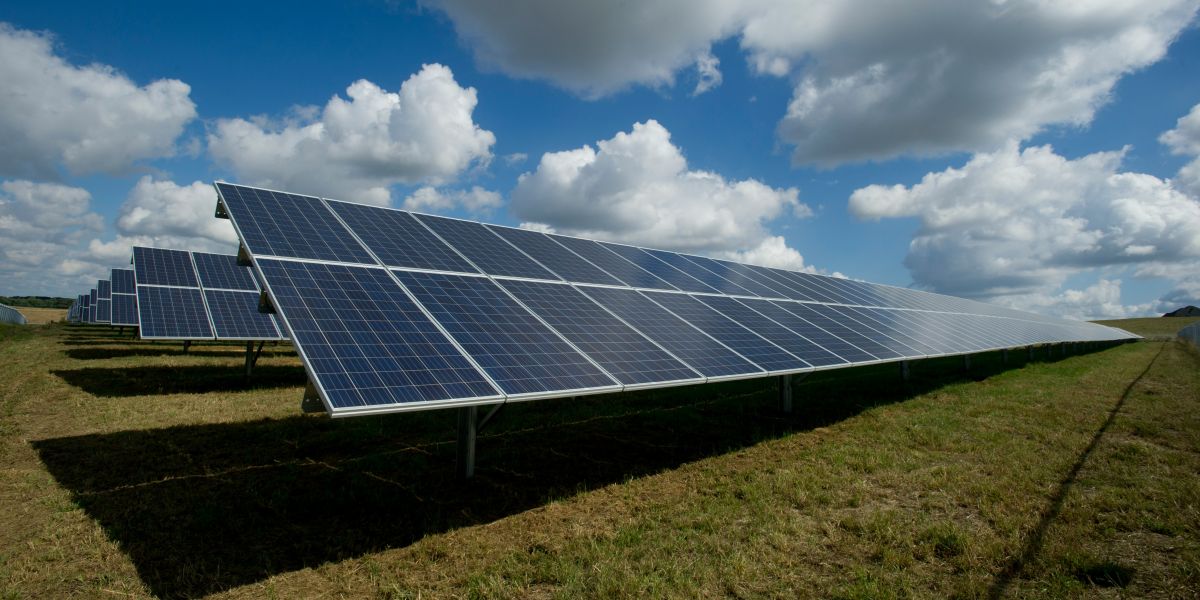
For the first time in American history, renewable energy generated more electricity than natural gas across an entire calendar month — a milestone decades in the making.
Something historic happened on the American power grid in March 2026, and it went largely unnoticed amid the noise of the news cycle. For the first time ever, the United States generated more electricity from renewable sources than from natural gas over the course of a complete calendar month. Renewables accounted for 35% of generation versus gas’s 34.4% — a margin that may look small on paper but represents the culmination of years of infrastructure investment, falling technology costs, and a steady shift in how the country powers itself.
The milestone was confirmed in late April by energy analysts tracking U.S. grid data, and it has drawn attention from clean energy researchers and economists who have been watching the crossover point approach for years. For a country that has long depended on fossil fuels as the backbone of its electricity supply, the numbers mark a genuine turning point.
How It Happened
The March crossover was not accidental. It was the product of a sustained build-out of solar and wind capacity that has been quietly accelerating throughout the country — even as policy debates about energy’s future have raged in Washington and state capitals.
Spring is always a strong time for renewable energy — the sun is shining, the winds are blowing, and the waters are flowing. The interlude between winter’s cold and summer’s heat is when demand for electricity is lowest, which means less demand for gas. This recent crossover milestone, though, is principally a consequence of all the new renewables capacity added in recent years.
That distinction matters. Seasonal patterns have always given renewables a brief edge during mild-weather months. What is different about March 2026 is that the underlying installed capacity has grown large enough to sustain that edge across an entire month of real-world electricity demand — not just for a few favorable days.
Renewables’ strong showing last spring meant that these sources plus nuclear generated more than half of U.S. electricity in March 2025 for the first time ever — with fossil fuels falling below the 50% mark. That happened again in April 2025 and March 2026. Each milestone has come faster than the previous one, reflecting the compound effect of years of grid investment.
The Numbers Behind the Shift
The March 2026 milestone arrives as the broader U.S. energy buildout reaches record scale. According to the U.S. Energy Information Administration’s latest data, a total of 86 gigawatts of new utility-scale capacity is expected to come online in 2026, a figure that would surpass the previous single-year record of 53 gigawatts added in 2025.
To put that in context: 86 gigawatts is enough capacity to power tens of millions of American homes. And nearly all of it is clean. The agency projects that 93% of that new capacity will come from solar, storage, and wind power. Solar energy leads the expansion by a wide margin, accounting for 51% of planned additions, with Texas, Arizona, California, and Michigan leading the way. Battery storage follows as the second-largest category at 28% of new capacity, continuing an exponential growth trend that has seen more than 40 gigawatts of storage added to the grid over the past five years alone.
The battery storage figure is particularly significant. One of the longstanding challenges of solar and wind power has been intermittency — the sun does not always shine, and the wind does not always blow. As battery storage capacity expands, the ability to hold and dispatch clean energy on demand grows alongside it, making the grid more stable and less dependent on gas-fired plants to fill the gaps.
Solar’s Decade of Transformation
The pace of solar deployment in the United States has been among the most dramatic technology stories of the past decade — one that rarely gets the attention it deserves outside of energy circles. In 2004, it took the world a full year to install one gigawatt of solar power capacity. Today, twice that amount goes online each day.
That acceleration has been driven by cost. Solar panels and wind turbines have become substantially cheaper to manufacture and install, shifting the economic calculus for utilities, developers, and increasingly for homeowners across the country. Where renewable energy once required subsidies to compete with gas and coal, it now wins on price in most markets.
“These projections suggest 2026 could be a banner year in terms of America tapping its vast renewable energy sources to power more of our lives,” said Johanna Neumann, senior director with Environment America Policy and Research Center. “Wind and solar don’t pollute and never run out.”
What Comes Next
The March milestone is unlikely to be repeated every month in 2026. Summer brings higher electricity demand — particularly for air conditioning — and natural gas remains the go-to source when the grid needs to ramp up quickly to meet peak load. The crossover point for summer months is further off. But the direction of travel is clear.
Solar, wind, and energy storage combined had a record year in 2025, making up more than 90% of new energy capacity added in the country. They are projected to make up 93% of what gets built in the power sector in 2026. With each new gigawatt that comes online, the window for future crossovers — including during higher-demand months — gets smaller.
For American consumers, the implications are straightforward. A grid with more solar, wind, and storage is one that is increasingly insulated from the price swings that accompany fossil fuel markets. Gasoline prices are hitting multi-year highs in 2026; electricity from wind and solar is not subject to the same supply shocks.
The March 2026 milestone did not arrive with a ribbon-cutting or a presidential announcement. It showed up quietly in the monthly grid data, a number that crossed a threshold for the first time in the history of American electricity. The country’s energy system is changing — measurably, verifiably, and faster than most expected.