
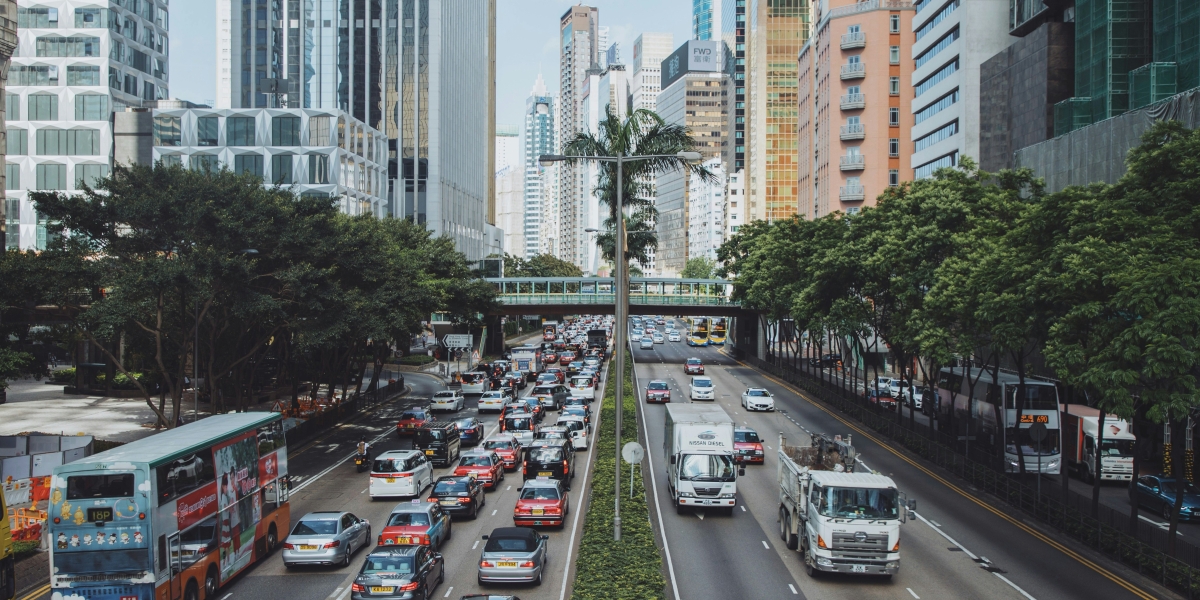
Public travel data shows how heavily Americans still depend on cars. Now startups are asking whether long-distance shared mobility can organize the empty seats already moving between cities.
America does not have a shortage of movement.
Every day, people travel between suburbs, airports, universities, job centers, and fast-growing metro areas. The problem is that many of those trips sit in an awkward middle ground. They are too long for a normal local ride-hailing trip, too short or inconvenient for a flight, and not always well served by trains or buses.
That middle ground may become one of the next major opportunities in mobility.
Public data already shows how car-dependent American travel remains. According to the Bureau of Transportation Statistics, in 2022, personal vehicles accounted for 86.8 percent of trips and 82.8 percent of person-miles traveled in the United States. The Federal Highway Administration’s National Household Travel Survey remains one of the main national sources for understanding how Americans travel, including who travels, why they travel, and what modes they use.
The cost burden is also visible. A Bureau of Transportation Statistics data spotlight reported that lower-income households spent 30 percent of their after-tax income on transportation in 2022. For families, students, workers, and new immigrants, transportation is not just a convenience issue. It is a household budget issue.
At the same time, long-distance regional travel is still heavily shaped by the private vehicle. Bureau of Transportation Statistics long-distance travel data shows that for trips of 50–99 miles, personal vehicles account for about 97 percent of trips, and for 100–249 miles, they account for about 94 percent. Even in the 250–499 mile range, personal vehicles still represent about 67 percent of trips.
That is the market gap: Americans are already making regional trips by car, but the system does not always help them share those trips efficiently.
For years, mobility startups focused heavily on city rides, delivery, scooters, autonomous vehicles, and short-distance convenience. Those markets were easier to see because the density was obvious. But another pattern has been growing in plain sight: people moving between regional hubs, college towns, airports, and suburbs, often with limited shared options.
A college student trying to reach a major airport may not need a private car service. A weekend traveler moving between two metro areas may not need a flight. A worker traveling between a smaller city and a major hub may not need a full bus route. What many of these travelers need is a trusted way to find someone already making the same trip.
That behavior already exists informally. Students use group chats. Families use community networks. Immigrant communities rely on referrals. Travelers post in local groups asking whether anyone is driving to the airport or another city. The demand is visible, but it is fragmented.
The business opportunity is to turn that informal behavior into organized infrastructure.
That is where companies like Kamuit are entering the conversation. Kamuit is a transportation technology startup focused on scheduled, long-distance shared mobility. Rather than treating every ride as an instant local trip, the company looks at recurring regional corridors where drivers are already moving and riders need predictable access.
“The demand already exists,” said Yogesh Rethinapandian, co-founder of Kamuit. “People are already driving between these cities, and people already need those same trips. The business opportunity is not creating movement from scratch. It is organizing an existing movement with trust, timing, and verification.”
Kamuit’s model focuses on structured shared rides: verified users, scheduled routes, route-based matching, and cost-sharing. The company’s early focus includes university towns, airport corridors, and regional travel clusters where existing transportation options are often limited, expensive, or inconvenient.
The idea is not to replace buses, trains, or local ride-hailing. Instead, it occupies the space between them.
That space matters because America’s transportation geography is not uniform. Dense cities may support rail and frequent buses. Rural areas may remain deeply car-dependent. But fast-growing regions often sit between those extremes. They have enough demand to create recurring trips, but not always enough public transportation coverage to make travel easy without a car.
Texas is one example. The Texas Department of Transportation says the Texas Triangle is home to more than 22 million residents and accounts for nearly 80 percent of the state’s GDP. That megaregion includes Dallas-Fort Worth, Houston, Austin, San Antonio, and surrounding areas such as Bryan-College Station, Waco, and Killeen-Temple. The economic activity is connected, but many traveler needs still depend heavily on highways and private cars.
For startups, the question is whether highways can become more than private-car infrastructure. If millions of vehicles are already moving between hubs, the unused seat capacity inside those vehicles may represent a new kind of mobility supply.
Rethinapandian says that is the point.
“We often talk about transportation as if the only solutions are building something completely new,” he said. “But sometimes the first step is making existing movement visible. If the roads are already full of people going places, technology can help organize that movement into something safer, more predictable, and more useful.”
The business case depends on solving the trust problem. Riders need to know who they are traveling with. Drivers need confidence that riders are verified and serious. Payments need to be clear. Routes need to be scheduled. Safety, identity, timing, and communication all become part of the product.
That is why long-distance shared mobility is different from casual carpooling. It is less about a one-time ride and more about building a marketplace around repeated regional behavior.
If the model works, it could open a new category between public transit and private ride-hailing. It would not remove the need for trains, buses, airport shuttles, or better infrastructure. But it could give travelers another option in corridors where those systems are incomplete.
For investors and mobility operators, that makes the category worth watching. The largest opportunities in transportation are not always created by inventing brand-new demand. Sometimes they come from organizing demand that already exists.
America’s regional travel gap is not new. What may be new is the recognition that the solution may already be on the road.