
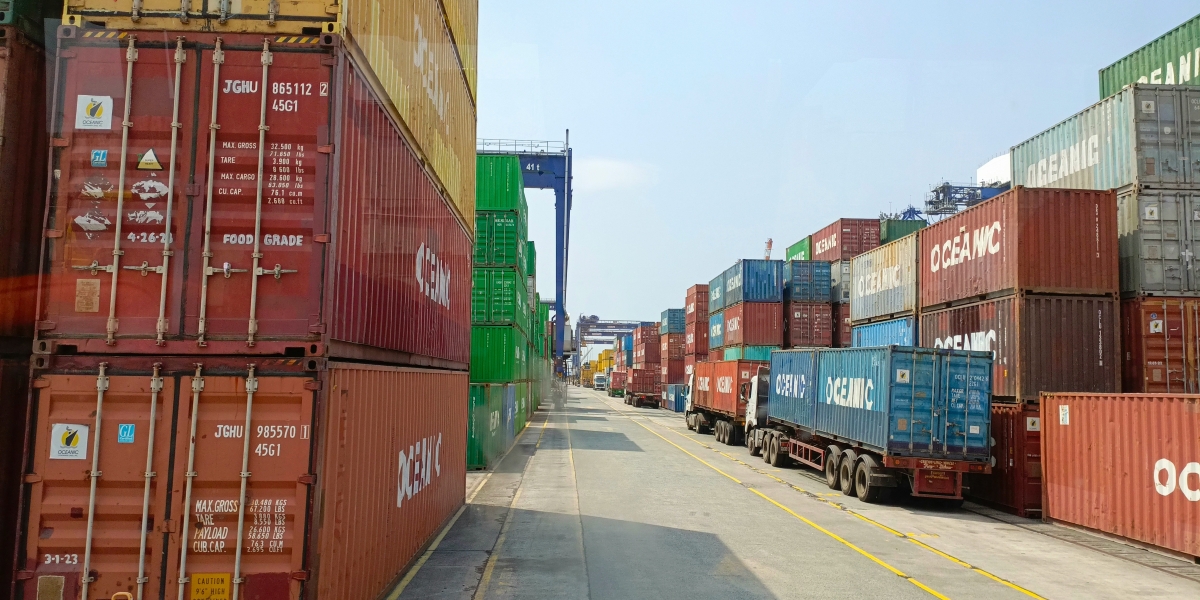
In a significant move to reshape Pacific commerce, the United States and Taiwan officially finalized a reciprocal trade agreement on February 12, 2026. The deal, hailed by the White House as a “historic victory” for American exporters, aims to lower trade barriers and deepen the economic partnership between the two regions at a critical moment for global supply chains.
The agreement establishes a fixed 15% tariff rate on specific imports from Taiwan entering the United States. In exchange, Taiwan has committed to eliminating or significantly lowering tariffs on nearly all American-made goods, ranging from agricultural products to high-tech machinery.
A Win for the American Heartland
For American farmers and manufacturers, the deal represents an immediate opening of a lucrative market. Under the new terms, Taiwan—already a top-ten trading partner for the U.S.—will remove long-standing barriers on American beef, pork, and dairy products.
U.S. Trade Representative Katherine Tai emphasized that the agreement is designed to provide a level playing field for American workers.
“This agreement is a cornerstone of our ‘Fair Trade’ initiative,” Tai stated during the signing ceremony. “By securing lower tariffs and more predictable market access, we are ensuring that American farmers, ranchers, and manufacturers can compete and win in one of the world’s most dynamic economies.”
Economic analysts predict that the deal could boost U.S. exports to Taiwan by as much as $4 billion annually over the next three years. The removal of non-tariff barriers, such as complex labeling requirements and redundant safety inspections, is expected to be particularly beneficial for small and medium-sized American businesses.
Securing the High-Tech Supply Chain
Beyond agriculture, the agreement has profound implications for the global technology sector. Taiwan is home to the world’s most advanced semiconductor manufacturing, which powers everything from American smartphones to military hardware.
By setting a fixed 15% tariff on Taiwanese imports, the U.S. provides much-needed cost certainty for American tech companies that rely on Taiwanese chips. This stability is viewed as essential for maintaining the momentum of the U.S. artificial intelligence and electric vehicle industries.
A spokesperson for the U.S. Department of Commerce highlighted the strategic nature of the deal:
“In an era of global uncertainty, securing our supply chains with trusted partners is a national security priority. This agreement doesn’t just cut costs; it builds a bridge of economic resilience that protects American innovation.”
Reciprocity and Reform
The “reciprocal” nature of the deal means that Taiwan is also making significant domestic reforms to align with international standards. This includes new protections for intellectual property and digital trade, making it easier for American software and entertainment companies to operate in the Taiwanese market.
Taiwan’s lead negotiator, John Deng, noted that the deal is a reflection of Taiwan’s commitment to open markets and democratic values.
“Taiwan is proud to be a reliable and high-standard trading partner for the United States,” Deng said. “This agreement shows the world that we are ready to play a larger role in the international economic community by adhering to fair, transparent, and reciprocal trade rules.”
Bipartisan Support and Civic Debate
In a rare moment of unity, the trade deal has received support from both sides of the aisle in Washington. Supporters argue that the deal strengthens American influence in the Indo-Pacific without the complexities of larger, multinational pacts.
However, the deal is not without its critics. Some labor advocates have expressed concerns that even a 15% tariff might not be enough to protect certain domestic manufacturing sectors from lower-cost competition.
In response, the administration has pointed to a “Rapid Response Mechanism” included in the text of the agreement. This allows the U.S. to quickly address any sudden surges in imports that could harm American workers, providing a “safety valve” for the domestic economy.
Economic Impact by the Numbers
According to preliminary data from the Department of Commerce, the agreement is expected to have an immediate impact on several key U.S. industries:
| Industry Sector | Expected Tariff Change | Projected Annual Export Growth |
| Agriculture | From ~25% to 0-5% | $1.2 Billion |
| Motor Vehicles | From 17.5% to 10% | $850 Million |
| Machinery | From 10% to 0% | $900 Million |
| Digital Services | N/A (Reduced barriers) | $600 Million |
As the global economy continues to recalibrate in 2026, the U.S.-Taiwan Trade Agreement stands as a model for “bilateralism with a purpose.” It moves away from the sprawling, all-encompassing deals of the past in favor of a targeted, enforceable, and mutually beneficial partnership.
For the American public, the deal promises lower costs for high-tech goods and more opportunities for home-grown products abroad. As President Trump noted in a statement following the finalization:
“We are bringing fairness back to trade. This deal with Taiwan is great for our workers, great for our farmers, and great for the future of American energy and technology.”
With the agreement set to take full effect by the second quarter of 2026, the world will be watching closely to see if this “fixed tariff” model becomes the new standard for international trade.