Steeling Roses is more than an artistic name. It feels like a philosophy.
Behind the pseudonym is an artist creating a visual world where strength and vulnerability coexist, where steel becomes delicate, roses become permanent, and industrial materials are transformed into emotional statements about identity, resilience, love, ambition, and modern culture. Even with limited public information available, the artistic language surrounding Steeling Roses already feels remarkably recognizable.
And that recognition comes from energy.
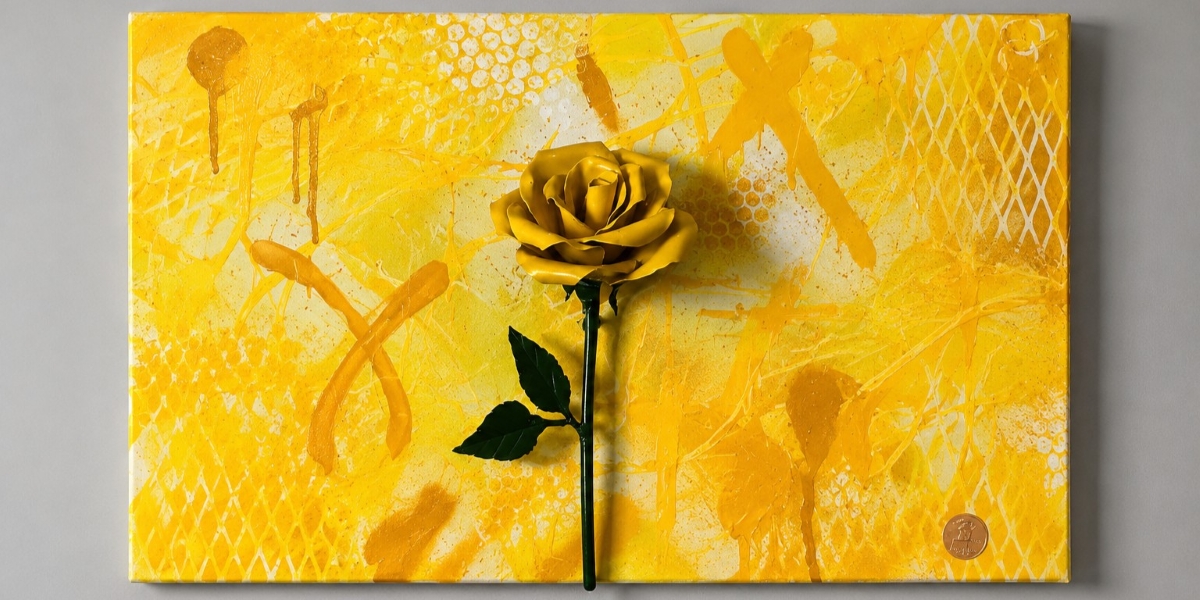
The work immediately carries presence. Welded steel roses, graffiti-inspired textures, oversized sculptural forms, symbolic numbers, fashion references, urban aesthetics, and emotionally charged visual contrasts combine to create a style that feels raw, contemporary, and deeply connected to modern street culture.
But beneath the industrial surfaces, there is something surprisingly human about the work.
The name itself captures the emotional duality at the center of the artist’s identity. Steel traditionally represents strength, survival, permanence, labor, and resilience. Roses symbolize beauty, softness, emotion, vulnerability, and memory. Combining those two ideas creates immediate tension, and tension is often where the strongest contemporary art lives.
That emotional contradiction appears throughout Steeling Roses’ creative universe.
The work balances masculinity with sensitivity, toughness with emotion, and industrial craftsmanship with personal storytelling. Pieces often feel less like decorative objects and more like symbols connected to lived experiences. Whether through sculptural roses, steel typography, graffiti references, or emotionally loaded imagery, there is a sense that every object carries personal meaning beneath the surface.
That emotional honesty is what gives the work impact.
Today’s collectors are increasingly drawn toward artists whose work feels authentic rather than manufactured. People want art that reflects identity, atmosphere, emotion, and cultural relevance, not simply aesthetics. Steeling Roses appears deeply connected to that shift in contemporary art.
The work naturally exists between multiple creative worlds at once.
Part sculpture.
Part street culture.
Part fashion.
Part emotional storytelling.
Rather than separating fine art from lifestyle, music, celebrity culture, or urban influence, the artist allows all of these worlds to coexist organically. That crossover gives the work a distinctly modern identity, particularly within today’s cultural landscape, where art increasingly lives beyond gallery walls alone.
There is also something deeply tactile about the creative process itself.
Unlike digital-heavy contemporary aesthetics, Steeling Roses creates work that feels physically built through labor, fire, welding, pressure, texture, and transformation. You can almost feel the heat and weight of the materials simply by looking at the pieces. That physical craftsmanship gives the work authenticity and presence.
The process becomes part of the story.
The sparks.
The metal.
The construction.
The reshaping of something hard into something emotionally symbolic.
And perhaps that transformation is exactly what makes the work resonate.
Many of the visual themes surrounding Steeling Roses also reflect modern ideas of identity and reinvention. The artist’s world includes references to fatherhood, entrepreneurship, celebrity collaborations, fashion, streetwear culture, and emotional symbolism, creating the portrait of someone building not only artwork, but an entire lifestyle-oriented creative identity.
That multidimensional approach feels increasingly important in contemporary art.
Today, artists are no longer simply creators working quietly inside studios. They are building worlds, atmospheres, and emotional narratives that extend across fashion, interiors, social culture, music, branding, and collectible design. Steeling Roses feels instinctively aware of that evolution.
The work looks equally natural inside modern collector homes, luxury hospitality spaces, creative studios, fashion-oriented environments, music venues, and industrial-style galleries. It carries enough boldness to command attention while still remaining emotionally accessible.
And that balance is difficult to achieve.
One of the most compelling aspects of the artist’s visual language is the use of recurring symbolism. Roses repeatedly appear throughout the work, but they never feel overly romantic or decorative. Instead, they function almost like emotional armor, symbols of beauty that survive in harsh environments. Steel structures and industrial textures contrast with softer imagery, creating psychological depth beneath the surface aesthetics.
The work does not overexplain itself.
It allows viewers to bring their own emotions and interpretations into the experience.
That mystery gives the pieces longevity.
There is also a strong instinctive quality throughout everything Steeling Roses creates. Nothing feels overly polished or creatively restrained. The work embraces imperfection, texture, roughness, and raw emotion in a way that feels genuine rather than strategically manufactured.
And in an era where much contemporary culture feels algorithmic and emotionally disconnected, that rawness becomes powerful.
Steeling Roses is not simply creating industrial artwork.
The artist is creating emotional symbolism through material itself, transforming steel into memory, vulnerability into strength, and contemporary art into something people can feel long before they fully understand it.
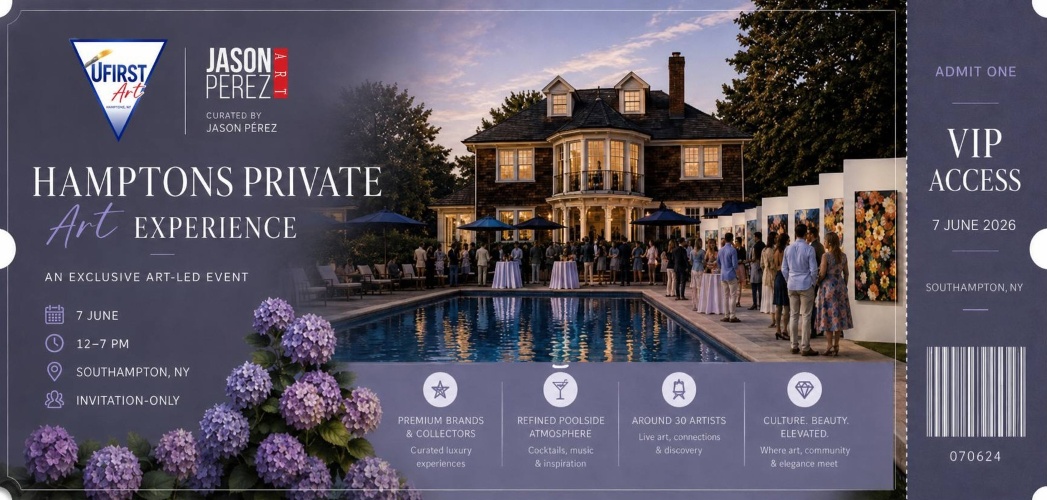
The artist’s work will be featured at the upcoming Hamptons Private Art Experience on June 7, 2026, in Southampton, New York, an invitation-only gathering produced by Jason Perez and UFIRST Art Production. Set within a private Hamptons estate, the experience brings together collectors, tastemakers, and high-net-worth guests for an elevated evening where contemporary art, curated networking, and refined summer lifestyle converge in an intimate collector-focused setting. Unlike traditional exhibitions, the event is designed to create meaningful access between artists and collectors, positioning each work within a sophisticated cultural atmosphere shaped by exclusivity, conversation, and artistic discovery.