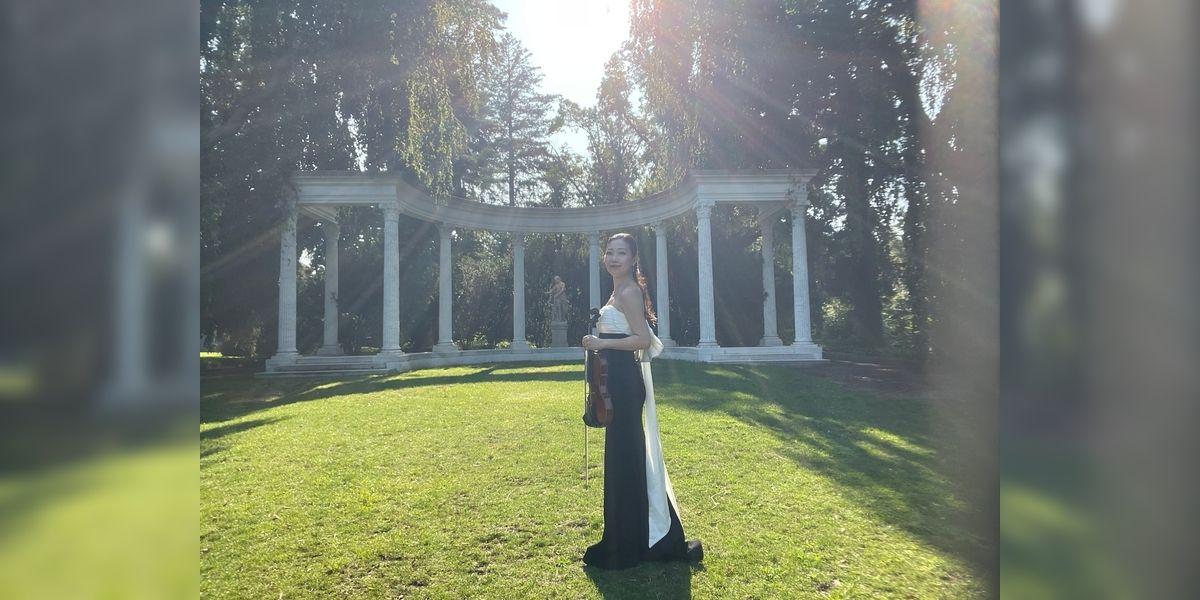

Before a performer speaks a line or an orchestra plays its first note, a stage can already tell a story. Its shapes, colors, textures, and spaces invite the audience into another world. For Georgian artist Nino Kordzadze, creating that world has been a lifelong pursuit, one that has taken her from sculpture studios in Tbilisi to opera and theater productions across borders.
Kordzadze’s work moves between disciplines. She is a sculptor, a set designer, and an artist trained in decorative and applied arts. In each field, she works with space: sometimes shaping a form that will stand on its own, sometimes building an environment that performers will inhabit. Her career shows how naturally those practices can meet. A sculptor’s attention to form gives her stage designs depth and presence; a set designer’s sense of drama brings movement and feeling to her sculpture.

Born in Tbilisi in 1972, Kordzadze grew up close to both art and disciplined professional work. Her mother was an artist and a professor at the Tbilisi State Academy of Arts, while her father was a doctor who worked in government. She began her formal art education as a child, studying at a specialized school for gifted young artists from 1978 to 1987. She then attended the Toidze High School of Arts, where she graduated in sculpture of architectural details.
Those early years gave her a foundation in drawing, materials, and three-dimensional form. At the Tbilisi State Academy of Fine Arts, where she studied from 1990 to 1996, she earned a master’s degree in decorative and applied arts. She continued her education at the Georgia State Institute of Theatre and Cinema, graduating with a master’s degree as an artist and scenographer. The combination would come to define her career: she could conceive an artwork as an object, but also understand how it might transform a room, a stage, or an audience’s experience.
A period in California broadened that perspective. In 2000 and 2001, Kordzadze lived with her family in Monterey, where she studied computer graphic arts while her then-husband attended the Naval Postgraduate School. It was another medium to add to an already varied artistic education, at a time when digital tools were opening new possibilities for visual design.
Her professional theater career began in 2003 at the Greek National Opera, where she worked as a costume artist on La Traviata. The work brought her into the collaborative world of performance, where every visual choice must serve a larger production. She subsequently worked on Les Troyens and, in 2005, designed a set for A Midsummer Night’s Dream. During this period, her work also reached Moscow’s Bolshoi Theatre through costume design for a production of the same Shakespeare play.
Invitations to work with the Tbilisi Opera and Ballet Theatre and the Rustaveli State Theatre brought her back to major stages in Georgia. Her projects included productions of Aida, Les Troyens, and Attila. In 2010, she worked with opera director Jean-Louis Grinda and artist Jean-Pierre Tasquery, an experience she described in her autobiography as a great pleasure. Her work crossed languages and theatrical traditions, but remained grounded in the same question: how can a visual setting help a story come alive?
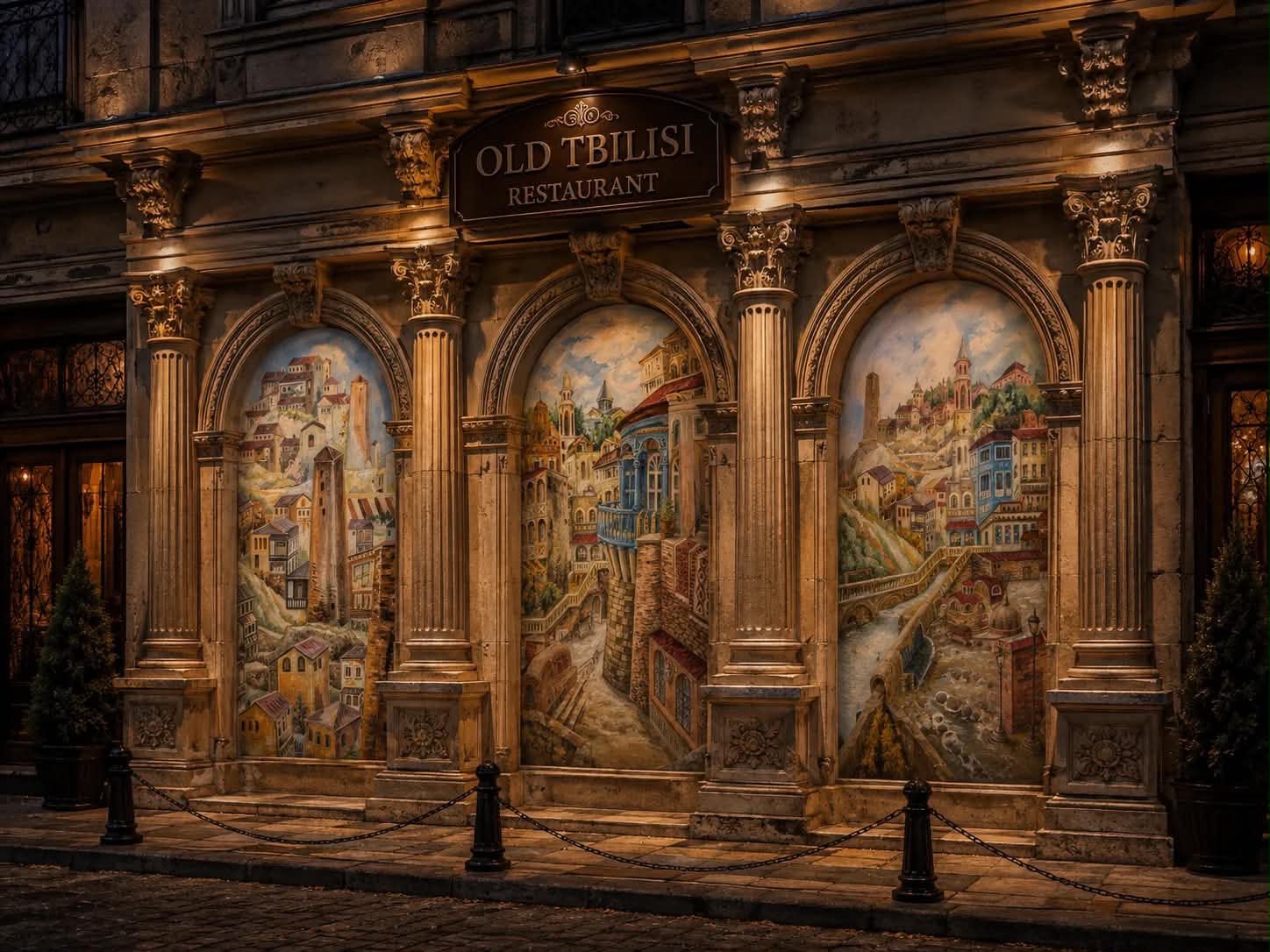
One of the most notable collaborations in her account came in 2009, when director Robert Sturua invited her to design the set for A Midsummer Night’s Dream at the Rustaveli State Theatre. According to Kordzadze’s autobiography, the production received two Grand Prix awards and gold medals for best performance and best set design at a Shakespeare festival in the United Kingdom. For an artist whose education had brought together sculpture and scenography, the recognition was a significant moment. It honored the setting as an essential part of the production’s storytelling.
Kordzadze’s sculpture developed alongside her theater work. In 2008, she won a competition for a sculptural complex at the Batumi Dolphinarium. Her autobiography records that the work was recognized as the year’s best sculpture in 2009. The project demonstrates the range of scales at which she works: from the carefully considered details of a stage to a monumental composition intended for a public setting.
She went on to win a 2011 competition for a sculptural memorial in Gori dedicated to Georgian hero Elizbar Eristavi. Her other commissions in Tbilisi included a monumental portrait of the Georgian philosopher Merab Mamardashvili. Alongside these public works, she continued to participate in exhibitions in Georgia and abroad. A 2013 letter from the Georgian International Creative Union, of which she had been a member since 1996, also recognized her contributions to sculpture and scenography.
For Kordzadze, however, artistic achievement was never confined to prizes or commissions. Among the productions she recalled was Oliver, a joint project involving the Tbilisi Opera and Ballet Theatre and the Rustaveli State Theatre. She described it as a children’s production on a large stage and wrote of how happy she was to work on it. That small personal detail reveals something important about her practice: the satisfaction of making a world that others, performers and audiences alike, can enter.
In the autobiography she wrote in 2013, Kordzadze reflected on change in both Georgia and her own life. She expressed her belief that America would be a place where she could more fully realize her potential as an artist and give her children opportunities to develop. It was a statement about the future, written after years of study, international work, and artistic recognition.
The career documented in those pages is already rich with crossings: between Georgia and the wider world, between sculpture and theater, between the permanence of a public monument and the fleeting life of a performance. Through each, Nino Kordzadze has returned to the power of form and space to carry meaning. Her work reminds us that an artist can tell a story before a single word is spoken, and leave an impression long after the curtain falls.