
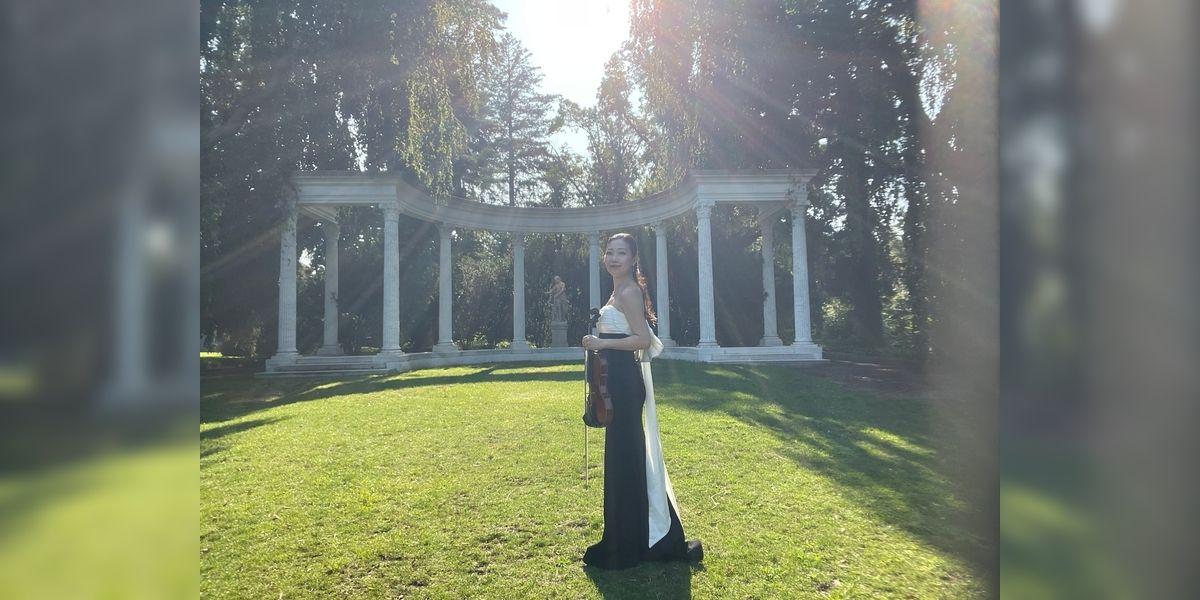
A peer-reviewed study by Xue Ding, published in the Journal of the American Viola Society, uncovers a traceable link between Franz Liszt’s rarely performed Romance oubliée and Rebecca Clarke’s Viola Sonata (1919), one of the instrument’s cornerstone works. The paper, “Reappraising a Romance Oubliée: Liszt’s Viola Piece and Its Traceable Influence on Rebecca Clarke,” argues that Liszt’s intimate late work is not merely a marginal gem but a vital source for Clarke’s masterpiece.
A Forgotten Work Reconsidered
Liszt’s Romance oubliée, published in 1881 for viola and piano, grew from a forgotten song from his youth. Reimagined late in life, it became a meditation on memory and melancholy. Dedicated to viola pioneer Hermann Ritter, a tireless advocate who commissioned the Viola alta and was endorsed by Richard Wagner, the piece is firmly situated in the viola’s historical development. Ritter’s larger instrument was designed to match the violin’s sonority, and Liszt’s dedication reflects the composer’s engagement with the viola’s growing identity as a solo voice. Ding describes the work as “a fleeting memory made sound,” one that asks not for technical display but for poetic introspection.
The Evidence: Structural Parallels
Ding’s research identifies striking parallels between Liszt’s Romance and the first movement of Clarke’s Sonata. Both begin in E minor, move to E major, and end in that major key. Both open with recitative-like viola passages: seven measures in Liszt, twelve in Clarke. Both employ shimmering arpeggiated sixteenth-note textures marked tranquillo and calmato espr., and both use flexible meter to accommodate lyrical flow. These affinities, Ding argues, transcend coincidence. She presents them as compelling evidence that Clarke’s first movement is directly and creatively influenced by Liszt’s Romance oubliée, synthesizing his programmatic ethos with her own distinctive voice.
The Musset Connection
The paper also traces a deeper aesthetic lineage through poet Alfred de Musset. Clarke’s epigraph from Musset’s La Nuit de Mai, Ding shows, invokes the programmatic tradition coined by Liszt. Musset and Liszt moved in the same Parisian circles in the 1830s; Musset’s sister studied with Liszt, and Musset introduced George Sand to him in 1834. Clarke’s quotation thus functions as a deliberate signpost, situating her sonata within a Francophone Romantic lineage connected to Liszt. “Clarke is not merely selecting a text but deliberately situating her sonata within a specific lineage,” Ding writes. “She constructs an artistic genealogy that connects her work, through Musset, to the world of Liszt.”
A First in Clarke Scholarship
The paper’s central importance lies in its claim to identify, for the first time since Clarke’s Sonata entered the public eye in 1919, a concrete and traceable source for the work’s inspiration. Clarke’s Sonata has long been admired for its emotional intensity and narrative sweep, but the origins of its aesthetic program have remained speculative. Ding’s research changes that. By connecting Clarke’s epigraph, tonal plan, recitative opening, arpeggiated textures, and flexible meter to Liszt’s Romance oubliée, the study offers a specific musical lineage where previously there was only intuition. It reveals that Clarke’s masterpiece was, in part, a creative dialogue with Liszt’s forgotten romance, an argument that reframes how performers and scholars understand the Sonata’s conception.
Why It Matters
For violists, the study offers a new interpretive lens: Clarke’s Sonata can be heard not as an isolated masterwork but as part of a living tradition rooted in Liszt’s aesthetic philosophy. For scholars, it challenges the neglect of Liszt’s late chamber music and illuminates how Romantic ideals passed across generations. Ding concludes that Romance oubliée deserves greater attention. “Its legacy, quietly echoing through Clarke’s pages, ensures that this forgotten romance is, in fact, unforgettable.”
The article appears in the Journal of the American Viola Society, the premier peer-reviewed publication devoted to viola scholarship, performance practice, pedagogy, and repertoire. Xue Ding’s work adds a significant new chapter to the history of the viola and its literature, and for the first time, traces the inspiration behind one of its most beloved works to a specific, identifiable source.