By: UFIRST Art Production
In a contemporary art world increasingly dominated by speed, trends, and visual overload, artists who create genuine emotional impact have become surprisingly rare. Yet New York-based multidisciplinary artist Joe Stublick is quietly emerging as one of the most intriguing voices of a new generation, not because he follows traditional artistic structures, but because he challenges them entirely.
Working across painting, live performance, movement, philosophy, embodiment, and emotional storytelling, Stublick approaches art less as production and more as investigation. His work consistently asks deeper questions about human identity, transformation, discipline, emotional tension, and the invisible psychological forces shaping everyday life. Rather than creating art simply to be viewed, he creates experiences designed to be felt.
What makes Joe Stublick especially compelling is the authenticity behind his work. Even his decision to create under his real name reflects his artistic philosophy. For Stublick, separating the artist from the human being has never made sense. “Authenticity is a huge part of what I do,” he explains. “The work and the life are connected.” That perspective has become central not only to his creative process, but to the entire way he approaches art, discipline, performance, and self-expression.
Long before his work appeared at major art events, Stublick’s relationship with creativity began as something deeply personal. Art became a way to process emotion, chaos, identity, healing, and transformation during periods of intense personal growth. Over time, what initially functioned as a private outlet evolved into a much larger exploration of what it means to consciously shape one’s own life.
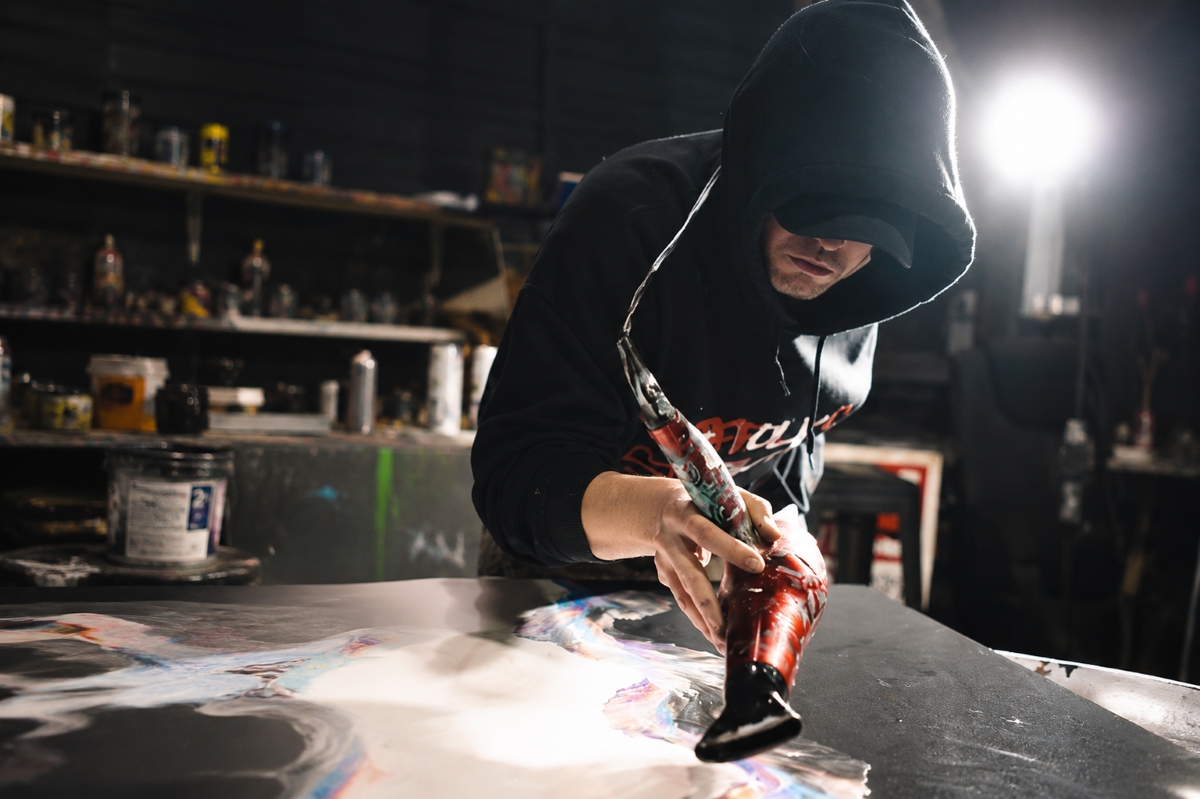
This evolution became especially significant during a major period of personal transformation that changed nearly every aspect of his world physically, emotionally, mentally, and creatively. Rather than hiding that process, Stublick allowed it to become the foundation of his artistic practice itself. The artwork became both documentation and byproduct of that evolution.
His methodology gradually expanded beyond the traditional idea of a studio practice. Discipline, habits, schedules, movement, physical embodiment, work ethic, emotional resilience, and decision-making all became extensions of the work itself. Stublick began exploring how identity is not simply declared once, but continuously reinforced through repeated action. In his world, the body, the studio, the workplace, and daily life all became interconnected systems through which transformation could be tested and observed in real time.
This deeply introspective yet highly disciplined approach quickly began attracting attention inside the international art world. Within only a short period of time, Joe Stublick’s work evolved from personal investigation into internationally exhibited contemporary art, including presentations at ArtExpo New York, The Hamptons Fine Art Fair, Art Basel Miami, and Carrousel du Louvre in Paris. Yet despite the growing visibility, Stublick’s focus remains remarkably grounded in process rather than recognition itself.
Much of his work continues returning to what he refers to as “The Invisible Line,” the threshold between intention and action, where identity is either reinforced or contradicted. Rather than attempting to resolve that tension, his work intentionally remains inside it. He examines the emotional space between chaos and order, discipline and freedom, control and surrender, past identity and future self.
That philosophy eventually evolved into one of his most ambitious projects to date, The Invisible Line: Live, a multidisciplinary immersive performance piece combining painting, improvised music, movement, aerial performance, and emotional interaction into a single evolving environment.
What makes the project especially powerful is that nothing inside it is fully predetermined. The music is not pre-written. The movement is not rigidly choreographed. Instead, every element continuously responds to every other element in real time. The musicians react instinctively to the painting. Movement reacts to sound. Emotion reacts to the atmosphere inside the room. Even the audience becomes part of the energetic exchange unfolding live in front of them.
Developed in collaboration with the Long Island-based band Funamungus, the project treats sound not as background accompaniment, but as an active force within the artwork itself. The sonic environment behaves almost like a living nervous system, building and dissolving tension in real time while influencing the pace, direction, and emotional weight of every movement occurring within the performance.
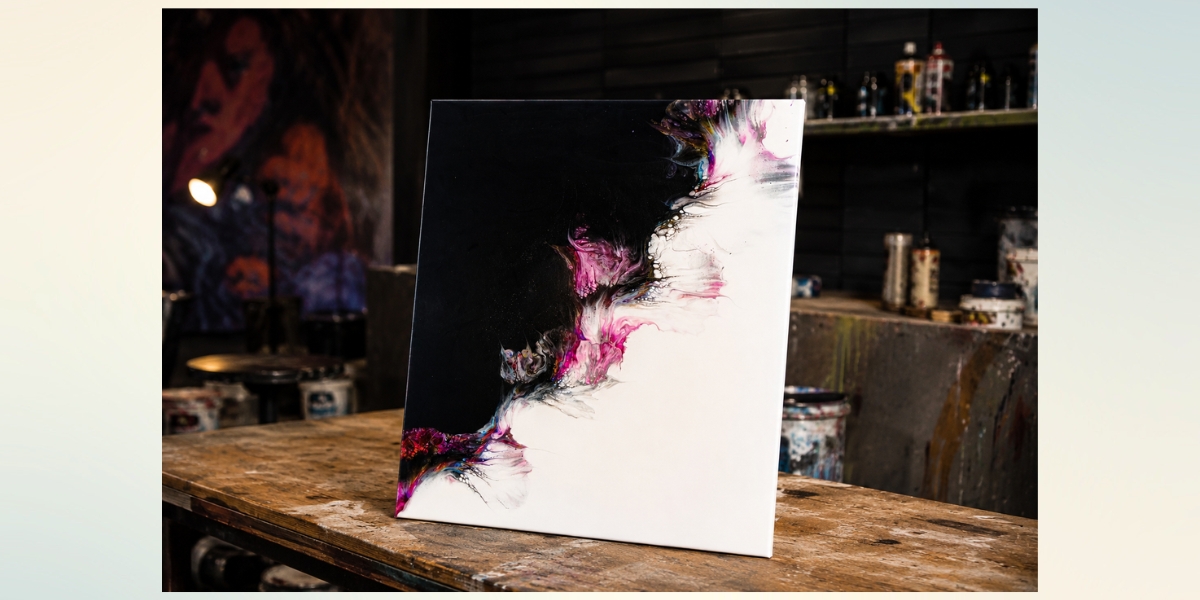
One of the most visually unforgettable moments arrives during the upside-down trapeze paint pour, where Stublick suspends himself in the air while integrating his body directly into the painting process. For the artist, this moment symbolizes surrender, releasing enough control to allow something honest to emerge naturally. The final artwork becomes less of a product and more of a living fingerprint of emotion, movement, sound, spontaneity, and human interaction existing together in one unrepeatable moment.
In another innovative layer to the work, the finished paintings are equipped with nearfield collector portals. When scanned with a smartphone, collectors gain access to exclusive audio and video footage from the exact live performance during which the artwork was created. In this way, the painting becomes not only a physical object, but a portal into the emotional experience itself.
What makes Joe Stublick’s work resonate so strongly today is that it reflects a much larger shift happening inside contemporary culture. Audiences increasingly crave experiences that feel emotionally real. People want connection, vulnerability, meaning, and immersion rather than passive observation. Stublick understands this instinctively, which is why his work naturally exists at the intersection of fine art, philosophy, performance, psychology, movement, and human transformation.
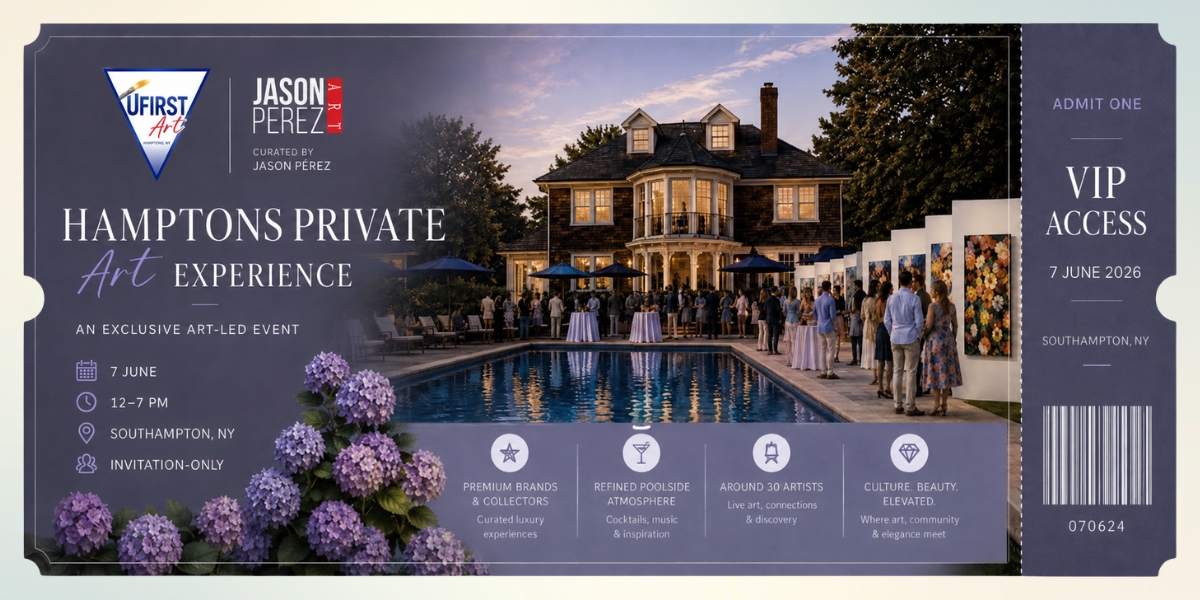
That vision is also one of the reasons his collaboration with Jason Perez and UFIRST Art Production feels especially aligned with the direction of his work. On June 7, 2026, Joe Stublick will participate in the upcoming Hamptons Private Art Experience in Southampton, New York, an immersive cultural event bringing together artists, collectors, entrepreneurs, tastemakers, luxury brands, and influential guests within an elegant private estate setting.
Designed as a next-generation art and lifestyle experience, the project moves far beyond the traditional exhibition format. Contemporary art will naturally blend with music, networking, luxury hospitality, curated installations, live DJ performances, cocktails by the pool, and meaningful human interaction. For an artist like Joe Stublick, whose work is built around emotional exchange and immersive experience, the event represents a natural extension of his philosophy.
At the same time, Stublick continues developing future projects that expand his artistic universe even further. He is currently working on a book titled The Art of Freedom, exploring identity, transformation, discipline, embodiment, and what it truly means to fully inhabit one’s own life.
Ultimately, what makes Joe Stublick stand out is not only his artistic talent but his willingness to turn life itself into an act of conscious creation. His work reminds audiences that transformation is never a single moment, but an ongoing process shaped through discipline, vulnerability, tension, surrender, and repeated action. As audiences grow more disconnected from genuine emotional experience, Joe Stublick is creating art that invites people not only to observe, but to feel, reflect, and reconnect with themselves on a deeper level.