
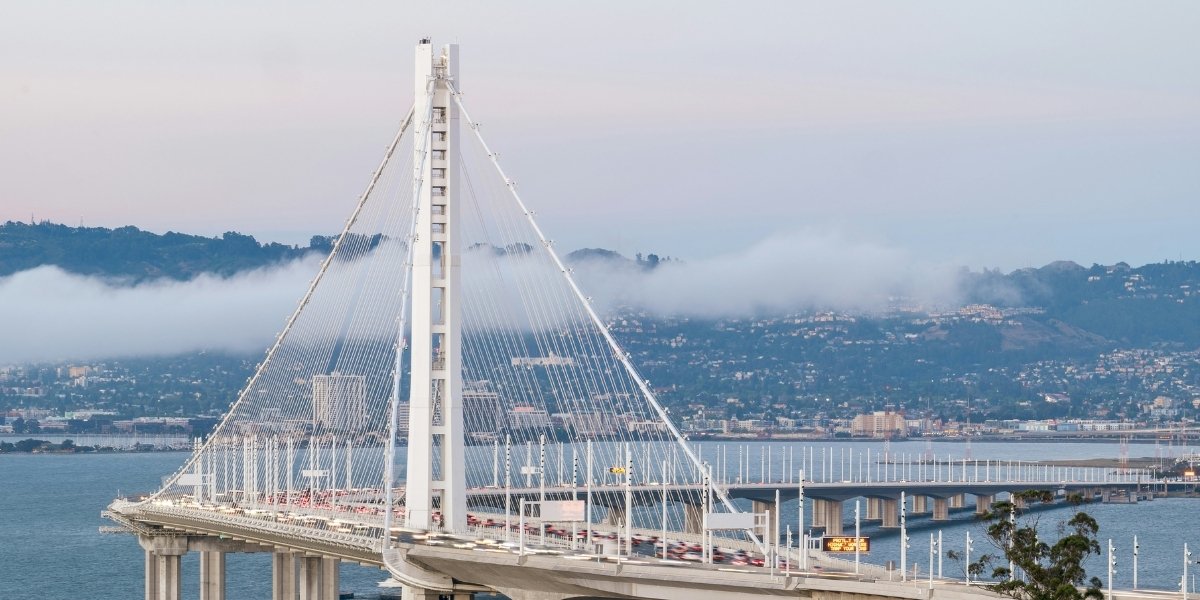
Bridges have always served as more than crossings. They are symbols of human ingenuity, products of advanced engineering, and in many cases, defining features of the cities and landscapes they inhabit. Today, a new generation of bridges is pushing the limits of what is possible in civil engineering. They span longer distances, rise to greater heights, and incorporate materials and design techniques that would have been unimaginable a few decades ago. Below is a closer look at some of the bridges that continue to redefine modern engineering.
The Millau Viaduct, France
Few bridges capture the imagination quite like the Millau Viaduct in southern France. Designed by British architect Norman Foster and French engineer Michel Virlogeux, the structure was completed in December 2004 to ease traffic congestion on the route between Paris and Barcelona.
The Millau Viaduct is a cable-stayed bridge that spans the Tarn Valley. Its highest tower reaches roughly 343 meters, taller than the Eiffel Tower and just shy of the Empire State Building. The bridge stretches 2,460 meters in length and borrows aerodynamic features from aircraft design to minimize wind resistance, allowing it to withstand wind speeds of up to 250 kilometers per hour.
Constructed using approximately 290,000 tonnes of materials, the viaduct was completed in only three years thanks to a novel construction method in which the roadway was built on either side of the towers and then rolled into the center using hydraulic systems.
The Akashi Kaikyō Bridge, Japan
Japan’s Akashi Kaikyō Bridge, also known as the Pearl Bridge, redefined what suspension bridges could achieve. Completed in 1998, it connects the city of Kobe to Awaji Island, with a central span of roughly 1,991 meters (6,532 feet), holding the record for the longest central span of any suspension bridge.
What makes the Akashi Kaikyō Bridge especially remarkable is its location. Built in one of the most seismically active regions in the world, the bridge had to be engineered to withstand earthquakes, typhoons, and powerful tidal currents. Engineers used pendulum bearings, tuned mass dampers, and counter-weights that allow the structure to absorb and dissipate seismic energy. Its central towers rise roughly 297 meters above sea level.
Notably, a major earthquake struck the region during construction. Rather than damaging the bridge, the seismic event shifted the towers slightly apart, prompting engineers to lengthen the span by nearly a meter to accommodate the new geography.
The Duge Bridge, China
China has become a major hub for record-breaking bridge construction, and the Duge Bridge in Guizhou Province exemplifies that trend. The cable-stayed bridge spans the Beipan River Gorge and stretches approximately 1,341 meters in length.
What makes the Duge Bridge extraordinary is its height. It rises roughly 565 meters above the river below, making it the highest bridge in the world. The structure required precise engineering to manage wind loads at such an elevation, along with logistical challenges in transporting materials to the remote mountainous site. The Duge Bridge highlights how modern engineering has made it possible to connect regions once considered geographically impassable.
The Helix Bridge, Singapore
Not all engineering marvels rely on size. Singapore’s Helix Bridge, opened in 2010, is a 280-meter pedestrian crossing in Marina Bay that draws its design from the structure of human DNA. The bridge’s double helix form is built from stainless steel tubes, and engineers used advanced computational design to minimize material use. The result is a bridge constructed with roughly one-fifth of the steel typically required for a structure of its size.
The Helix Bridge also incorporates five viewing platforms where pedestrians can pause to take in views of the Marina Bay skyline. At night, LED lighting illuminates the helical pattern, transforming the bridge into a sculptural landmark.
The Øresund Bridge, Denmark and Sweden
The Øresund Bridge is a hybrid engineering project that combines a bridge, an artificial island, and an underwater tunnel to connect Copenhagen, Denmark, with Malmö, Sweden. Opened in 2000, it spans roughly 7.8 kilometers across the Øresund Strait and forms a key piece of regional infrastructure linking Scandinavia with continental Europe.
The bridge section alone weighs approximately 82,000 tonnes and was designed to withstand ship collisions, aircraft impacts, earthquakes, and high winds. Beyond its transportation role, the Øresund Bridge also serves as a critical conduit for internet data transmission across the region, illustrating how modern bridges can support multiple forms of connectivity.
Engineering Trends Behind the Marvels
What unites these structures is not simply scale but the underlying engineering techniques that make them possible. Modern bridges increasingly rely on high-performance concrete, epoxy-coated rebar to resist corrosion, embedded sensors that monitor structural integrity in real time, and even self-cleaning materials. Some bridges, like Italy’s Jubilee Bridge, use concrete infused with photocatalytic agents that break down air pollutants in sunlight.
Computational design tools and aerodynamic modeling now allow engineers to test how bridges respond to wind, seismic activity, and traffic loads before construction begins. Sustainability has also become a growing priority, with designers exploring how bridges can incorporate green spaces, reduce material waste, and adapt to rising sea levels.
From the soaring heights of the Millau Viaduct to the seismic resilience of the Akashi Kaikyō Bridge, modern bridge engineering continues to demonstrate that infrastructure can be both functional and inspiring. Each new project builds on those that came before, advancing the field one span at a time.