
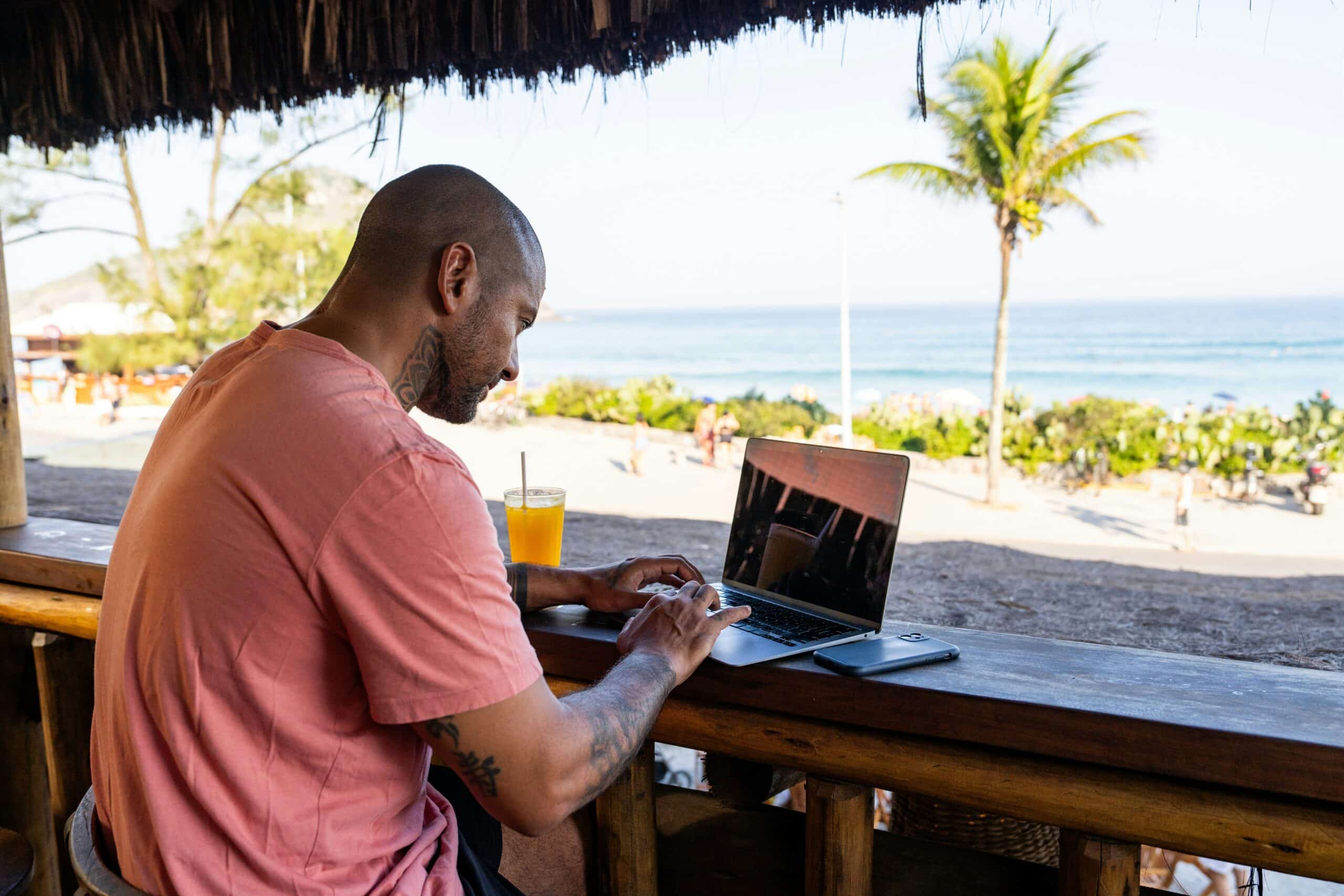
A generation ago, leaving your office meant leaving your career. Today, for millions of Americans, leaving the office means the career is just getting started.
The traditional image of remote work — a laptop on the kitchen table, a spare bedroom converted into a home office — is rapidly giving way to something more expansive. Across the United States, a growing movement of professionals is untethering from fixed addresses entirely, blending work with travel, and redefining what a productive career looks like. The nomadic lifestyle, once the province of tech-savvy freelancers and startup founders, has gone mainstream — and the data behind it is reshaping how businesses, governments, and workers think about where and how Americans earn a living.
The Numbers Tell the Story
There are now over 40 million digital nomads worldwide, with 18.1 million from the United States alone — an increase of 147% compared to 2019 figures. That surge was accelerated by the pandemic, sustained by technological infrastructure, and is now being normalized by a workforce that has discovered it can deliver professional results from virtually anywhere with a reliable internet connection.
Almost four in ten American workers say their ideal work arrangement has seen a post-pandemic shift. Among remote workers, 37% say they would work remotely from another country if their employer allowed it. That figure is not aspirational chatter — it reflects a structural change in how U.S. workers are thinking about the relationship between geography and employment.
In 2026, remote work has reached 52% of the global workforce, nearly doubling since pre-pandemic levels. In the United States, over 32.6 million people work remotely, making up 22% of the national workforce. For context: that is more Americans living the remote-work reality than the entire population of Texas.
Who the Nomads Actually Are
The popular image of the digital nomad as a twenty-something backpacker freelancing from a Bali beach house does not match the data. Today’s nomadic professional is typically a mid-career knowledge worker: 49% of digital nomads are aged 30 to 39, with 38% aged 40 and above. The 2026 profile is a tech-literate, mid-career professional from the U.S., often traveling with a partner or family.
Over one-third of digital nomads earn between $50,000 and $100,000 annually, and 90% have completed higher education. These are not people opting out of professional life — they are people optimizing it, trading commute times and fixed addresses for flexibility, lower costs of living, and direct control over their environments.
The industries driving this shift skew toward the knowledge economy. Technology leads all sectors in remote work adoption, followed by project management, sales, operations, and customer service. But the nomadic workforce now includes accountants, educators, healthcare administrators, marketing professionals, and legal consultants — roles that would have been considered office-bound just a decade ago.
What Is Driving the Shift
Three forces are converging to make the nomadic lifestyle increasingly practical for a wider slice of the American workforce.
The first is technology. Cloud-based collaboration tools, high-bandwidth satellite internet, AI-assisted communication platforms, and the broad availability of co-working spaces worldwide have eliminated most of the logistical barriers that once made distributed work impractical. Remote work is expanding from working from home to working from literally anywhere — while traveling, at a local park, or in another country entirely.
The second is the global proliferation of digital nomad visas. More than 50 countries now offer digital nomad visas, reflecting how aggressively governments are competing to attract globally mobile professionals. These visas allow remote workers, entrepreneurs, and freelancers to live abroad legally while continuing to work remotely for employers or clients elsewhere. Portugal, Spain, Greece, Italy, Estonia, Croatia, Costa Rica, and Thailand are among the most popular destinations, each offering legal frameworks specifically designed to attract American remote workers. For governments, the appeal is straightforward: remote workers bring outside income, spending power, and entrepreneurship without directly competing for local jobs.
The third is employer acceptance — or in some cases, employer necessity. Companies with remote work options now have a 25% lower employee turnover rate, and 63% of job seekers prioritize remote work options when searching for a new position. In a labor market where top talent holds significant leverage, restricting location has become a competitive liability for employers.
The Trade-Offs Are Real
The nomadic lifestyle is not without friction. Over half of digital nomads report difficulty finding reliable Wi-Fi connections. Twenty-nine percent cite communication challenges caused by time zone differences, and 32% report feelings of homesickness or isolation from family and friends.
Tax complexity is another layer. For Americans, digital nomad visas provide legal residency abroad but do not change U.S. tax obligations. American remote workers must still file a U.S. tax return on worldwide income, though they may qualify for the Foreign Earned Income Exclusion — up to $132,900 for the 2026 tax year — if they spend 330 or more days outside the United States in any 12-month period. Navigating double taxation treaties, social security obligations, and host-country tax treatment requires planning that many first-time nomads underestimate.
There is also a broader social dimension. High-earning foreign remote professionals are unintentionally reshaping local economies in cities like Lisbon, outpricing locals and driving up rents and daily living costs — an unintended consequence of the freedom to work from anywhere.
What Comes Next
The trajectory is not slowing down. Digital nomadism in 2026 is mainstream. Expect growth in nomads who maintain a home base but travel seasonally — especially among families — and rising participation from women and Gen Z professionals driven by online entrepreneurship and flexible career design.
For American businesses, the pressure to accommodate this shift will only intensify. Twenty-nine percent of employees indicate they would look to leave their job if it became fully in-person, a figure that concentrates in exactly the high-skill, high-demand roles that companies most need to retain.
The nomadic lifestyle is no longer a fringe experiment. It is a structural feature of how millions of Americans are choosing to build careers — and companies, policymakers, and communities that ignore it are already falling behind those that do not.