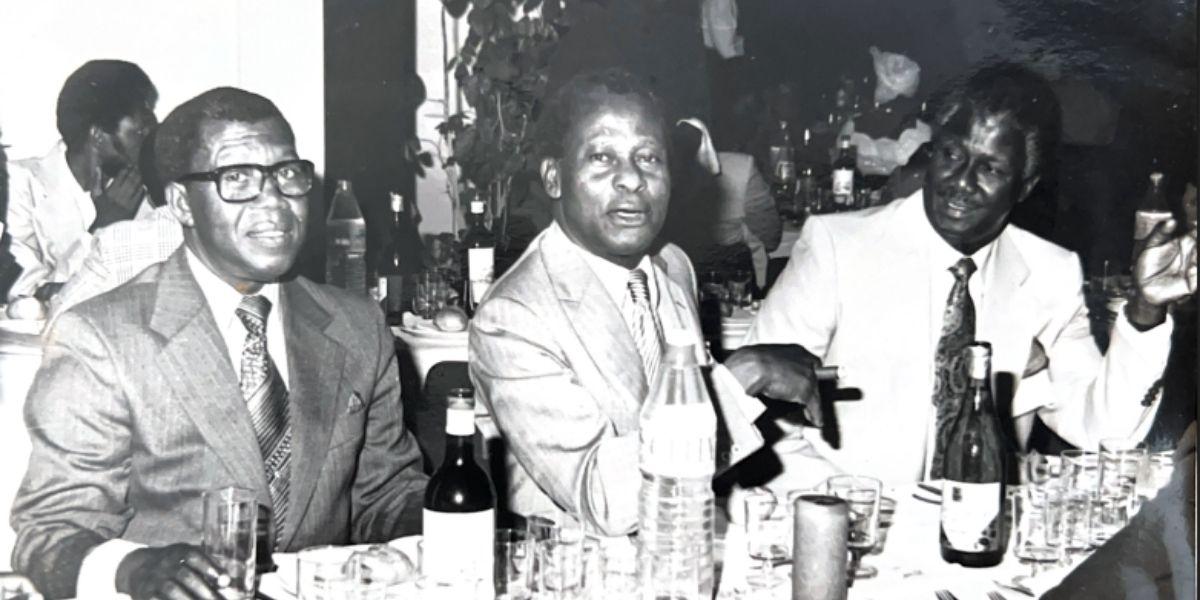
The development of modern medicine is dependent not only on hospitals and doctors but also on institutions that provide medical training, regulate their conduct, and determine national health policy. After Ghana’s independence, the country made great efforts to develop the necessary infrastructure. Training doctors, regulating the profession of a doctor, and administering public health were among the top priorities, as this country needed to replace colonial institutions with its own. This was reflected in the creation of the Ghana Medical School. Among the physicians who contributed to these developments was Dr. Matthew A. Barnor, whose work extended beyond clinical practice into medical education and institutional development.
When Barnor returned to the Gold Coast in 1949, aspiring doctors from the territory still depended largely on overseas medical schools for their education. Ghana did not admit its first medical students until 1962, when the Ghana Medical School began operating before later becoming part of the University of Ghana. The first class graduated in 1969, marking an important milestone in the country’s effort to educate physicians locally. These developments followed decades of discussion about creating a national medical school capable of meeting Ghana’s growing healthcare needs.
Barnor became closely associated with those efforts through his work within the Ghana Medical Association and the wider medical community. According to published accounts, he supported the campaign to establish local medical education and, in 1962, served on the interim council of the medical school before its incorporation into the University of Ghana. During the institution’s first decade, he lectured students on professional responsibility and medical ethics, subjects regarded as important to the development of clinical practice and professional conduct. His involvement reflected the contributions of practicing physicians who helped shape the school’s early academic environment while continuing their own medical careers.
Barnor’s work also extended into national health administration during a period of political transition. After the new government took control in 1966, the National Liberation Council evaluated various public organizations, including aspects of the health care and educational systems. Barnor was a member of various national health committees at that time and continued to serve in the administration of Prime Minister Kofi Abrefa Busia, who took office in 1969. This involvement can be attributed to the advisory role of senior members of the medical community regarding the organization of health care and medical institutions in those years.
Professional regulation became another important area of Barnor’s public service. According to published records, he was a member of Sir Rowan Bolan’s working party that helped establish the Medical and Dental Council in 1972. The Council became responsible for regulating medical and dental practice, maintaining professional registers, and helping safeguard standards within the profession. Barnor later served as a member of the Council and held the position of treasurer from 1974 until 1979. His work formed part of wider efforts to strengthen professional accountability at a time when Ghana’s healthcare system was becoming increasingly complex.
These developments occurred alongside broader growth within Ghana’s medical sector. The establishment of the University of Ghana Medical School created opportunities for doctors to receive medical education within the country, reducing dependence on overseas institutions. In later years, additional medical schools expanded that capacity, while regulatory bodies strengthened oversight of professional practice. Barnor’s contributions were directed toward these institutional developments rather than solely individual clinical work. His involvement reflected the wider commitment of many physicians who helped create the organizational framework needed to sustain healthcare services for future generations.
Barnor also remained active in professional organizations beyond medical education. He was the president of the Ghana Medical Association from 1963 to 1966. He also contributed significantly to discussions of medical practices, ethics, and healthcare policy throughout most of his life. Later, he became the chairman of the management committee of the University of Ghana Legon Hospital, which provided healthcare services to the university while also fostering medical training. These experiences showed the involvement of doctors of his generation in combining clinical practice with administration and education at the development stage of Ghana’s healthcare facilities.
The recognition of Barnor’s institutional achievements took the form of various professional awards, including his fellowship from the West African College of Physicians in 2003 and the Doctor of Science (Honoris Causa) from the University of Ghana in 2004. When Dr. Matthew A. Barnor died in June 2005, Ghana already had its well-developed medical school, a working regulatory body, and institutions that were greatly different from those that existed when he returned in 1949. His career remains associated with the generation of physicians who helped build the educational and professional structures that continue to support medical practice in Ghana.