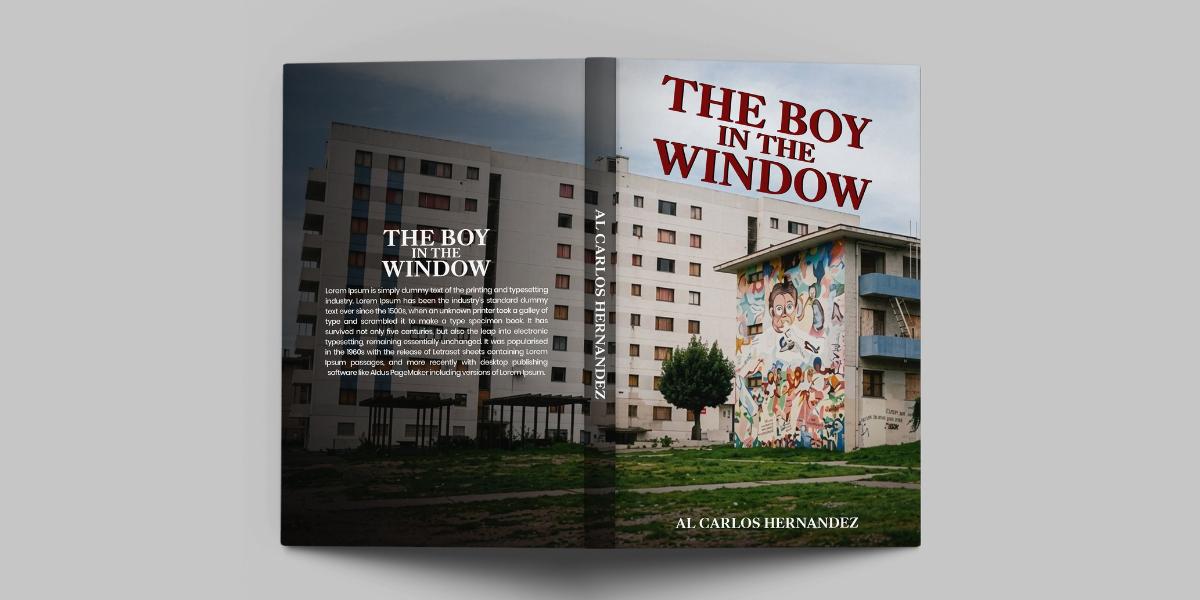
By: Sophie Williams
Long before diversity and inclusion were corporate buzzwords, Dr. Alan Carlos Hernandez was on the front lines of the battle for Latino representation in American media, carrying not a picket sign, but a press pass.
Growing up in the federal housing projects of San Francisco’s Mission District, Hernandez witnessed firsthand the systemic discrimination that plagued his community. “Many of the people that I grew up with are drug dealers and gangsters,” he says bluntly. “I understand that mentality. But I realized I was different.”
That difference manifested in activism. He joined the Brown Berets, a militant Chicano group that protected their community from police brutality. “There were no Latino police or black police,” he recalls. “We had an obligation to defend ourselves.”
His brother, who would later become a distinguished judge, provided an alternative blueprint. While Hernandez wanted to join the gangs, his brother wanted to join the Boy Scouts, only to be rejected because he “lived in the projects.” Decades later, that same brother delivered a keynote speech to the National Boy Scouts of America. “He doesn’t have a chip on his shoulder,” Hernandez says. “He understands the realities of life.”
For Hernandez, media became the ultimate tool for fighting those realities. “When we’d have a demonstration, if the media didn’t show up, it didn’t happen,” he explains. “So I chose media to make it happen.”
He enrolled at Cal State Hayward and became the first Latino Editor-in-Chief of the Daily Pioneer. He leveraged alliances with feminists and other minority groups to elevate marginalized voices. “If we don’t speak for ourselves with authority, our stories won’t be told,” he emphasizes.
That philosophy propelled him into radio. At KFRC San Francisco, he hosted a weekend show, playing everything from salsa to rock. But his most audacious move came when he accepted the position of Program Director at KBRG, a Spanish-language FM station.
“I couldn’t speak Spanish,” he laughs. “I was all hat and no cattle.” Despite that, he applied modern rock radio techniques and won the International Latin Program Director of the Year award in 1980, only to be fired when they realized he couldn’t actually speak the language. “Aggressive ignorance,” he calls it.
The setbacks didn’t break him. He pivoted to record production, teaching, and journalism. He served as the West Coast Regional Editor for Nuestro magazine, the first national Latino people magazine. Today, he is the Deputy Managing Editor of Herald de Paris et Cie, an international portal reaching 165 countries, where he has conducted over 200 A-list interviews.
His commitment to representation extends beyond his own career. He taught Mass Communications at Patten University for nine years, shaping the next generation of media professionals. “I tell them, ‘It’s not the grades you make, it’s the hands you shake,'” he says.
In 2026, Hernandez received the Top Latino Professional Award from the New York-based publication Top Latinos, recognizing his contributions to the community.
For Hernandez, the fight for representation is far from over. He points out that the music industry has sidelined homegrown Latinos in favor of imported Mexican nationals. “They’ve cut the local and local-originated music out of the mix,” he says. “That’s by design.”
But he remains defiant. “We have a rich tradition, we have a rich culture, and a tremendous amount of familial stability and love,” he says. “My ethnicity doesn’t hold me back; it empowers me.”
Dr. Alan Carlos Hernandez is proof that activism takes many forms, sometimes in the streets, but often in the newsroom, the classroom, and the recording studio.