By Dr. Goodman, DC + Dr. Bradberry, DC | ReliefNow Laser Charlotte | Charlotte, North Carolina
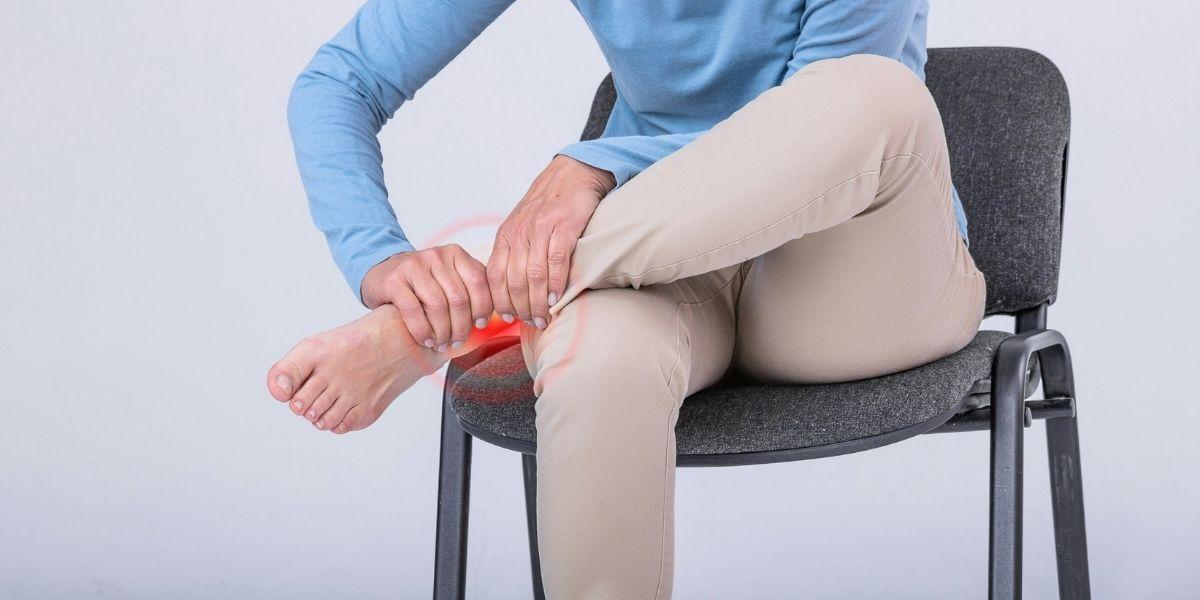
Plantar fasciitis is the most common cause of heel pain in the United States, affecting approximately 2 million Americans each year. For Charlotte’s runners, CrossFit athletes, cyclists, healthcare workers, and the retail and service employees whose livelihoods depend on staying on their feet, the pattern is familiar. A stabbing heel pain greets them with the first steps of the morning, eases as they move, then returns after any prolonged activity. That pattern is a recognized clinical signature of plantar fasciitis, and it often persists despite repeated cortisone shots and stretching routines that have already fallen short.
Chronic plantar fasciitis that lasts beyond six weeks is, pathologically, a tendinosis. It is a degenerative condition rather than an inflammatory one. Cortisone injections can calm inflammation in acute cases, but in chronic cases they tend to offer only temporary relief while the underlying tissue degeneration continues. For that reason, the clinical conversation around chronic cases has shifted toward regenerative approaches rather than anti-inflammatory ones.
Dr. Goodman competes in 5k races, Spartan races, and CrossFit, so he understands firsthand what it means to train through foot pain. Dr. Bradberry runs, cycles, and plays soccer, the same repetitive loading activities that place stress on the plantar fascia. Both doctors approach plantar fasciitis as athletes who have lived with foot pain themselves, not only as clinicians who have read about it.
What Is Plantar Fasciitis and Why Doesn’t Standard Treatment Work?
The plantar fascia is a thick band of connective tissue that runs from the heel bone to the base of the toes. Research published in the Journal of Bone and Joint Surgery established that chronic plantar fasciitis is, at the tissue level, a tendinosis, marked by disorganized collagen fibers, new blood vessel growth, and an absence of the classic inflammatory cells. That distinction matters. Anti-inflammatory treatments, including cortisone injections, tend to fall short in chronic cases because they target inflammation that is no longer the primary problem.
A 2010 systematic review in the Journal of Foot and Ankle Surgery reported that cortisone injections for plantar fasciitis were associated with plantar fascia rupture in roughly 2 to 10 percent of cases. The same review noted a link to fat pad atrophy, a potentially permanent complication that can compromise the heel’s natural shock absorption.
What Does the Regenerative Medical Laser™ Protocol Do for Plantar Fasciitis?
The Regenerative Medical Laser™ protocol used at ReliefNow Laser Charlotte applies medical-grade, near-infrared laser energy to the plantar fascia. Class IV laser therapy of this kind is designed to support the body’s own tissue-repair processes at the cellular level, an approach that differs fundamentally from anti-inflammatory treatment. The published research on the modality is encouraging. A 2014 randomized controlled trial in Lasers in Medical Science found that laser therapy was associated with reductions in plantar fasciitis pain and improvements in function, with outcomes that compared favorably to ultrasound therapy.
What Does Dr. Goodman’s Neurokinetic Therapy Add for Heel Pain Patients?
The calf muscles, the gastrocnemius and soleus, pull on the plantar fascia through the Achilles and its fascial connections. When motor patterns in the calf, hip, and core fall out of balance, they can load the fascia unevenly and keep aggravating the tissue. Dr. Goodman’s neurokinetic therapy training is aimed at identifying those motor contributors, which is often why stretching and orthotics on their own leave patients with lingering symptoms. He works to address those patterns alongside the laser protocol, so the biomechanical factors are considered rather than the cellular ones alone.
What About Charlotte’s Running and CrossFit Communities Specifically?
Charlotte supports one of the most active running and fitness communities in the Southeast. Between the U.S. National Whitewater Center, the greenway trail system, and the many CrossFit and functional fitness gyms across Mecklenburg County, local clinicians see a steady stream of plantar fasciitis cases. At ReliefNow Laser Charlotte, every patient starts with a comprehensive lower extremity evaluation that looks at foot mechanics, calf mobility, and gait pattern. That assessment is used to identify the specific contributors behind each person’s symptoms so the treatment plan can be tailored accordingly.
To learn more about the practice, visit ReliefNow Laser Charlotte. Patient education videos are available on the ReliefNow patient education channel. ReliefNow Laser Charlotte is located at 4601 Park Rd, Suite 100, Charlotte, NC 28209, and can be reached at 704-527-7246.
About the Authors
Dr. Eric Goodman, DC — UNC-Charlotte, Palmer College of Chiropractic; training in neurokinetic therapy, acupuncture, laser, rehabilitation, and nutrition. A CrossFit athlete and 5k and Spartan racer, he volunteers with Habitat for Humanity, United Way, and the Rotary Club.
Dr. Douglas Bradberry, DC — University of Florida; graduated with honors from Palmer College of Chiropractic; CCSP, with experience in Olympic sports medicine. Both doctors are providers in the national ReliefNow® network, founded by Dr. Robert Hanopole, DC.
Disclaimer: This article is for informational purposes only and does not constitute medical advice. Consult a qualified healthcare provider before beginning any treatment program.