
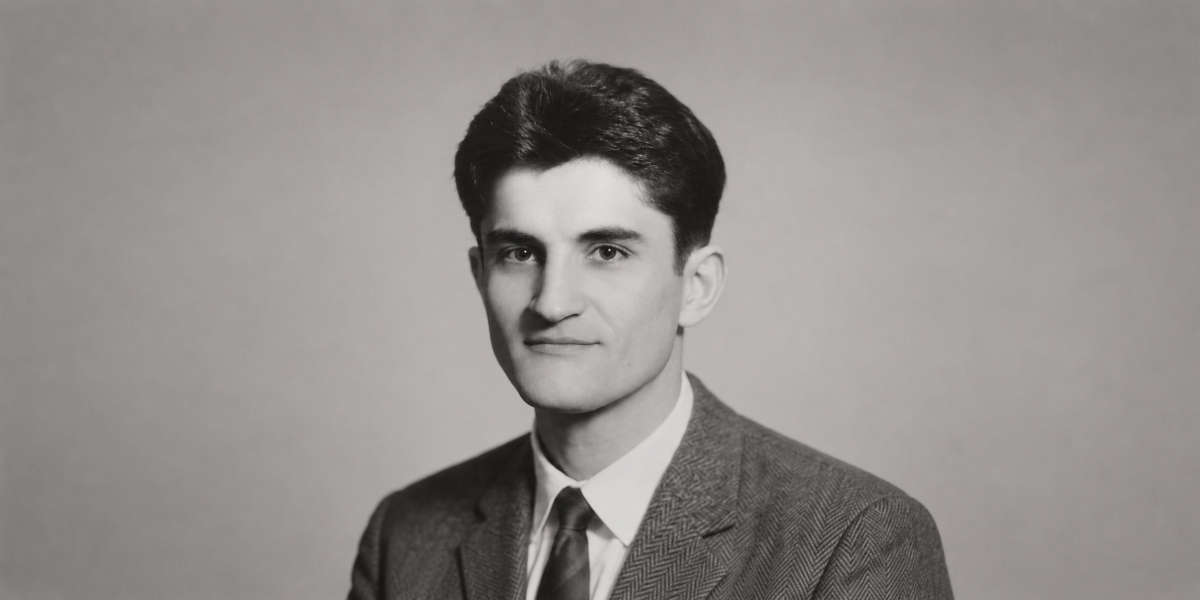
The life of Dr. Ernesto Nikolaos Argyris was defined by intellectual courage, disciplined inquiry, and a profound belief in humanity’s ability to understand the universe. A distinguished physicist, respected educator, and generous supporter of culture, he built a remarkable career spanning Greece, the United States, Canada, and some of the world’s most important scientific institutions. His journey stands as a testament to the power of education and to the lasting influence one dedicated individual can have across countries and generations.
Born on August 22, 1937, on the Greek island of Lefkada, Dr. Argyris grew up surrounded by the natural beauty and cultural richness of Greece. Yet his ambitions soon carried him far beyond the island. At a time when pursuing an international education demanded exceptional determination, he traveled to the United States to study physics and mathematics, subjects that require not only intelligence but also patience, imagination, and an unwavering commitment to discovering the truth.
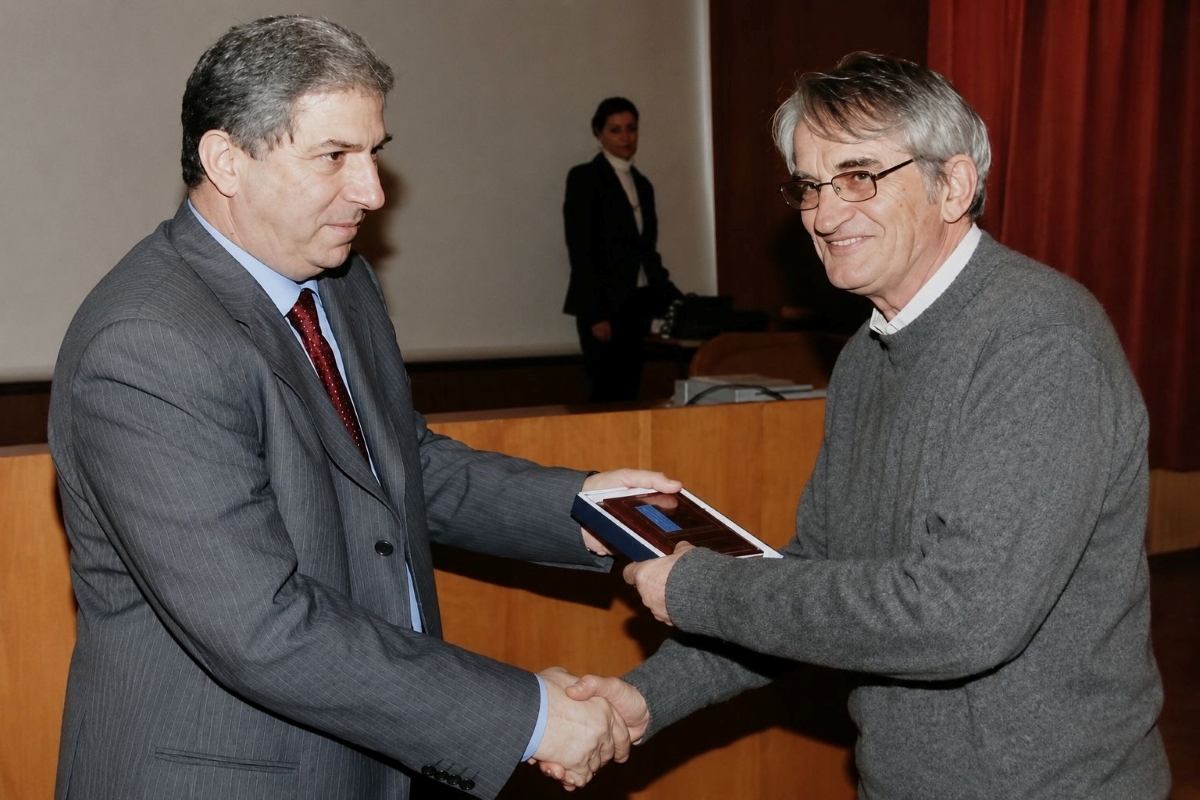
Dr. Argyris attended the University of California, Berkeley, one of the world’s leading academic institutions. In 1959, he earned a Bachelor of Arts degree with a major in mathematics and physics. Berkeley’s demanding intellectual environment provided a strong foundation for his future work and placed him within a community shaped by scientific innovation. His education there represented the beginning of a lifelong exploration of the fundamental principles governing matter, energy, and the universe.
He continued his graduate studies and earned a Doctor of Philosophy in Physics from Tufts University in Massachusetts in 1967. Completing a doctorate in physics is an achievement requiring years of concentrated research, original thinking, and personal discipline. For Dr. Argyris, it was not simply an academic distinction; it marked his entry into an international scientific community united by a shared pursuit of knowledge.
Following his doctoral studies, Dr. Argyris became a research associate in the Department of Physics at McGill University in Canada. He later served as a full professor in the Department of Physics at the State University of New York at Plattsburgh. In the classroom, he was able to share more than formulas and theories. He introduced students to a way of thinking: carefully, independently, and without fear of difficult questions.
The influence of an exceptional professor cannot always be measured by titles or publications. It can also be found in the confidence inspired in a student, in the curiosity awakened during a lecture, and in the careers shaped through guidance and encouragement. Dr. Argyris belonged to a generation of scholars who regarded teaching as both a responsibility and a privilege. His academic work connected scientific excellence with the deeply human task of preparing others to carry knowledge forward.
In 1984, Dr. Argyris entered another significant chapter of his career as a researcher at the Institute of Nuclear and Particle Physics at Greece’s National Centre for Scientific Research “Demokritos.” He remained associated with the institution until his retirement, contributing his international experience to the development of scientific research in his homeland.
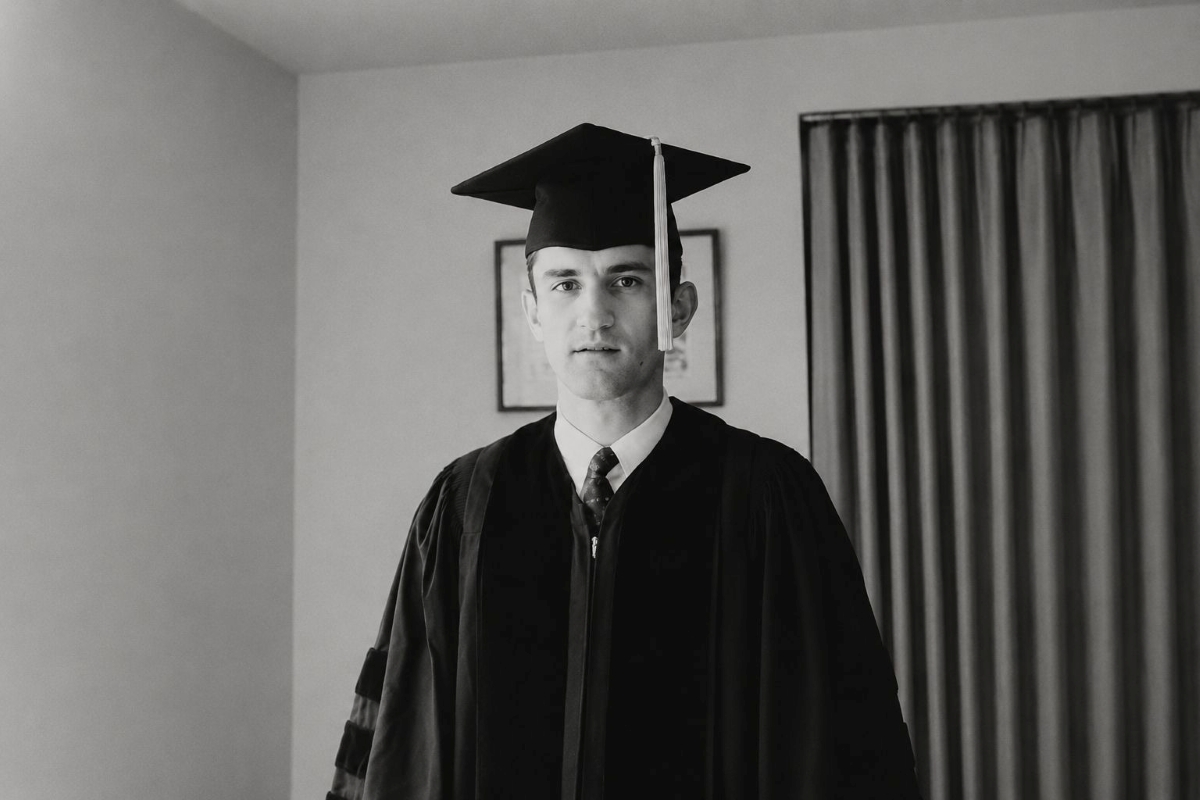
His principal field was theoretical high-energy physics, an area devoted to some of the most fundamental questions in science. Researchers in this discipline seek to understand the smallest components of matter, the forces that govern their interactions, and the deeper mathematical structure of the physical world. This work frequently deals with phenomena that cannot be directly observed in everyday life, requiring sophisticated mathematics, creativity, and the ability to imagine realities far beyond ordinary experience.
Throughout his career, Dr. Argyris collaborated with scientists and institutions across national borders. His professional path also included an association with CERN, the European Organization for Nuclear Research. CERN represents international science at its most ambitious: researchers from many countries working together to examine the fundamental structure of the universe. His connection to such an institution reflected the international scope of his expertise and the respect he earned among fellow scientists.
Dr. Argyris’s life, however, cannot be understood through science alone. He also possessed a deep appreciation for fine art and culture. He recognized that science and art, although expressed through different languages, share an essential purpose: both attempt to reveal what lies beneath the visible surface of the world. Science searches through evidence and mathematical reasoning; art reaches understanding through imagination, emotion, and form.
His support for artists, including both emerging and established talents, revealed his generosity and breadth of vision. He understood that a healthy society needs laboratories and universities, but it also needs artists, creativity, and cultural memory. By encouraging artistic expression, he helped others find the confidence to develop and share their work.
The story of Dr. Ernesto Nikolaos Argyris is therefore not merely the biography of an accomplished physicist. It is the story of a man who crossed oceans in pursuit of education, devoted decades to research and teaching, brought valuable knowledge back to Greece, and remained open to the beauty of creative expression. His journey connected Lefkada with California, Massachusetts, Canada, New York, Athens, and the wider European scientific community.
Although Dr. Argyris has passed away, the meaning of his life remains present. It survives in his scientific contributions, in the institutions he served, in the students and colleagues he influenced, and in the artists whose creativity he encouraged. His legacy reminds us that knowledge becomes most valuable when it is shared, and that a truly accomplished life is measured not only by personal success, but by the possibilities it creates for others.
Dr. Argyris will be remembered with admiration, gratitude, and enduring respect: as a scientist of distinction, an educator of principle, a supporter of culture, and a man whose life expanded the horizons of those around him.