By: Rachel Greenfield, Business & Philanthropy Reporter
Funding remains one of the most persistent and consequential barriers to quality STEM education in American schools. Districts in rural and lower-wealth areas often lack the budget to purchase advanced equipment, build dedicated technology labs, hire specialized instructors, or send teachers to professional development programs. The result is a two-tiered system where a student’s access to STEM education depends heavily on their zip code. Betabox, an education technology company based in Raleigh, North Carolina, has developed a partnership model designed to break that pattern by bringing private and public sector funding directly to the schools that need it most.
The company operates what it calls an impact partner network, a coalition of industry sponsors, higher education institutions, government agencies, and philanthropic organizations that collaborate to fund and support STEM programming in underserved communities. Through this network, Betabox has served more than 325,000 students across over 1,000 schools and 150 school districts in 125 counties since its founding in 2015. The network functions as a bridge between organizations that want to invest in education and schools that need investment but lack the connections to secure it independently.
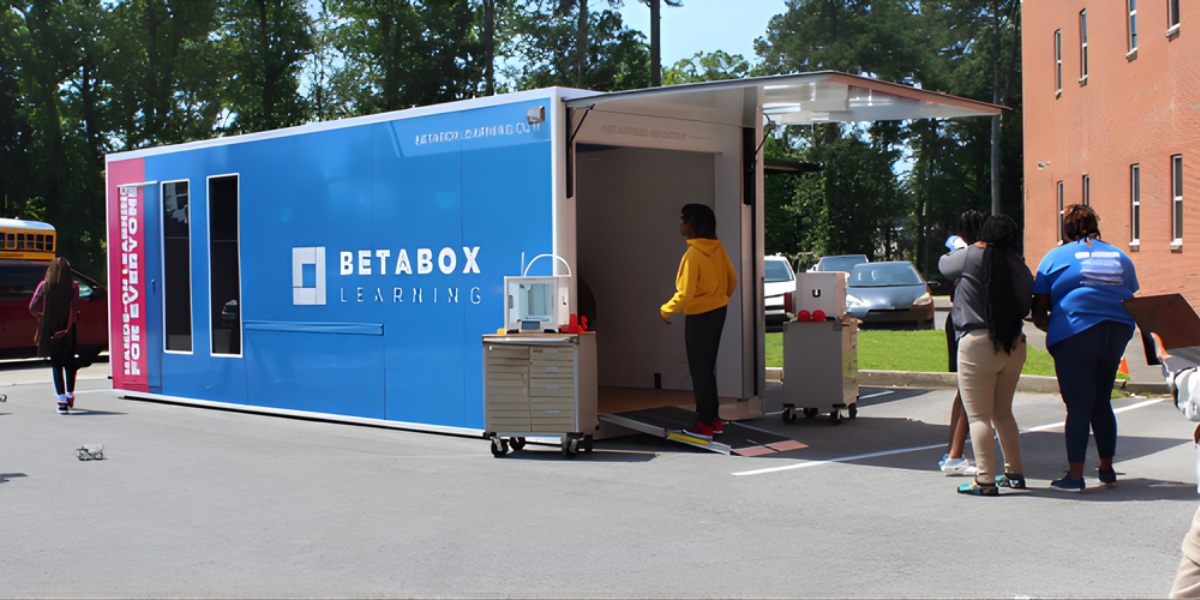
The partnership model works on a straightforward premise. Organizations that rely on a strong K-12 education pipeline, whether for workforce development, community engagement, or corporate social responsibility objectives, can partner with Betabox to direct resources toward specific schools, districts, or regions. Partners can fund individual onsite field trips that bring mobile STEM labs to campuses, hands-on project kits for classroom use, teacher professional development workshops, or comprehensive multi-year implementation plans that build sustainable STEM capacity across an entire district.
Several high-profile partnerships illustrate how the approach works in practice. Google partnered with Betabox to launch a STEM tour of North Carolina school districts, bringing mobile labs and hands-on technology experiences to rural communities that had never had access to this type of programming before. AARP and Booz Allen Hamilton partnered with Betabox to deliver a week-long technology education program in Washington, D.C., using Betabox’s mobile infrastructure to introduce older adults to emerging technologies such as virtual and mixed reality. The University of West Alabama partnered with Betabox to extend K-12 STEM outreach programming across its service region, creating a pipeline between local schools and the university’s STEM programs.
For corporate partners, the value proposition extends well beyond philanthropy. Companies facing talent shortages in technical fields can use the Betabox platform to build awareness of career opportunities among students in regions where they operate, manufacture, or recruit. The program creates a direct and measurable connection between industry investment and workforce pipeline development. Partners receive detailed reports on participation, engagement, and learning outcomes that can be shared with stakeholders, boards, and CSR teams.
Betabox provides partners with what it calls ImpactOS, a platform that tracks and reports on the outcomes of funded programs. Partners receive data on student participation numbers, engagement metrics, and learning outcomes, supported by third-party evaluation research that examines changes in students’ STEM content knowledge and STEM identity. This level of accountability and transparency makes it easier for organizations to justify continued investment and demonstrate the tangible impact of their education spending.
The model also benefits higher education institutions that are looking to strengthen their enrollment pipelines and community relationships. Colleges and universities that partner with Betabox can extend their outreach into K-12 communities, building relationships with prospective students years before they apply and demonstrating their institutional commitment to educational equity and access.
Government partners at the state and local level have also engaged with the Betabox platform. The company works with government agencies to align its programming with state education priorities, standards, and funding mechanisms, helping districts access available grant money and allocate it effectively toward STEM capacity building. This alignment ensures that Betabox programs complement rather than compete with existing state-level education initiatives.
The company positions itself as a facilitator rather than a competitor in the education ecosystem. Rather than replacing existing programs, personnel, or curricula, Betabox provides the tools, training, and coordination that districts need to build sustainable STEM capacity. The impact network model ensures that funding flows to where it is needed most, and the company’s turnkey approach means that schools can begin implementation quickly without extensive planning, infrastructure investment, or procurement delays.
For organizations interested in supporting STEM education through the Betabox impact network, the company offers partnership planning calls to design custom programs tailored to specific goals and geographies. Schools and districts seeking funding can submit applications through the company’s website.
More details are available at betabox.com.