
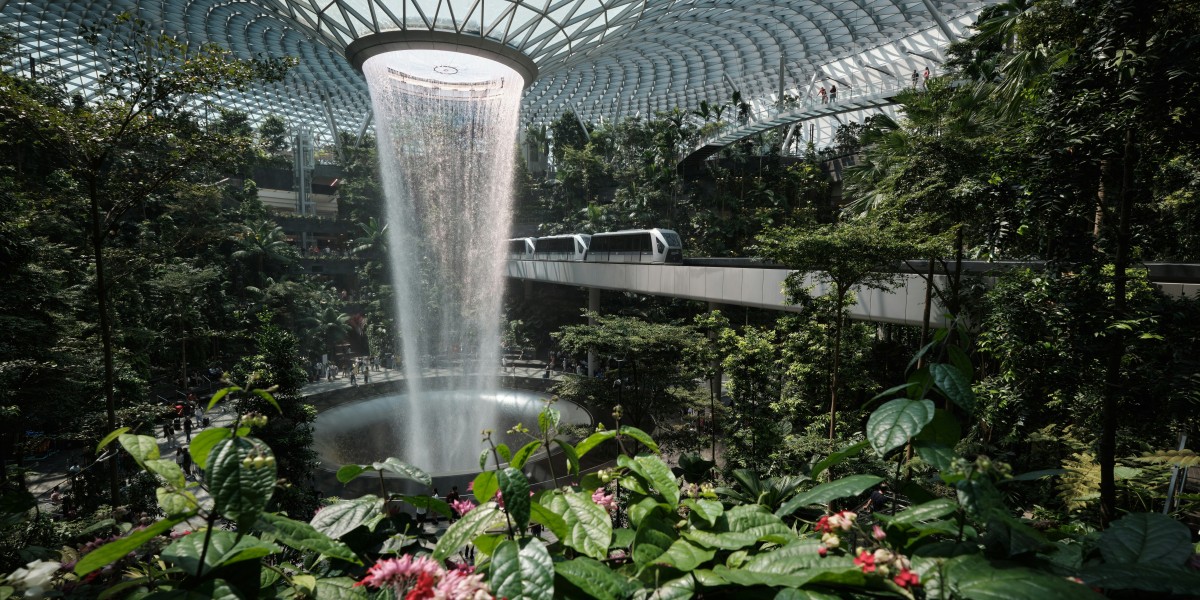
As global travel volumes rebound and passenger expectations rise, the question of what defines the world’s best airport is being reshaped. Industry rankings, traveler surveys, and aviation analysts increasingly agree that the answer extends far beyond on-time departures and terminal size.
Airports now compete on experience as much as infrastructure.
Efficiency Remains The Baseline
Operational performance still anchors any top-tier airport. Fast security screening, reliable baggage handling, and intuitive terminal layouts remain nonnegotiable. Airports such as Singapore Changi Airport and Tokyo Haneda Airport are frequently cited for minimizing friction at every stage of the passenger journey.
Clear signage, logical gate placement, and smooth transfers increasingly separate elite hubs from the rest.
In recent years, comfort has become a major evaluation factor. Seating quality, cleanliness, quiet zones, lighting, and access to showers or rest areas now carry measurable influence in global rankings.
Airports like Hamad International Airport have drawn attention for designing terminals that treat layovers as livable spaces rather than holding areas.
Leading airports are also acting as gateways to local culture. Art installations, architectural design, regional food options, and curated retail increasingly reflect a sense of place.
Incheon International Airport, for example, integrates Korean art, cuisine, and cultural programming into its terminal experience, reinforcing the airport’s role as part of the destination rather than a neutral transit zone.
Technology Is Expected, Not Celebrated
Biometric boarding, automated immigration, real-time flight updates, and digital wayfinding are now expected features at top airports. The measure of success lies in reliability rather than novelty.
When technology works seamlessly, it fades into the background. When it fails, it quickly shapes passenger dissatisfaction.
Traveler Experience Is The Deciding Factor
Ultimately, industry observers note that emotional response is becoming the final differentiator. Travelers consistently rank airports higher when they feel calm, oriented, and respected.
The world’s best airports succeed not only by moving people efficiently, but by reducing stress and creating a sense of control during travel. As competition among global hubs intensifies, that human-centered approach is increasingly defining excellence in aviation.