The tournament — the first held in the United States since 1994 — opened June 11 with three ceremonies across three host nations, and the New York-New Jersey corridor is now preparing for five more matches at MetLife Stadium, culminating in the World Cup Final on July 19.
The Largest World Cup in History Reaches American Shores
The 2026 FIFA World Cup is the largest ever staged. The expanded 48-team field is playing 104 matches across 16 host stadiums in the United States, Mexico, and Canada through July 19, with 11 of those venues located on U.S. soil. The tournament opened June 11 with a ceremony at Estadio Azteca in Mexico City ahead of the Group A match between Mexico and South Africa. Shakira and Burna Boy headlined the performance of the official tournament song, “Dai Dai,” joined by J Balvin, Maná, Tyla, and Andrea Bocelli. A second ceremony followed June 12 at BMO Field in Toronto for the Canada-Bosnia and Herzegovina match, and a third took place the same day at SoFi Stadium in Los Angeles before the U.S. opened group play.
The last time the United States hosted the World Cup was in 1994, when the tournament set attendance records across nine venues and generated what FIFA described at the time as its most commercially successful event. The 2026 edition is operating at a fundamentally different scale — nearly double the number of teams, 40 more matches than the 2022 tournament in Qatar, and a geographic footprint spanning three countries and four time zones. FOX holds the English-language U.S. broadcast rights, with every match also streaming live on its FOX One platform and Tubi simulcasting select games for free.
MetLife Stadium Anchors the Tournament’s Marquee Run
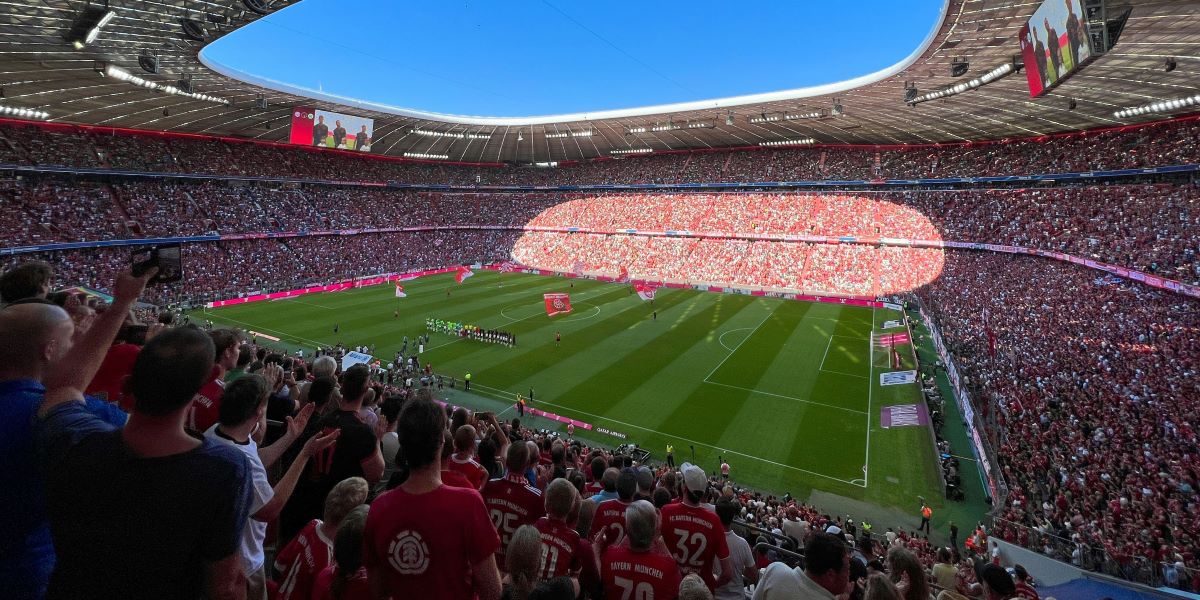
The New York-New Jersey region sits at the center of the tournament’s arc. MetLife Stadium in East Rutherford, New Jersey — renamed New York New Jersey Stadium under FIFA’s policy on sponsored venue names — is hosting eight matches, the most of any venue. Five are group-stage games: Brazil vs. Morocco (June 13), France vs. Senegal (June 16), Norway vs. Senegal (June 22), Ecuador vs. Germany (June 25), and Panama vs. England (June 27). The venue will also host a Round of 32 match on June 30, a Round of 16 on July 5, and the World Cup Final on July 19, which FIFA estimates will draw a global television audience of approximately 2 billion viewers.
The Brazil-Morocco opener at the stadium on June 13 drew a crowd of 80,663. The match ended 1-1, with Morocco’s Ismael Saibari opening the scoring in the 21st minute before Vinícius Júnior equalized with an angled strike in the 32nd. The game marked Brazilian manager Carlo Ancelotti’s World Cup coaching debut, and temperatures reached 88 degrees Fahrenheit for the 6 p.m. kickoff. France vs. Senegal, the next match at the venue, is scheduled for June 16 at 3 p.m.
A $6.4 Billion Economic Event — With Real Infrastructure Costs
FIFA’s economic analysis projects that tourists attending World Cup matches across U.S. host cities will spend $6.4 billion in aggregate, benefiting hospitality, transportation, and retail sectors. The New York-New Jersey region alone expects approximately 1.2 million visitors and a projected $3.3 billion in local economic impact, supporting an estimated 26,000 jobs, according to the host committee’s July 2025 economic impact summary.
Those projections, however, sit alongside mounting questions about the cost of hosting. New Jersey anticipates spending $48 million on its transit system for the tournament, covering expanded rail services, shuttle operations, traffic management, and security upgrades. There is no general parking at MetLife Stadium during World Cup matches. The only FIFA-endorsed parking option is at the adjacent American Dream Mall, priced at $225 per day. NJ Transit’s round-trip rail fare from Penn Station to the stadium was set at $98 — reduced from an initial $150 following backlash — compared to a standard fare of $12.90.
NJ Transit reported that it moved 21,578 fans via bus and rail within 90 minutes of the Brazil-Morocco final whistle, roughly half of the 40,000-person capacity it had planned for. But road congestion into Midtown Manhattan created significant disruptions: school buses contracted for fan transport became trapped on West 42nd Street, with five destroyed in vandalism and one set on fire. Ride-share operator Uber reported moving more than 6,500 people between rides and shuttle operations, while drivers faced restrictions on pickup locations near the stadium. Organizers are working to address the transit gaps ahead of subsequent matches.
Outbound NJ Transit service into and out of New York Penn Station is suspended beginning four hours before each match, except for ticket-holding World Cup attendees — a restriction that has drawn criticism from daily commuters. NJ Transit has offered a 3 percent discount on monthly passes and encouraged remote work on match days.
A Convergence of National Entertainment Events
The week of June 15 has become one of the most concentrated periods of national entertainment activity in recent memory. The World Cup matches at MetLife Stadium overlap with the New York Knicks’ championship ticker-tape parade on June 18, the strongest post-pandemic summer box office (up 11.6 percent year over year), and the lead-up to Juneteenth on June 19. New York City has organized public watch parties in all five boroughs, and fan zones operated by the host committee are running in Manhattan and across the wider metro area.
NYU Stern economist Luís Cabral has cautioned that the projected $3.3 billion economic impact for the New York-New Jersey region may overstate the actual net benefit, given the displacement effects on normal commercial activity and the public costs required to host an event of this magnitude. Still, the scale of the tournament’s footprint across U.S. cities — from the opening matches in Mexico City to the Final at MetLife Stadium — represents the kind of sustained national attention that host committees have spent years lobbying to capture.
The next match at New York New Jersey Stadium is France vs. Senegal on Monday, June 16. The tournament continues through the knockout rounds in late June and early July before the Final on July 19.