
By: Caroline Westfield
For years, the natural gas industry has contended with the daunting task of managing pipeline tariffs across a labyrinth of regulatory bodies, infrastructure owners, and shifting rate structures. Pipeline companies, utilities, and traders were left painstakingly poring over countless portals, websites, and CSV files, each filled with complex charges, fee structures, and compliance requirements. The inefficiencies and risks inherent in this manual approach were glaring, leading to unnecessary costs and missed opportunities in a sector where margins and timing are paramount.
Enter NatGasHub and its Automated Gas Pipeline Tariffs, or gTARIFF, platform, a digital solution that has swiftly earned the reputation of being the “Google Maps” for natural gas tariff data. Under the guidance of CEO and founder Jay Bhatty, NatGasHub has addressed this longstanding challenge with a unified, automated system that sweeps tariff information from more than 215 interstate and intrastate pipelines and nearly 500 utilities across the United States and Canada. By offering an integrated, real-time tariff API, the company enables traders, schedulers, and producers to access and rely on the most current pricing, fee, and regulatory data, right when they need it.
What sets the gTARIFF platform apart is both the breadth and the intelligence of its automation. Every day, before the crack of dawn, NatGasHub’s system updates its database, ensuring that users work with data fresh from regulatory approval. This real-time approach is not just a matter of convenience; in a market where minute discrepancies can lead to significant gains or losses, data accuracy and timeliness are economic imperatives. Traditional processes, reliant on manual spreadsheet comparisons, were vulnerable to error, as even small lapses could lead to costly scheduling mistakes, incorrect invoices, or compliance headaches.
NatGasHub’s gTARIFF, however, tackles these pitfalls with precision. The system automatically retrieves and standardizes a vast array of tariff line items, including reservation and demand charges, commodity fees, fuel percentages, ACA charges, and all surcharges. It maps them to a client’s internal systems via a seamless API or a user-friendly visual interface. By assigning a unique identifier to each line item and supporting diverse rate structures, from mileage-based and zone-to-zone to hybrid models, the platform offers flexibility that is critical for operators managing complex, multi-jurisdictional portfolios.
Equally significant is the platform’s commitment to regulatory compliance and data security. All tariffs included in the system are validated against filings from the Federal Energy Regulatory Commission, state Public Utility Commissions, and Canadian regulatory bodies. The architecture is certified by the North American Energy Standards Board and adheres to SOC2-compliant security protocols, giving companies confidence that their automated workflows are not only accurate but also protected from data breaches or errors.
A further innovation lies in NatGasHub’s robust change-detection capabilities. The system constantly monitors for tariff updates and regulatory changes, flagging any pending adjustments and alerting users before they impact operations. This allows strategic decisions, from transportation cost modeling to risk management, to be based on the most current data. Customers can even preview tariff updates before they enter production environments, retaining full transparency and control.

The ramifications are transformative for everyone in the natural gas value chain. Gas traders, often the first to feel the sting of outdated data, now gain instant clarity into true, up-to-the-minute transportation costs. This precision allows them to adjust bids, structure deals, and hedge risks with greater speed and assurance. Schedulers and operational personnel, historically bogged down reconciling tariffs and invoices by hand, enjoy more streamlined workflows, freeing time for optimization, logistics management, and high-value planning.
Producers and utilities likewise reap the benefits. As pipeline operators submit new filings and rate proposals, gTARIFF provides immediate alerts, giving stakeholders valuable lead time to prepare for changes and update their financial strategies accordingly. Early visibility into regulatory trends fosters resilience in a sector where variables, from regulation to resource pricing, shift quickly and unpredictably.
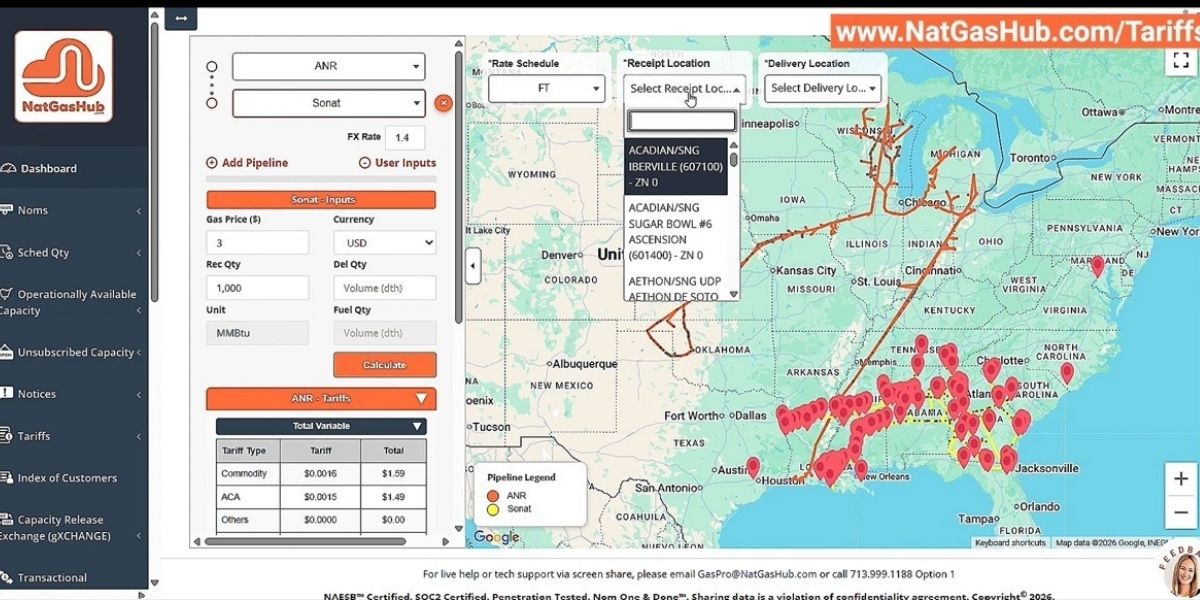
The visualization tools embedded within the platform represent another leap forward. Drawing inspiration from the intuitiveness of mapping applications, NatGasHub lets users query and display tariffs geographically, mapping them to pipeline routes and locations. This visual context transforms static data into actionable insights, supporting scenario analysis and transportation modeling with improved agility.
A broader industry view underscores the significant impact of such a solution. Historically, the challenge of synthesizing tariff data was so persistent that even large players resigned themselves to fragmented, sometimes error-prone systems. NatGasHub’s centralized and automated approach represents a new paradigm, one in which the industry can pivot from time-consuming data wrangling to proactive strategy and innovation. As the digital transformation of energy markets accelerates, platforms like gTARIFF become not just tools of efficiency but foundational pillars of competitiveness.
This leap forward is a testament to the vision of leaders like Jay Bhatty, who recognized the need for pairing artificial intelligence-driven automation with rigorous human oversight. It is this hybrid approach, marrying rapid detection with meticulous verification, that assures clients the data they rely on is both timely and trusted. While the company’s public focus remains on architecture and system integrity rather than granular tariff publication, its real value is delivered directly to clients who use the structured data to power their own operational and analytical systems.
NatGasHub’s Automated Gas Pipeline Tariffs system marks a watershed moment in natural gas industry modernization. By centralizing, automating, and standardizing tariff data, it delivers not just operational efficiency but also the clarity and confidence required for high-stakes energy decision-making. As the nation’s energy landscape grows more complex and fast-paced, the role of platforms like NatGasHub will only deepen, setting the standard for data-driven excellence in natural gas trading and operations.