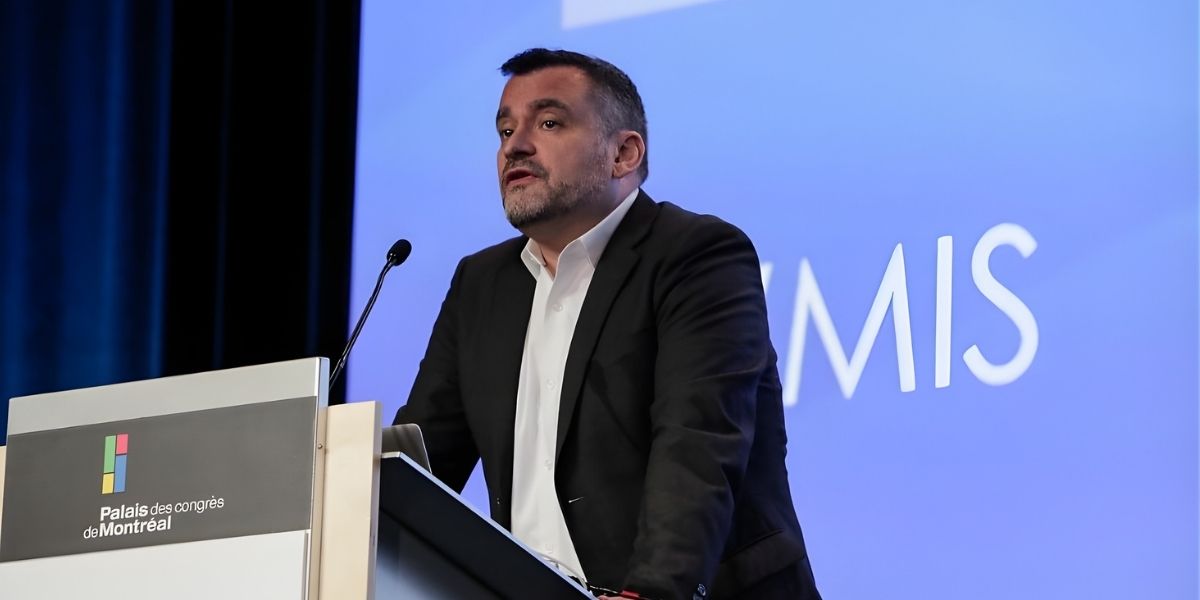
Scientific advancement generally relies on the unsleeping work of scientists who cross fields, assemble teams, and produce the type of information that drives ideas from hypothesis to fact. In cancer science, where precision and reproducibility quite literally decide patient fates, such efforts become increasingly crucial. During the last three decades, the science of molecular imaging has progressed from modest-scale radiotracer investigations to an integral part of contemporary oncology. This expansion has been driven by scientists who not only develop novel imaging probes but also ensure that these advances are grounded in hard science. Among the scientists whose research contributions have had a substantial impact in this environment is Jason S. Lewis, a researcher renowned for his work in molecular imaging and radiopharmaceuticals.
During his career, he has authored or co-authored more than 350 peer-reviewed publications that have appeared in journals such as Nature Medicine, Nature Cancer, Clinical Cancer Research, The Journal of Nuclear Medicine, and Proceedings of the National Academy of Sciences (PNAS). Overall, his research spans the chemistry, biology, and translational medicine of radiopharmaceuticals, with a particular focus on cancer diagnosis and therapy. This collection of work highlights his position as one of the most prolific contributors to molecular imaging in the last two decades.
He has worked on antibody-based PET tracers, mapping of tumor microenvironments, and radioimmunotherapy design. One of his most-cited areas of research is the application of zirconium-89-labeled antibodies for imaging cancer (immunoPET), which has provided clinicians with valuable agents to detect cancer and monitor therapeutic response in patients with breast, prostate, and lung cancer. Concurrent with this work, Lewis’s research on tumor and metabolic imaging has shed light on the role of the tumor microenvironment in drug resistance. These studies have been employed to improve therapeutic and diagnostic strategies across oncology.
One of Lewis’s most notable lines of work is the study of how molecular imaging can be applied to characterize cancer antigen expression and to exploit this for radiopharmaceutical therapy. This work, published in the Journal of Nuclear Medicine, PNAS, and Clinical Cancer Research, from 2018 to date, has informed the development of new methods for treating cancer. It also enables us to observe patient response more dynamically than has been possible with conventional biomarkers alone.
Lewis’s work integrates radioimmunotherapy with targeted antibodies and therapeutic isotopes to concentrate a higher dose of radiation within cancer cells. His research with oncologists and radiochemists has yielded promising preclinical results with isotopes such as lutetium-177 and actinium-225. The work aims to make the treatment more targeted and minimize side effects in normal tissue. Through such research, Lewis’s work has contributed to the overall trend toward theranostic medicine, in which imaging and therapy are integrated into a single molecular platform.
Strong collaborative platforms support the scope of his work. At Memorial Sloan Kettering Cancer Center (MSK), where Lewis is the Emily Tow Chair and Deputy Director of the Sloan Kettering Institute, the laboratory has worked closely with clinicians in oncology, surgery, and radiology. The collaborations have extended into translational research that progresses elegantly from preclinical validation to the clinic. Over the last decade, more than a dozen imaging agents created under his leadership have advanced to human trials at MSK, bearing witness to scientific productivity and organizational accomplishment.
Aside from his institutional roles, Lewis has also had an impact on the wider scientific policy and collaboration networks. He has served as President of the Society of Radiopharmaceutical Sciences (2022–2023) and the World Molecular Imaging Society (2014–2015), and held executive roles within the Society of Nuclear Medicine and Molecular Imaging, indicating his involvement with the broader research community. These roles have allowed him to play a role in funding priority discussions, education in radiochemistry, and the ethical use of nuclear medicine technology.
Lewis has also been honored with many prestigious grant awards. Of these, the National Cancer Institute’s (NCI) Outstanding Investigator Award is one of the distinguished recognitions of his consistent research excellence. This senior research project grant has enabled Lewis to pursue extensive research in radiochemistry and molecular imaging without the constraints of short-term, limited-duration grants. His group has been funded in addition by the Department of Energy, the National Institutes of Health, and several private foundations working to combat cancer. Together, the grants have laid the groundwork for the high-throughput analyses that characterize his research program.
The scholarly impact of Lewis’s research extends far beyond the number of publications and awards received. His work has guided the calibration of radiopharmaceutical standards, refined tracer validation protocols, and influenced imaging protocols in cancer centers worldwide. For example, extensive investigation by his team into the chemistry of zirconium-89 chelation has set the benchmark for laboratories seeking to promote immunoPET agent stability and safety. Likewise, his collaborative work on copper-64 and gallium-68 tracers has enabled better design of small-molecule probes for tumor imaging and therapy quantification.
Lewis is a frequent co-author with scientists from as disparate disciplines as immunology, pharmacology, and materials science, indicating his emphasis on interdisciplinarity. This drive towards collaboration is also evident in his work with national and international societies, such as the Society of Nuclear Medicine, which aims to standardize imaging and accelerate clinical translation.
Lewis’s research not merely promoted technical proficiency but also decided how institutions conceive of the boundary between medicine and chemistry. His integration of sound methodology, co-design, and a translational purpose has reaffirmed the dictum that innovation in molecular imaging must always serve clinical need. This mentorial paradigm has continued to direct international research activities, inspiring similar schemes of academic and clinical alliance at cancer institutions worldwide in Europe, North America, and Asia.
In a nutshell, Jason S. Lewis has contributed to the modern paradigm of molecular imaging science. His contribution is an affirmation of the enduring manner in which meticulous, lengthy academic inquiry can spur considerable forward progress in oncology. Since radiopharmaceutical science is becoming more prominent daily around the world, the work described by Lewis and others is central to the development of the field, ensuring that molecular imaging can continue to be not just a diagnostic modality but also a means of improving cancer therapy.
Disclaimer: The information provided in this article is for informational purposes only and reflects the research and achievements of Jason S. Lewis in the field of molecular imaging. It is not intended to serve as medical advice or make any specific claims regarding health outcomes. For medical advice or treatment, please consult a healthcare professional.