
By: Laura Zanky
English is a genuinely strange language in many respects, but few of its strangenesses are quite as immediately experienced by young learners as homophones. The fact that the English language contains hundreds of word pairs that are pronounced identically but mean entirely different things and are often spelled differently is the kind of feature that, presented in a grammar lesson, produces groans and confusion. Presented through a story about a gnome from Nome, it produces something entirely different: delight, curiosity, and the particular excitement of a child who has just discovered that language can be played with in ways nobody warned them about.
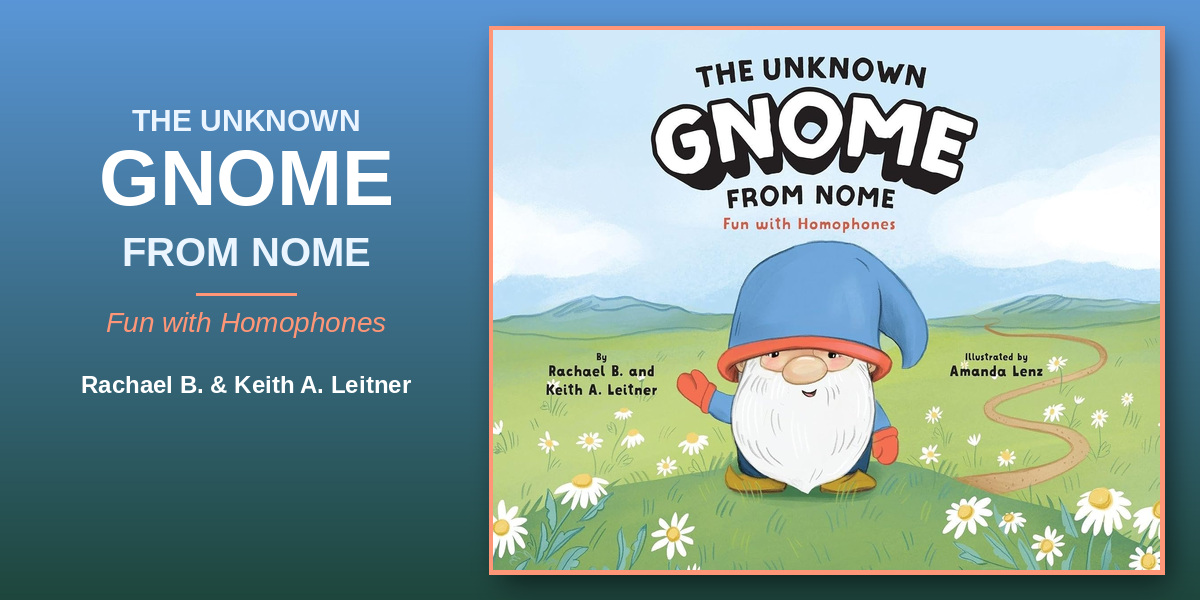
Keith Leitner’s The Unknown Gnome from Nome: Fun with Homophones is built around that transformation, from confusion to delight, and aims to give young readers that same experience.
The Secret Ingredient Is Absurdity
What makes wordplay books work for children is the same thing that makes riddles and puns work: the pleasure of incongruity. A gnome is a mythical creature associated with European folklore. Nome is a city in Alaska where gold was discovered in the late 1890s. These two things have absolutely nothing to do with each other except that they sound identical, and the book’s premise is built on exactly that absence of logical connection. The absurdity is the point.
Children are drawn to absurdity in a way that adults sometimes underestimate. The logical impossibility of a gnome from Nome is not confusing to a child. It is funny. And the funniness comes from the same place that the educational value comes from: the recognition that two different things can sound exactly the same, which is the homophone lesson delivered through laughter rather than through explanation.
Building a Foundation for Reading Confidence
One of the less visible but genuinely important effects of a book like this is what it does for a young reader’s relationship with the English language. Children who encounter homophones for the first time in a context that makes them feel clever, that gives them the experience of getting the joke, develop a different relationship to language’s complexity than children who encounter homophones for the first time in a red-marked spelling error on a returned assignment.
The first experience builds curiosity. The second builds anxiety. Keith’s book is designed to be the first experience, to give children a framework for encountering homophones that positions the learner as someone who understands something interesting about the language rather than someone who has been caught out by one of its traps.
What Teachers and Parents Can Do With It
The book is structured in a way that invites extension beyond the reading experience itself. A child who finishes the book having enjoyed it is a child who is primed to notice homophones in the world around them, in signs and labels and conversations and their own reading. That noticing, once it begins, is a form of continuous language learning that requires no instruction and produces genuine engagement.
Parents who read the book aloud have a natural opportunity to pause on the homophone moments and explore them together. What else sounds like that? Can you think of another word that sounds the same but means something different? Those conversations, prompted by the pleasure of the story, are exactly the kind of language play that builds the intuitive understanding of English that formal instruction alone rarely produces.
Keith has written a book that keeps teaching after it has been put down. In children’s education, that is one of the highest achievements available.
For the young reader who loves a good pun and the adult who wants to feed that instinct, The Unknown Gnome from Nome by Keith Leitner is available now on Amazon and at www.leitnerpublishing.com.