
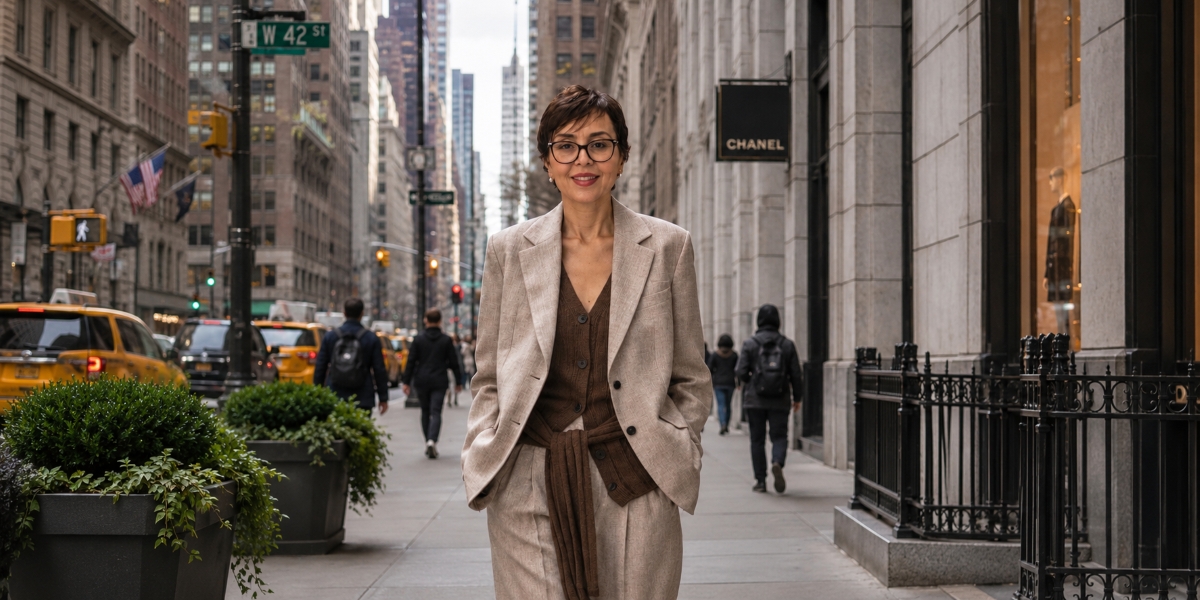
Some artists choose a single medium through which to express themselves. Others spend a lifetime crossing creative boundaries, allowing words, images, cinema, and ideas to speak together. Mzekhala Gogochuri belongs to the latter category, a rare cultural figure whose work has touched literature, filmmaking, visual arts, translation, and education, creating a body of work that reflects both artistic versatility and a deep commitment to preserving cultural memory.
For decades, Gogochuri has been a recognizable presence in Georgia’s cultural landscape. Her career cannot be easily defined by a single profession. She is a film director, visual artist, writer, editor, translator, and cultural organizer. Yet behind these diverse roles lies a common purpose: the desire to preserve stories, honor artistic heritage, and create meaningful dialogue between generations and cultures.
Her professional journey reflects an unusual combination of analytical thinking and artistic vision. After completing her studies in economics, she later pursued her true creative calling through formal education in film directing at the Shota Rustaveli State University of Theatre and Film of Georgia. This transition from economics to cinema was more than a career change, it was a declaration of artistic purpose.
Film became one of the first major platforms through which she explored storytelling. Her documentary film Chubchika, dedicated to the celebrated Georgian artist Tengiz Mirzashvili, stands as an example of her ability to transform biography into visual narrative. Rather than simply documenting a life, the film captures the atmosphere, personality, and artistic spirit of its subject, reflecting Gogochuri’s belief that culture is best preserved through human stories.
Her work in cinema expanded further through collaborations as a screenwriter and creative contributor. While living in the United States, she joined the creative team of Georgian filmmaker Giorgi Tkemaladze, contributing to projects that ultimately led to her recognition as a screenwriter on IMDb. This international experience broadened her artistic perspective while strengthening her role as a cultural bridge between Georgia and the wider world.

Yet cinema represents only one chapter of Gogochuri’s creative life.
Literature has remained at the heart of her artistic identity. Throughout the years, she has written essays, memoirs, journalistic articles, and short stories that have appeared in Georgian literary journals, newspapers, and cultural publications. Her writing is often characterized by emotional depth, thoughtful observation, and an enduring respect for human experience.
Particularly significant among her literary contributions is her memorial essay dedicated to her late husband, the distinguished Georgian scholar, writer, folklorist, and translator Vakhushti Kotetishvili. More than a personal tribute, the work became a reflection on love, intellectual partnership, and cultural legacy. Through her writing, Gogochuri demonstrates a rare ability to connect personal memory with broader cultural history.
Her contribution to literature extends beyond her own authorship. Over the years, she has worked extensively as a literary editor, helping shape important Georgian publications. From poetry collections to autobiographical works, her editorial involvement reflects both literary expertise and a profound respect for the written word. Colleagues frequently note her ability to preserve an author’s voice while enhancing clarity, structure, and artistic impact.
At the same time, visual art emerged as another powerful dimension of her creative expression.
Since 2003, Gogochuri has devoted significant attention to painting and graphic arts, developing a distinctive artistic practice centered largely on portraiture. Through oil paintings, graphic works, and pencil drawings, she has created portraits of prominent cultural figures, intellectuals, and public personalities.
Portraiture, for Gogochuri, is more than representation. It is an attempt to capture character, memory, and presence.
Her works dedicated to notable Georgian cultural figures have become part of important collections and cultural institutions. Whether working in oil, graphite, or mixed media, she approaches each subject with the sensitivity of a writer and the observational eye of a filmmaker, creating portraits that reveal not only physical likeness but emotional depth.
Her artistic journey eventually expanded beyond Georgia’s borders. During her years in the United States, she continued developing her visual practice while participating in exhibitions that introduced Georgian art to international audiences. A notable exhibition in New York’s Chelsea district provided an opportunity to present her work alongside other Georgian artists, strengthening cultural connections between Georgia and the American art community.
Translation represents yet another important chapter in her career.
For Gogochuri, translation is not simply a linguistic exercise but an act of cultural dialogue. While living in the United States, she completed a Georgian translation of A Woman’s Rendezvous, a celebrated long-form poem by renowned Russian poet Robert Rozhdestvensky. The translation was later published and publicly presented before members of New York’s Georgian cultural community.
The project received praise from literary professionals and translators who recognized both its linguistic precision and emotional authenticity. Such recognition reflects Gogochuri’s understanding that translation requires more than words, it requires empathy, interpretation, and artistic sensitivity.
Beyond her creative achievements, she has remained deeply involved in educational and cultural initiatives. Throughout her career, she has organized literary evenings, moderated cultural discussions, participated in public programs, and engaged with students, readers, and audiences across Georgia and abroad.
These activities reveal another important aspect of her work: a commitment to community. Whether through literature, visual art, cinema, or public dialogue, Gogochuri consistently views culture as something that must be shared, discussed, and passed forward.
Today, Mzekhala Gogochuri continues to work across multiple artistic disciplines, remaining actively engaged in writing, painting, translation, screenwriting, and cultural development projects. Her career stands as a remarkable example of creative versatility and lifelong dedication to the arts.
In an age that often encourages specialization, Gogochuri’s journey offers a different model, one built on curiosity, intellectual depth, and an unwavering belief that art, in all its forms, has the power to preserve memory, connect people, and enrich society. Through every project she undertakes, she continues to demonstrate that culture is not merely inherited; it is continually created, protected, and renewed by those willing to dedicate their lives to it.