
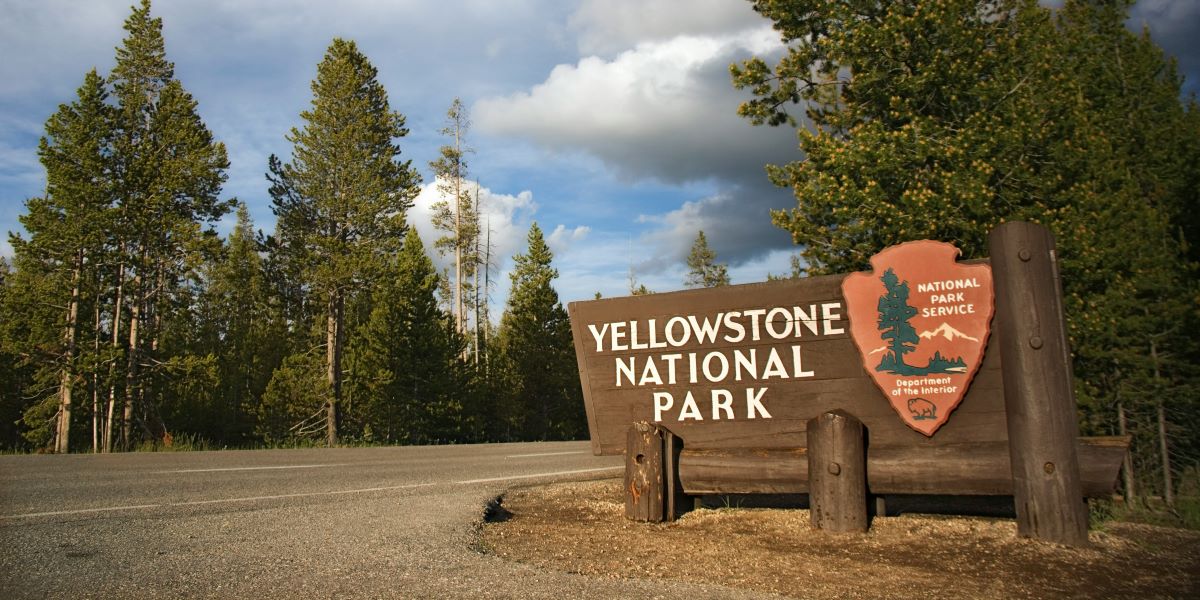
When Congress set aside Yellowstone in 1872, it did something no nation had done before: it reserved a vast stretch of wilderness, not for a king, a church, or a private owner, but for everyone. The idea that spectacular natural places should belong to the public, protected for future generations to enjoy, was novel enough that it would later be called America’s best idea. More than 150 years on, that experiment has grown into a system of more than 400 sites visited by hundreds of millions of people each year.
The story of the national parks is one of vision and argument, of poets and presidents, and of a country slowly deciding that some places are worth more left standing than developed.
The First Park in the World
Yellowstone, spread across parts of present-day Wyoming, Montana, and Idaho, became the first national park anywhere in the world when President Ulysses S. Grant signed it into protection in 1872. Its geysers, canyons, and herds of wildlife had been described by explorers in terms that strained belief, and rather than allow the area to be carved up by private interests, Congress designated it a public reserve.
The decision established a principle that would prove powerful: that the federal government could hold extraordinary landscapes in trust for the people. In the decades that followed, more parks joined the list, though for years they lacked any unified management, leaving them vulnerable to poaching, development pressure, and neglect.
The Voices of Conservation
The parks owe much of their existence to a generation of advocates who insisted that wild places had value beyond what could be logged, mined, or grazed. Among the most influential was John Muir, the naturalist and writer whose lyrical accounts of the Sierra Nevada helped persuade Americans that wilderness deserved protection. Muir’s advocacy was instrumental in the campaign to safeguard Yosemite, and he co-founded the Sierra Club to carry the cause forward.
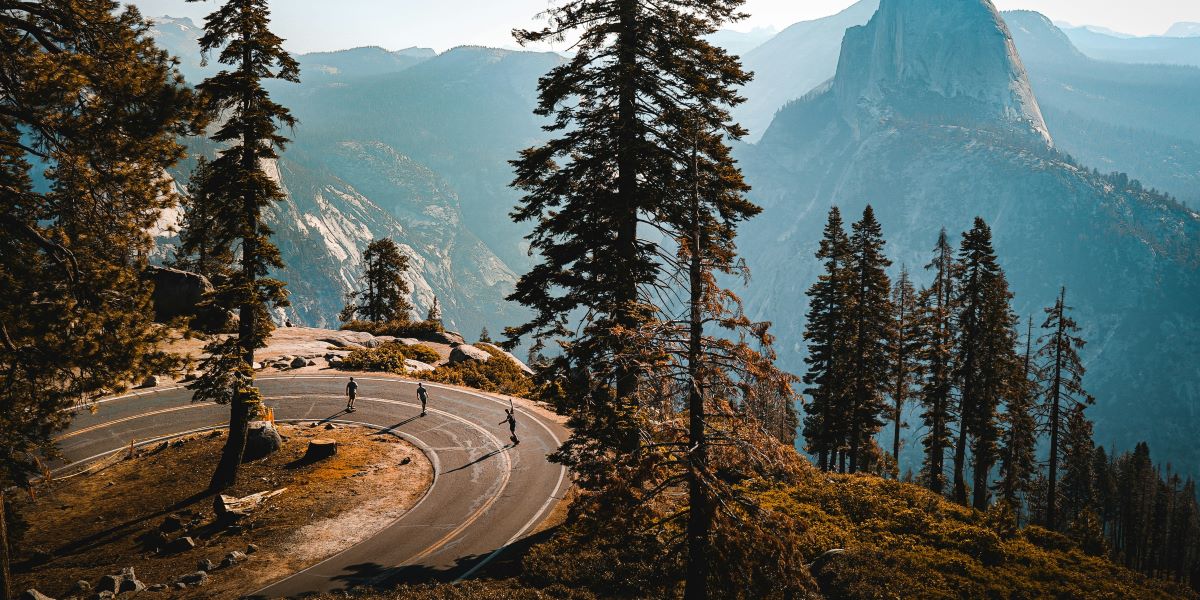
Few figures did more in practice than Theodore Roosevelt. As president, Roosevelt was a committed conservationist who placed enormous acreage under federal protection, establishing national parks, forests, monuments, and wildlife refuges. A famous 1903 camping trip through Yosemite with Muir, the two men sleeping under the stars and talking conservation, has become emblematic of the alliance between scientific advocacy and political power that built the system.
Bringing Order: The National Park Service
By the early twentieth century, the country had parks but no coherent way to run them. That changed in 1916, when Congress created the National Park Service and President Woodrow Wilson signed it into law. The new agency was charged with a dual mission that remains its guiding tension: to conserve the scenery, wildlife, and natural and historic objects of the parks, and to provide for their enjoyment in a way that leaves them unimpaired for future generations.
Under its first director, Stephen Mather, and his deputy Horace Albright, the Park Service professionalized management, expanded the system, and worked to build public support. Roads, lodges, and ranger programs made the parks accessible, while the agency wrestled, then and now, with how to welcome millions of visitors without loving the parks to death.
A Model the World Adopted
The American invention did not stay American for long. The national park concept spread across the globe, inspiring countries on every continent to set aside their own protected landscapes. Today, thousands of national parks worldwide trace their lineage, directly or indirectly, to the precedent set at Yellowstone.
That global reach is part of why the parks are remembered as a distinctly American contribution to the world. The notion that a nation might measure its wealth partly by the wild places it chooses not to exploit has become a widely shared value, even as the pressures of population, climate change, and development continue to test it.
A Shared Inheritance
The system has also broadened over time. What began as a collection of scenic wonders now includes historic sites, battlefields, seashores, and monuments that tell a fuller story of the country, its triumphs and its painful chapters alike. The parks preserve not only geysers and canyons but also memory and meaning.
For all the debates over funding, crowding, and how best to honor the land’s original Indigenous stewards, who lived on and cared for these places long before they were designated parks, the underlying idea has held. Generation after generation, Americans have inherited landscapes their predecessors chose to protect, and have largely chosen to pass them on intact.
Why It Lasts
The national parks endure because they answer a simple, durable question in the affirmative: are some things worth keeping for everyone? The foresight of 1872 and the stewardship formalized in 1916 created a legacy that millions still benefit from, an inheritance of mountains, forests, deserts, and coastlines held in common. It remains, by many accounts, one of the finest ideas the country ever had.