By: Alexandra Hayes
A Blank Yard and a Bold Idea
When Martha Retallick bought her home in 2004, the outdoor space barely deserved to be called a yard. The front was a flat stretch of crushed rock. The back was overrun with invasive Bermuda grass. It was dry, stark, and about as far from a garden as you could imagine. Then a friend looked at the barren space and said something that stuck: “That’s your palette.”
That simple comment sparked a two-decade journey that would turn Martha’s property into a living experiment in blending nature with the built world. Her goal was never to create a lush, water-hungry showpiece. Instead, she wanted to explore what could be achieved when a landscape worked with the desert rather than against it.
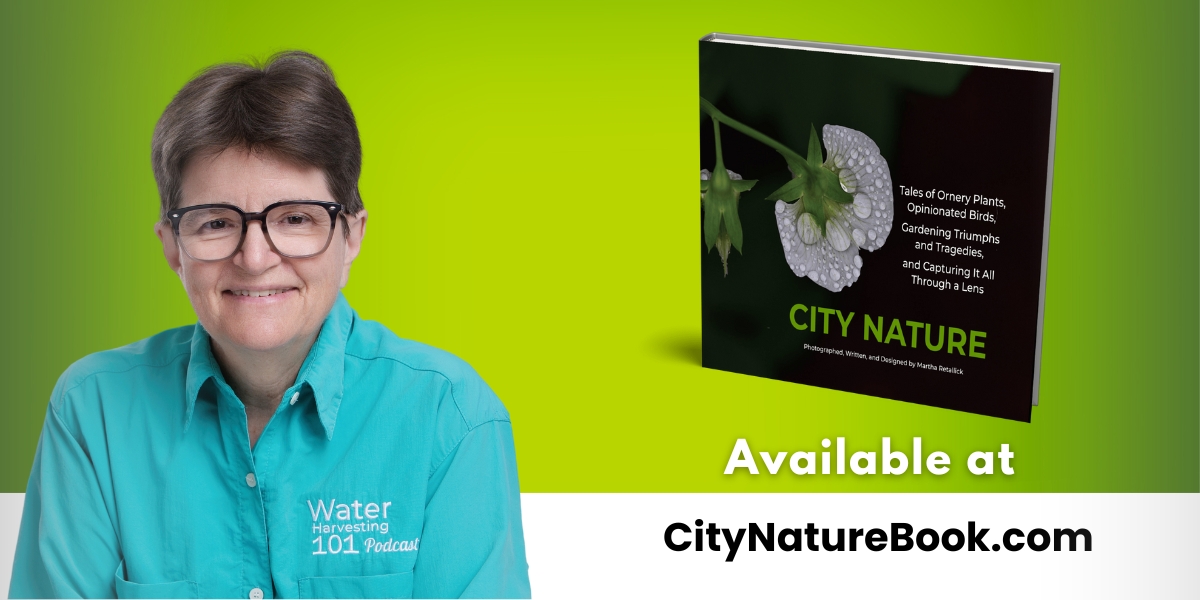
Today, that idea is at the heart of her book City Nature, where she shares the real story of trial, error, and unexpected wins in desert gardening and sustainable landscaping.
Learning to Think Like Water
One of the biggest shifts in Martha’s approach came when she realized that water does not need to be forced into a landscape. It needs to be guided. Living in Tucson means facing intense summer storms that can drop inches of rain in hours. Early on, those storms turned her yard into a flood zone.
Her first solution was a rock-lined swale designed to move water away from the house. It looked beautiful but didn’t hold up well during heavy rains. Water pooled in corners, barely making it where she wanted it to go. That moment pushed her to seek help and learn from local water-harvesting projects.
The lesson that changed everything was simple but powerful: think like water. It always flows downhill. The question is whether you like where it is going.
Martha began reshaping her yard with basins, berms, and swales that slowed rain, spread it out, and helped it sink into the soil near her plants. Instead of rushing off the property, the water stayed where it could do the most good.
Growing a Desert Oasis Without Irrigation
Traditional irrigation systems were never part of Martha’s plan, mostly because they were out of her budget. That limitation turned into an advantage. She focused on drought-tolerant plants and native desert trees that could survive on rain alone.
In her front yard, two ironwoods and a mesquite now stand as proof that long-term thinking can yield positive results. These trees have survived for two decades without regular watering. Beneath them, shrubs benefit from the shade and the water that collects naturally in the basins around their roots.
Her success was not universal. Cactus, often seen as the ultimate desert plant, turned out to be more fragile than expected. Disease and insects took their toll. Only a hardy bunny ears cactus remains, slowly spreading on its own terms.
These honest moments of failure are part of what makes Martha’s story relatable. City Nature does not present a perfect system. It presents a real one.
The Power of Passive and Active Water Harvesting
For years, Martha relied entirely on passive water harvesting. A shovel, some planning, and a lot of patience went a long way. She often says that it is possible to create a massive underground water reserve just by shaping the land to hold moisture.
Later, when her finances allowed, she added active systems. A laundry-to-landscape greywater setup now directs wastewater from her washing machine to irrigate pomegranate and lemon trees in her backyard. A 1,500-gallon cistern captures rain from her roof and stores it for a small garden space.
Even with those tools, she remains cautious about expectations. A cistern sounds impressive, but water goes quickly in a hot climate. For Martha, it is about using each system where it makes the most sense, rather than trying to cover everything.
A Practical Message for Urban Homeowners
Martha’s work challenges the idea that sustainable landscaping is expensive or complicated. She often reminds people that they can start small. Dig a basin. Add mulch. Watch how water moves through your yard during a storm. Let the land teach you.
Her approach speaks to urban homeowners who want to lower water bills, reduce environmental impact, and still enjoy a thriving outdoor space. It is not about copying a desert garden. It is about understanding your own conditions and building from there.
Why City Nature Resonates Beyond the Garden
At its core, Martha’s story is about paying attention. To the land. To the climate. To the quiet signals that show what is working and what is not. That mindset reaches beyond gardening into how people think about cities, resources, and long-term choices.
City Nature blends personal experience with practical guidance, offering a fresh take on urban gardening, water conservation, and sustainable living. It invites readers to see their own yards not as fixed spaces, but as living systems that can evolve over time.
A Living Landscape That Keeps Growing
Two decades after that first look at a yard of crushed rock, Martha is still shaping her desert oasis. Trees continue to grow. Water continues to find new paths. And her experiment in working with nature rather than forcing it remains very much alive.
Her journey shows that even in the harshest environments, thoughtful design and patience can help create something both resilient and beautiful.
Find more about Martha and her work on her website, and explore City Nature to see how urban spaces can become part of the natural world rather than separate from it.